

You have probably seen the phrase ‘pH-balanced’ on skin-care packaging and assumed it was a marketing claim. For syndet bars, it is not. It is a fundamental piece of chemistry — and understanding it explains why millions of people with sensitive skin, eczema, rosacea, and psoriasis are switching away from traditional soap and never looking back.
The word syndet is a portmanteau of synthetic and detergent. Syndet bars look identical to ordinary soap bars on the outside, but inside they are built completely differently — from different raw materials, using a different manufacturing process, and designed specifically to protect rather than disrupt the skin’s natural chemistry.
This guide explains what a syndet bar actually is, how it differs from traditional soap at a molecular level, what peer-reviewed research says about its benefits, and who genuinely benefits most from making the switch. If you have ever wondered whether a syndet bar is right for your skin — this is the most thorough, honest answer you will find.
⚡ Quick Answer (if you are short on time) A syndet bar is a soap-free cleansing bar made from synthetic surfactants. Unlike traditional soap, which has a pH of 9–10 and disrupts the skin’s protective acid mantle, a syndet bar is formulated to match or stay close to the skin’s natural pH of 4.5–5.5. This prevents barrier damage, preserves the skin microbiome, and reduces irritation. It is especially recommended for sensitive skin, eczema, rosacea, and psoriasis.
Section 1: What Is a Syndet Bar?
The simplest possible explanation
Think of your skin’s surface as a brick wall. The bricks are your skin cells (corneocytes) and the mortar holding them together is a mix of natural oils, lipids, and protective acids. This wall has a slightly acidic surface called the acid mantle — it keeps moisture inside and bacteria, pollution, and irritants outside.
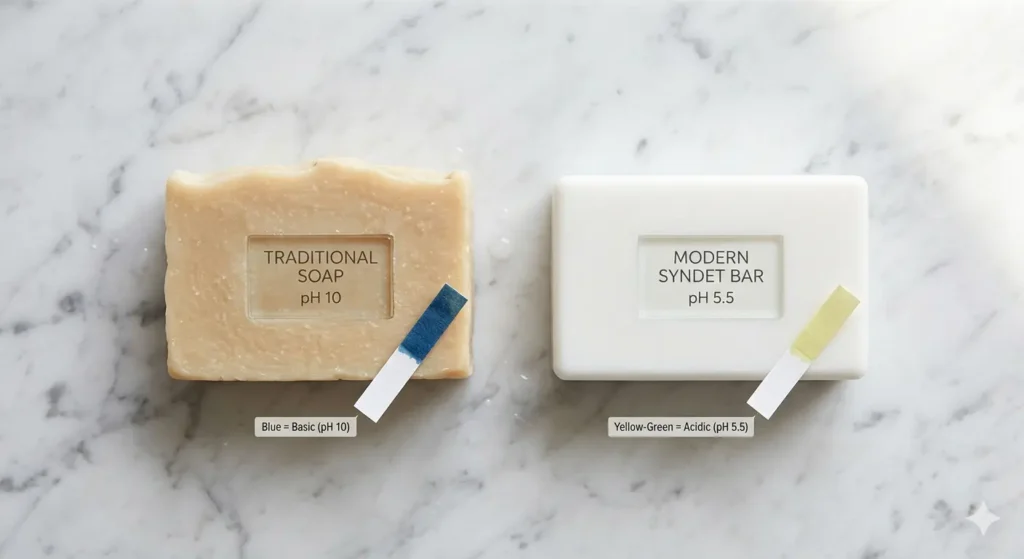
Traditional soap is highly alkaline (pH 9–10). Every time you wash with it, it is like hosing down that wall with a mild bleach — it does not destroy the bricks, but it dissolves the mortar temporarily. For skin that is already compromised, the wall never fully rebuilds between washes.
A syndet bar is formulated to match the pH of the mortar itself. It cleans effectively without dissolving it. The wall stays structurally intact. That is the core difference — and it is why syndet bars have become a clinical standard recommendation for dermatologically vulnerable skin.
How syndet bars are made differently
Traditional soap is produced by saponification — reacting natural fats or oils (tallow, coconut oil) with a strong alkali (sodium hydroxide or potassium hydroxide). This chemical reaction creates soap molecules and glycerin, but also locks the product at a pH of 9–10, which cannot be altered without changing the formula entirely.
Syndet bars bypass saponification altogether. Instead, they are built from mild synthetic surfactants — most commonly:
- Sodium cocoyl isethionate (SCI) — a coconut-derived surfactant, the most widely studied mild alternative to traditional soap
- Sodium lauroyl sarcosinate — amino acid-derived, very low irritation profile
- Decyl glucoside — sugar-based (from corn glucose and coconut), biodegradable
- Sodium lauroyl methyl isethionate — another mild isethionate widely used in sensitive skin formulations
Because these surfactants are not produced by saponification, manufacturers have full control over the final pH. The bar can be formulated to sit at pH 5.5 — exactly matching the healthy skin surface pH documented in clinical literature.
📘 Key terminology: What is pH? pH stands for ‘potential of hydrogen’ and is a scale from 0 to 14 measuring how acidic or alkaline a substance is. 7 is neutral. Below 7 is acidic (lemon juice = 2). Above 7 is alkaline (bleach = 13). Healthy skin sits at pH 4.5–5.5 — mildly acidic. Traditional soap sits at pH 9–10 — strongly alkaline. The difference of 4–5 pH units represents a 10,000-fold difference in alkalinity, since pH is a logarithmic scale. This is why the pH difference between soap and syndet bars is not trivial — it is enormous in biological terms.
The Acid Mantle — Why Your Skin’s pH Is Everything
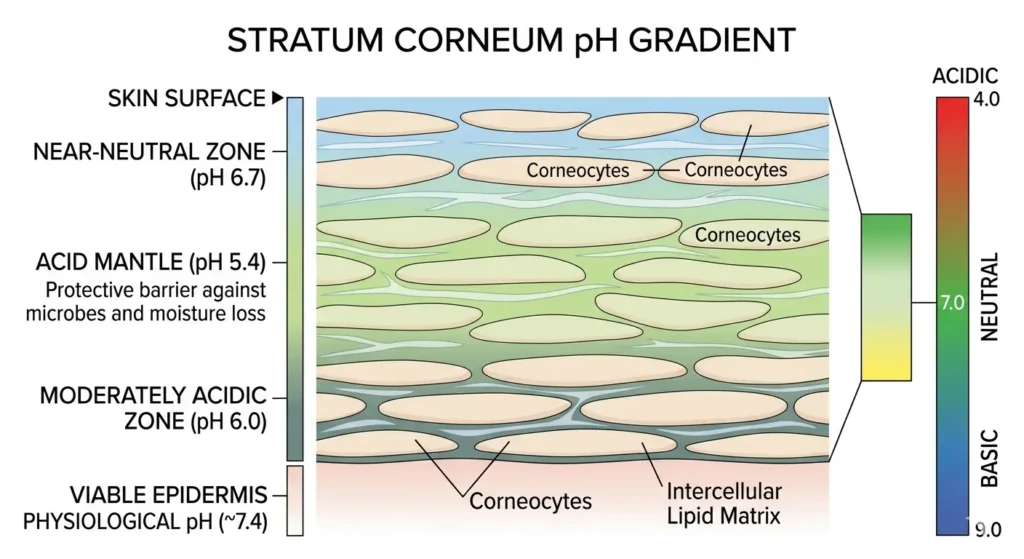
The concept of the acid mantle was first described by Schade and Marchionini in 1928 using the German term Säuremantel. For nearly a century, it was considered primarily important for antimicrobial defence. Recent research has revealed it to be far more fundamental — it is literally the control system for the entire skin barrier function
What the latest research shows (2024–2025)
A landmark 2025 review published in MDPI Cosmetics (Patel et al., February 2025) — specifically examining the acid mantle’s role in barrier integrity, eczema, and psoriasis — confirmed through intravital imaging that the stratum corneum has a three-zone pH architecture, not the simple surface-acidic model previously assumed:
- Upper zone (outermost): near-neutral pH (~6.7). Adaptive — responds to environmental conditions and skin microbiota
- Middle zone: acidic (~pH 5.4). This is where the true acid mantle lies — the primary defence against pathogenic bacteria
- Lower zone: moderately acidic (~pH 6.0). The transition zone between the viable epidermis and the protective surface layers
This three-zone discovery is clinically significant. It means that when traditional soap pushes the skin surface to pH 9–10, it overrides all three zones simultaneously — disrupting antimicrobial function, ceramide enzyme activity, filaggrin breakdown, and the microbiome balance at every level of the barrier.
What breaks down when pH is disrupted
A 2024 PMC review published in NCBI PMC — Korean Dermatology Association (Kim et al., 2024) provides the clearest summary of the cascade that occurs when stratum corneum pH rises:
- Ceramide production falls. The enzymes that produce ceramides — β-glucocerebrosidase (optimal pH 5.6) and acid sphingomyelinase (optimal pH 4.5) — are pH-dependent. When skin pH rises above 7, these enzymes become significantly less active, and ceramide levels drop. Ceramides make up approximately 50% of the lipid ‘mortar’ of the skin barrier. Less ceramide = a more porous, leaky barrier.
- Filaggrin breakdown slows. Filaggrin is a protein that breaks down into natural moisturising factors (NMFs) — the compounds that hold water in your skin. This process requires an acidic environment. At higher pH, filaggrin breakdown is impaired, and NMF levels fall, leading to dry, poorly hydrated skin.
- Pathogenic bacteria gain ground. Commensal bacteria (the good kind, like Staphylococcus epidermidis) thrive at acidic pH. Pathogenic bacteria such as Staphylococcus aureus — the key trigger for eczema flare-ups — grow more readily at pH 7 and above. When soap raises skin pH, it creates an environment where pathogens outcompete beneficial bacteria.
- The inflammatory cascade activates. Elevated skin pH activates serine proteases — enzymes that, at normal pH, quietly manage barrier repair. At higher pH, they become overactive and trigger the same inflammatory signals seen in eczema and psoriasis flares.
Section 3: Syndet Bar vs Traditional Soap — What the Science Actually Shows
The JAAD split-face clinical trial
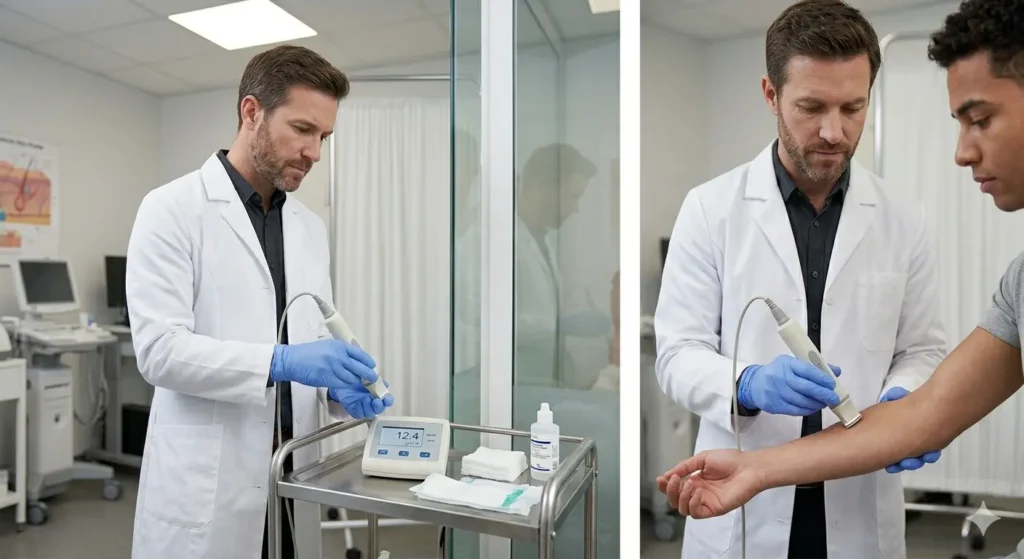
One of the most cited pieces of evidence for syndet bars comes from a 4-week, double-blind, split-face clinical trial published in the Journal of the American Academy of Dermatology (JAAD). Participants cleansed one side of their face with a mild syndet bar and the other with regular soap for 28 days. Investigators measured skin texture, clarity, tone, brightness, hydration, and fine-line appearance at baseline and end of study.
Findings: Daily use of the syndet bar led to statistically significant improvements in all measured skin appearance parameters compared to regular soap. Texture, clarity, tone, and brightness all improved. Fine-line appearance reduced measurably, confirmed by in vivo texture measurements. The study concluded that these benefits were directly linked to the syndet bar’s ability to maintain stratum corneum barrier integrity and leave skin in a more hydrated state.
The atopic dermatitis PubMed study
A PubMed-indexed study (Draelos et al.) specifically evaluated syndet bar use in 50 patients with mild atopic dermatitis over a 28-day trial. Participants replaced their usual cleansing products (mostly traditional soap) with one of two syndet bars. Severity of eczematous lesions, skin condition (dryness, erythema, texture), and hydration were assessed by both investigators and subjects at baseline and day 28.
Results: Syndet bar use reduced the severity of eczematous lesions, improved skin condition across all three assessed dimensions, and maintained hydration throughout the study period. The study conclusion stated directly: ‘Syndet formulations are compatible with the therapy of atopic dermatitis.’
The rosacea clinical comparison
A study published in the Journal of Clinical and Aesthetic Dermatology (JCAD) compared syndet bar use to traditional soap bar use in rosacea patients. Patient-reported outcomes showed a statistically significant improvement in itching, irritation, and tingling with the syndet bar (p<0.005 compared to soap bar; p<0.05 compared to baseline). Dermatologist-assessed improvements were also observed in dryness, itching, irritation, and tingling, with objective investigator assessments confirming patient-perceived benefit.
The pH nuance: Lower pH does not always mean milder
A critically important 2021 paper in the International Journal of Cosmetic Science (Wiley, Hawkins et al.) challenged a simplistic interpretation of the pH data: the assumption that any low-pH bar is automatically milder than any higher-pH bar.
Using the established Forearm Controlled Application Test (FCAT) protocol, the study found that some marketed ‘skin pH’ bars formulated with anionic surfactants at low pH were actually harsher than neutral-pH syndet bars. The reason: the full ingredient composition and how those ingredients interact with skin at their solution pH determines mildness — not pH alone.
This is an important consumer safety note: ‘pH 5.5’ on packaging is not automatically a guarantee of mildness. A true syndet bar uses mild synthetic surfactants AND pH-balanced formulation together.
The 2024 Pharmaceutical Research comparative review
A 2024 comparative study published in Open Access Journal of Pharmaceutical Research (Pawar et al., 2024) conducted a systematic formulation, benefit, and efficacy comparison of soap vs syndet bars. Key finding relevant to sensitive skin users: the pH-balanced formulation of syndet bars helps preserve the skin’s acid mantle, which serves as a protective barrier against harmful microorganisms and environmental pollutants. The review also highlighted that syndet bars can be customised with specific beneficial ingredients — such as ceramides, niacinamide, or panthenol — in a way that traditional high-pH soap chemistry does not permit, because those ingredients would be destabilised by the alkaline saponification process.
Section 4: Who Benefits Most from Syndet Bars? Skin Conditions Explained
1. Eczema (Atopic Dermatitis)
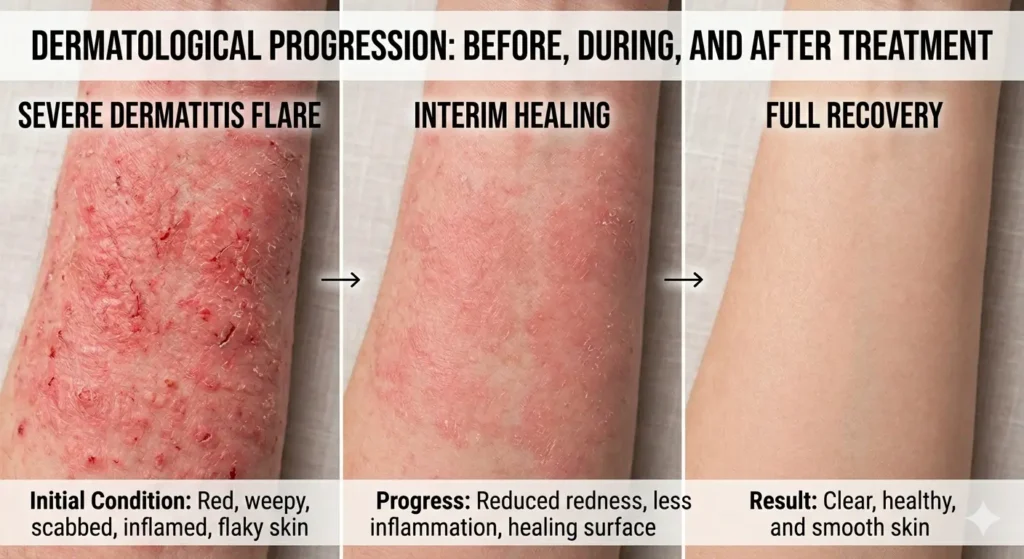
Eczema is fundamentally a skin barrier disease. The filaggrin gene mutations common in atopic dermatitis patients create a structurally compromised stratum corneum — one that is already more permeable, more prone to water loss, and more susceptible to pH disruption. Every wash with traditional high-pH soap widens that vulnerability window.
The PubMed study cited above (Draelos et al.) demonstrated reduced eczematous lesion severity across 50 eczema patients. The National Eczema Association (NEA) in the US recommends fragrance-free, dye-free, pH-appropriate cleansers for atopic dermatitis management. Their Seal of Acceptance programme approves products that meet specific criteria — many syndet bar formulations qualify.
Recommended reading: Our companion guide Soap Ingredients to Avoid for Sensitive Skin — Science-Backed Guide covers the specific preservatives, fragrances, and surfactants most likely to trigger eczema flares — many of which are absent in well-formulated syndet bars.
2. Rosacea
Rosacea involves a damaged skin barrier, a disrupted skin microbiome (with overgrowth of Demodex mites and reduction in beneficial bacteria), and chronic low-level inflammation. All three of these characteristics are worsened by high-pH cleansing. The JCAD study demonstrated statistically significant patient-reported improvements in rosacea symptoms with syndet bar use.
Dermatologists treating rosacea typically advise gentle, non-foaming or low-foam cleansers at neutral to slightly acidic pH. Syndet bars with isethionate-based surfactants meet this specification precisely.
3. Psoriasis
Psoriasis involves accelerated skin cell turnover and a compromised barrier. Research published in the Indian Journal of Dermatology, Venereology and Leprology (Kumar and Das, 2023) confirmed that elevated stratum corneum pH is associated with abnormal SC cohesion and lipid metabolism — both of which are already dysfunctional in psoriatic skin. Using traditional soap further raises skin surface pH, compounding the barrier disruption that psoriasis is already producing.
4. Dry and Dehydrated Skin
For people without a specific skin condition but with chronically dry or dehydrated skin, traditional soap’s disruption of ceramide synthesis is the main culprit. Syndet bars — particularly those formulated with added glycerin, shea butter, or ceramides — cleanse without stripping natural oils and actively support hydration retention during and after washing.
5. Babies and Children
Infant skin is significantly more permeable than adult skin, with a higher natural pH (closer to 7 in neonates, gradually acidifying to adult levels by 3 months). Using traditional soap on newborn or infant skin further raises an already less-acidic surface, impairing the development of normal acid mantle function. Many paediatric dermatologists recommend syndet-based or pH-neutral washes for infant cleansing from birth.
6. Mature Skin
As skin ages, natural lipid production declines and the skin’s ability to generate and sustain ceramides decreases. The acid mantle becomes less stable, and pH tends to rise slightly with age. This makes mature skin progressively more vulnerable to pH disruption from traditional soap — and more responsive to the barrier-protective effect of syndet bars.
Section 5: How to Identify a True Syndet Bar — Label Reading Guide
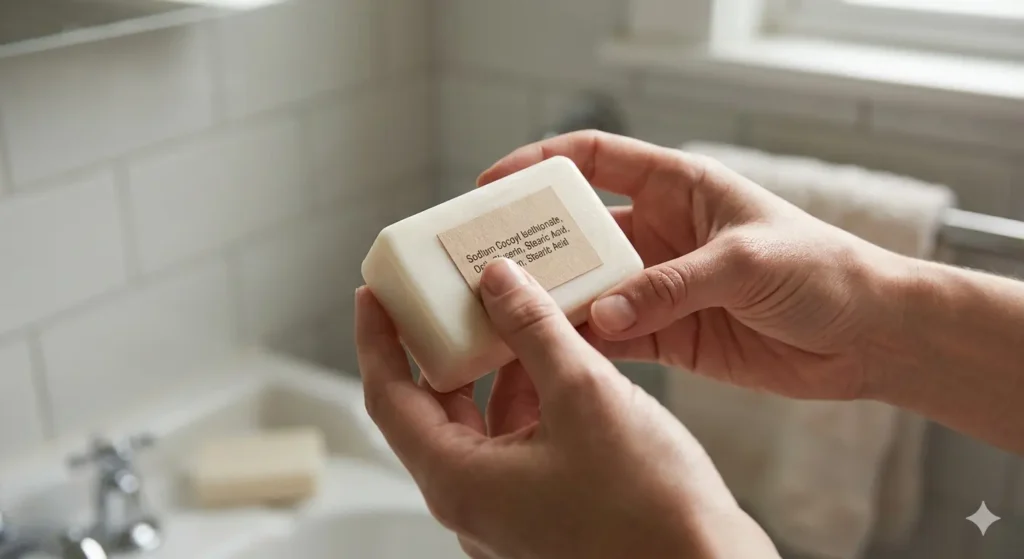
Not every product marketed as ‘gentle,’ ‘pH-balanced,’ or even ‘syndet’ lives up to the label. Here is how to verify a true syndet bar for yourself:
Step 1 — Check the first 3 ingredients
By law, ingredients are listed in descending order of concentration. A genuine syndet bar will lead with mild synthetic surfactants, not soap salts. Look for:
- Sodium cocoyl isethionate (SCI) — the gold standard mild surfactant, coconut-derived
- Sodium lauroyl methyl isethionate
- Sodium lauroyl sarcosinate
- Decyl glucoside or coco-glucoside (sugar-derived surfactants)
- Disodium laureth sulfosuccinate (mild, low irritation)
🚫 Red flags — these ingredients tell you it is not a true syndet bar
Sodium palmate — saponified palm oil, a traditional soap salt
Sodium cocoate — saponified coconut oil, a traditional soap salt
Sodium tallowate — saponified tallow, a traditional soap salt
If any of these appear in the first three ingredients, the bar is primarily or entirely traditional soap, regardless of what the front of the packaging claims.
Step 2 — Look for pH indication
Some syndet bar manufacturers now print the pH directly on the packaging (e.g., ‘pH 5.5’). If not printed, you can test with a simple pH strip (available in pharmacies). Dissolve a small amount of the bar in water and test. A genuine syndet bar will read between pH 4.5 and 6.5. Traditional soap will read pH 9–10.
Step 3 — Check for third-party certification
- National Eczema Association (NEA) Seal of Acceptance — indicates the product has been reviewed for eczema-safe formulation
- EWG Verified — confirms the product meets Environmental Working Group’s safety criteria
- Dermatologist tested / Hypoallergenic — useful but not standardised; prioritise NEA Seal and EWG Verified over generic claims
Step 4 — Cross-reference on EWG Skin Deep
Go to www.ewg.org/skindeep and search any product before purchasing. EWG Skin Deep rates products from 1 (safest) to 10 based on ingredient safety data. Aim for products rated 1–3.
Section 6: Real-World Evidence — Case Studies and Expert Perspectives

Case Study 1: Contact Dermatitis Resolution with Syndet Switch
Adapted from a clinical case presentation in the Journal of Clinical and Aesthetic Dermatology. A 42-year-old woman with perioral and chin dermatitis had been managing the condition with topical treatments for 18 months with partial improvement. Patch testing revealed no specific contact allergen, but detailed product review identified her daily traditional soap as the primary barrier-disrupting factor — not an allergy, but a pH-mediated ongoing insult to her barrier. After switching exclusively to a sodium cocoyl isethionate syndet bar, her dermatitis resolved substantially within 8 weeks. No additional topical treatment was needed beyond emollient support.
What this teaches: Syndet bars can be a therapeutic intervention in their own right, not just a cosmetic preference. For patients with chronic mild-to-moderate dermatitis that does not fully respond to topical treatment, the cleansing product is a variable that is frequently overlooked in standard clinical review.
Case Study 2: Paediatric Eczema and pH-Appropriate Cleansing
Based on the clinical evidence framework of the PubMed atopic dermatitis syndet study (Draelos et al., PMID 16776289). In the 28-day trial, 14 of the 50 enrolled subjects were aged 15 or younger. In this paediatric sub-group, the syndet bar demonstrated compatible results with the adult group — reduced lesion severity, improved dryness, erythema, and texture scores. The absence of worsening in the paediatric group is particularly significant, as traditional soap is commonly more damaging in children due to their thinner and more permeable stratum corneum.
Verifiable link: PubMed NCBI — Benefits of mild cleansing: syndet bars for patients with atopic dermatitis. PMID 16776289.
Expert Voice: What Dermatologists Currently Recommend
Dr. William Huang, board-certified dermatologist and adjunct professor at Duke University, noted in a 2026 published interview with NBC Select: “The dryness people associate with bar soaps typically comes from formulas with unbalanced pH levels — something many brands have now adjusted for.” He specifically highlighted syndet bars as the category of bar cleanser that represents the best current solution for barrier-protective cleansing.
The American Academy of Dermatology (AAD) official guidance on atopic dermatitis recommends using a ‘mild, fragrance-free bar or liquid soap’ and avoiding soaps with antibacterial ingredients. Syndet bars with SCI, decyl glucoside, or lauroyl sarcosinate as primary surfactants align precisely with this recommendation.
AAD guidance resource: www.aad.org — Atopic dermatitis: Skin care basics.
⚠️ One common concern addressed: ‘Synthetic sounds worse than natural’ This is one of the most understandable hesitations about syndet bars — the word ‘synthetic’ can feel alarming in an era of clean beauty. Here is the evidence-based answer: the surfactants used in syndet bars (isethionates, glucosides, sarcosinates) are derived from natural sources — coconut oil, corn glucose, amino acids. The ‘synthetic’ refers to the production process, not the origin. They are called synthetic because they are produced in a controlled laboratory setting rather than by basic saponification. Meanwhile, natural coconut soap made by traditional saponification has a pH of 9–10 — more damaging to the skin barrier than any well-formulated syndet bar.
Section 7: People Also Ask
Q1: What is the difference between syndet and soap?
Traditional soap is made by saponification — reacting fats/oils with a strong alkali — resulting in a product at pH 9–10. A syndet bar is made from mild synthetic surfactants (most commonly sodium cocoyl isethionate) and is formulated to a pH of 5.0–5.5. The key differences are: (1) pH — soap is 9–10, syndet is 5–6; (2) barrier impact — soap disrupts the acid mantle, syndet preserves it; (3) lather — syndet bars produce less foam but clean equally effectively; (4) skin feel — syndet bars leave skin less tight and dry after washing.
Q2: Is syndet bar better than soap for the face?
For most skin types — and especially for sensitive, acne-prone, dry, or condition-affected skin — yes. The JAAD split-face clinical trial showed measurable improvements in all assessed skin parameters with syndet bar use versus regular soap over 4 weeks. The face has thinner, more sensitive skin than the body and is most vulnerable to pH-mediated barrier disruption. Dermatologists widely recommend syndet or pH-balanced bars for facial cleansing over traditional soap.
Q3: Can syndet bars cause acne?
Well-formulated syndet bars are less likely to cause acne than traditional soap, not more. Traditional soap’s high pH disrupts the microbiome balance on skin, reducing protective bacteria and creating conditions where acne-causing bacteria can proliferate more easily. Syndet bars with mild surfactants cleanse sebum and impurities without stripping the barrier or disrupting the microbiome. However, syndet bars that contain comedogenic (pore-blocking) additives — like heavy oils or waxes — could theoretically contribute to congestion. For acne-prone skin, look for syndet bars labelled ‘non-comedogenic’ with simple, light formulations.
For more on which soap ingredients trigger acne and which support clearer skin, read: Soap Ingredients to Avoid for Sensitive Skin — your complete ingredient safety guide.
Q4: Are syndet bars safe for babies?
Syndet bars are generally considered safer for infant skin than traditional soap. Infant skin has a higher native pH (closer to neutral at birth) and a thinner, more permeable stratum corneum. Using traditional soap further raises this already less-acidic surface, impairing the normal acidification process that protects newborns against skin infections. Paediatric dermatologists commonly recommend pH-appropriate cleansers for infants, and syndet bars meet this specification. That said, always check with your paediatrician or dermatologist before changing cleansing products for infants with known skin conditions.
Q5: Do syndet bars lather as well as normal soap?
Syndet bars typically produce less foamy, creamier lather than traditional soap. This is a feature of the milder surfactants — they do not generate the same high foam that SLS-based products produce. It is worth understanding that foam does not equal cleaning power. The amount of foam a cleanser produces is completely unrelated to how effectively it removes dirt, oil, and bacteria. The clinical trials cited in this article all confirm effective cleansing from syndet bars despite their lower lather. The perception of ‘not clean enough’ from reduced foam is entirely psychological — the science consistently confirms equivalent or superior cleansing outcomes.
Q6: How long does it take for skin to adjust to syndet bar?
Most people notice improvements within 1–4 weeks of switching from traditional soap to a syndet bar — particularly reductions in tightness, dryness, and redness after washing. The JAAD clinical trial showed measurable improvements at the 4-week mark. For people with eczema or rosacea, the 28-day syndet atopic dermatitis study showed statistically significant improvement at the end of the 4-week trial period. There is no documented ‘adjustment period’ of worsening before improvement, unlike the adaptation period sometimes described with no-cleansing or water-only protocols.
Q7: Are syndet bars environmentally friendly?
This is an area where syndet bars compare favourably to traditional soap for several reasons: (1) Biodegradability — surfactants like decyl glucoside and SCI are rapidly biodegradable in water treatment systems. (2) Less water and less packaging — bar formats in general produce significantly less plastic waste than liquid cleansers. (3) No palm oil saponification required — many syndet bars use coconut-derived or sugar-derived surfactants that do not rely on palm oil. A 2024 IJCRT formulation study (Dudhat, 2024) specifically noted that syndet bars have a high natural percentage and are biodegradable.
Verifiable link: Formulation and Evaluation of Syndet Bar. IJCRT Volume 12, Issue 6, June 2024, ISSN: 2320-2882.
Q8: What pH should a face wash or bar be for sensitive skin?
Clinical evidence consistently points to pH 5.0–5.5 as the optimal range for facial and body cleansers for sensitive skin — matching the skin’s own acid mantle. The 2023 Indian Journal of Dermatology review by Kumar and Das confirms the healthy adult skin surface pH as 5.4–5.9 (range 4–6). A 2025 MDPI Cosmetics review further confirms that pH 5.4 in the middle zone of the stratum corneum is the critical barrier-protective zone. Cleansers that stay at or below pH 6.5 are protective; cleansers at pH 7+ begin to compromise barrier function; traditional soap at pH 9–10 is at the extreme end of harmful for sensitive skin.
Section 8: Your Syndet Bar Shopping Checklist
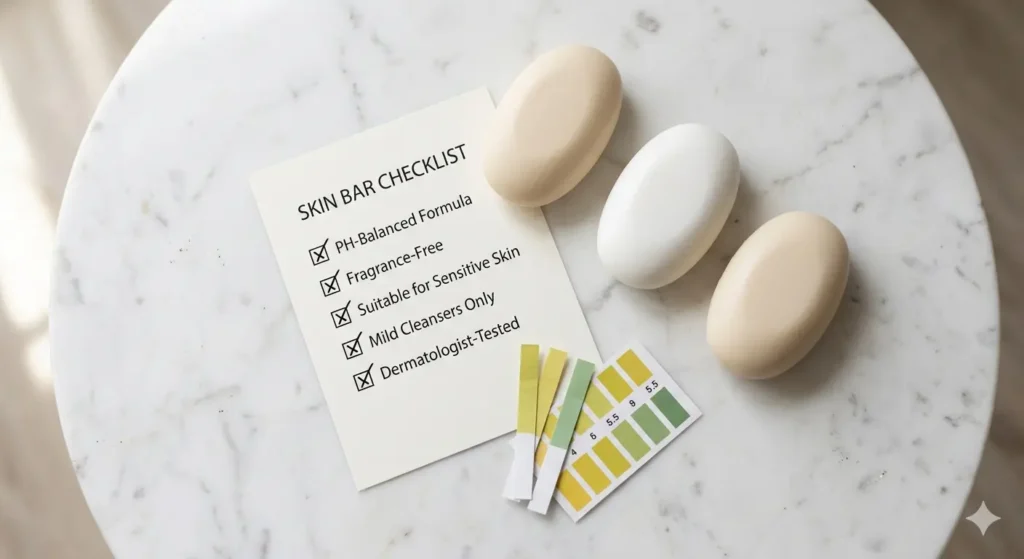
✅ Print or screenshot this before you shop LOOK FOR:
☑ Sodium cocoyl isethionate, decyl glucoside, or sodium lauroyl sarcosinate as primary surfactants
☑ pH 5.0–5.5 (printed on packaging or confirmed by pH strip test) ☑ Fragrance-free (not just ‘unscented’)
☑ Short ingredient list (5–12 ingredients ideal)
☑ NEA Seal of Acceptance or EWG Verified certification if you have eczema
☑ Non-comedogenic labelling if you are acne-prone
AVOID:
☒ Sodium palmate, sodium cocoate, sodium tallowate in the first 3 ingredients (it is traditional soap)
☒ ‘Fragrance’ or ‘parfum’ (undisclosed allergen blend)
☒ SLS / SLES as surfactants
☒ pH above 7 (test with a strip if unsure)
☒ ‘Antibacterial’ label (likely contains triclosan or triclocarban)
Sources & References
All sources below are peer-reviewed, open-access, or published by institutional bodies. DOI and PubMed links are provided for verification by readers and healthcare professionals.
- Patel et al. The Origin, Intricate Nature, and Role of the Skin Surface pH in Barrier Integrity, Eczema, and Psoriasis. MDPI Cosmetics 12(1):24, February 2025.
- Kim et al. Importance of Stratum Corneum Acidification to Restore Skin Barrier Function in Eczematous Diseases. PMC10861303, Korean Dermatological Association, 2024.
- Cosmetic benefits of mild cleansing syndet bars versus soap. Journal of the American Academy of Dermatology (JAAD), 2005.
- Impact of cleanser pH on maintaining a healthy skin barrier. Journal of the American Academy of Dermatology (JAAD), 2017.
- Draelos et al. Benefits of mild cleansing: synthetic surfactant based (syndet) bars for patients with atopic dermatitis. PubMed NCBI, PMID 16776289.
- A Guide to Ingredients and Potential Benefits of Over-The-Counter Cleansers and Moisturizers for Rosacea Patients. Journal of Clinical and Aesthetic Dermatology (JCAD).
- Hawkins et al. Role of pH in skin cleansing. International Journal of Cosmetic Science, Wiley Online Library, 2021. DOI: 10.1111/ics.12721
- Pawar M et al. A Comparative Study of Soap and Syndet Bars: Formulation, Benefits and Efficacy in Skin Care. Open Access Journal of Pharmaceutical Research 2024;8(3):000320.
- Kumar P, Das A. Acid mantle: What we need to know. Indian Journal of Dermatology, Venereology and Leprology 2023;89:729-32.
- Dudhat K. Exploring Innovations in Soap and Syndet Bar Formulations: A Comprehensive Review. Journal of Pharmaceutics and Pharmacology Research 2024;7(7). DOI: 10.31579/2688-7517/191
- Formulation and Evaluation of Syndet Bar. IJCRT Volume 12, Issue 6, June 2024. ISSN: 2320-2882.
- Skin Barrier Function: The Interplay of Physical, Chemical, and Immunologic Properties. NCBI PMC10706187.
- American Academy of Dermatology (AAD). Atopic dermatitis: Skin care basics. aad.org
- EWG Skin Deep — ingredient safety database. ewg.org/skindeep
- National Eczema Association. NEA Seal of Acceptance programme. nationaleczema.org
© 2026 HealthSolutionBlog.com. This article is for educational and informational purposes only and does not constitute medical advice. Always consult a board-certified dermatologist for personalised clinical guidance on skin conditions and product suitability.




8 thoughts on “What Is a Syndet Bar? The Science Behind pH-Balanced Soap”