

You reach for soap every single day — and for most people, that habit feels completely safe. But if your skin is sensitive, reactive, eczema-prone, or chronically dry, the ingredients hiding inside that bar or bottle may be quietly making things worse. Every time you wash, your skin is exposed to a complex mix of chemicals, surfactants, preservatives, and fragrances. For sensitive skin, the wrong combination of these does not just irritate — it can break down your skin’s protective barrier, trigger contact dermatitis, and cause flare-ups that can last for weeks.
The problem is not that you are not careful. The problem is that ingredient labels are designed for chemists, not consumers. Terms like ‘sodium lauryl sulfate,’ ‘DMDM hydantoin,’ and ‘methylisothiazolinone’ appear on products marketed as ‘gentle’ or ‘natural’ — and most people have no idea what they mean or what they do to skin tissue.
This guide explains — in plain, easy-to-understand language — which soap ingredients to avoid, why they are harmful, what the latest research says, and exactly how to read a label so you can protect your skin with confidence. Whether you have just started noticing reactions or have been dealing with skin issues for years, this guide is written for you.
⚡ Quick Answer (for readers in a hurry) The top soap ingredients to avoid for sensitive skin are: synthetic fragrance/parfum, sodium lauryl sulfate (SLS), parabens, DMDM hydantoin (a formaldehyde releaser), triclosan, methylisothiazolinone (MI), propylene glycol, and alcohol. Each of these has peer-reviewed evidence linking it to skin barrier disruption, contact dermatitis, or systemic health concerns. Keep reading for the full breakdown of each — including consequences and how to find safer alternatives.
Section 1: What Does ‘Sensitive Skin’ Actually Mean? (And Why Ingredients Matter More for You)
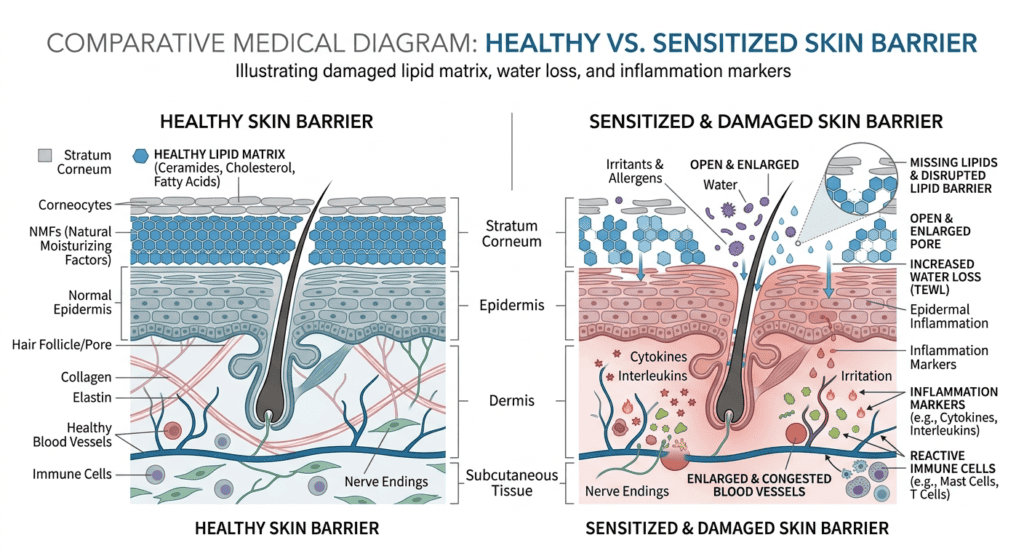
Before we list the ingredients to avoid, let us understand why sensitive skin reacts differently. Your skin has a protective outer layer called the stratum corneum — think of it as a brick wall where skin cells are the bricks and natural lipids (oils) are the mortar filling the gaps. This layer keeps moisture inside and irritants outside.
Sensitive skin has a compromised version of this barrier. The mortar is thinner, the bricks are less tightly packed, and the wall is easier to penetrate. When harsh chemicals from soap enter through these gaps, they trigger an inflammatory immune response — the redness, itching, stinging, or rash you experience is your body fighting back.
Key fact: A landmark 2022 review in Molecules (MDPI) by Mijaljica, Spada, and Harrison confirmed that even short-term exposure to high-pH soaps (pH 8.5–11) causes measurable barrier disruption, lipid dissolution, and pH alteration in sensitive skin. The effects can persist for several hours after a single wash.
📋 You likely have sensitive skin if you experience: Redness or flushing after using new products | Stinging or burning when applying cleansers | Dry, flaky patches that appear after washing | Itching without a visible rash | Frequent breakouts after trying new soaps | Skin tightness that lingers after bathing
Section 2: The 8 Soap Ingredients Most Harmful to Sensitive Skin (Backed by Research)
Below, each ingredient is explained in simple terms, followed by what the scientific evidence shows, the consequences for your skin, and how to identify it on a label. Where research is mixed or inconclusive, we say so honestly.
1. Sodium Lauryl Sulfate (SLS) and Sodium Laureth Sulfate (SLES)
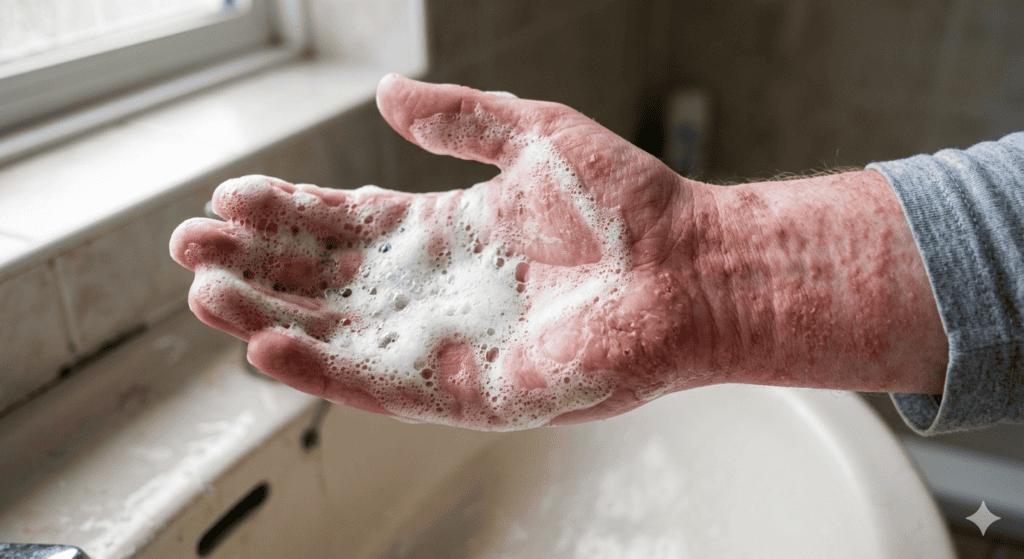
What is it?
SLS and SLES are surfactants — they are the reason your soap lathers into foam. They are cheap, highly effective cleansers that lift dirt and oil. You will find them in the majority of mass-market bar soaps, liquid body washes, face washes, and even toothpastes.
What does the science say?
A peer-reviewed study published in MDPI Cosmetics (2021) by Leoty-Okombi et al. applied a 0.5% SLS solution to the skin of volunteers with reactive skin under a 24-hour patch test. Results showed a measurable increase in skin redness, a decrease in stratum corneum hydration, and a significant breakdown of the skin barrier function. Crucially, the study also found that SLS disrupted the skin’s microbiome — the delicate community of protective bacteria on your skin — causing a shift toward potentially pathogenic organisms.
A separate study in the Journal of Investigative Dermatology found that SLS exposure altered the mRNA expression of keratinocyte differentiation markers (the genes that help repair your skin barrier), with effects lasting up to 7 days after a single 24-hour exposure.
⚠️ Consequence for Sensitive Skin Even brief or low-level SLS exposure can strip your skin’s natural oils, raise skin pH, and disrupt the bacterial balance that keeps your skin healthy. For people with eczema, rosacea, or psoriasis, SLS is a known and documented trigger for flare-ups. Regular use on sensitive skin can create a cycle where your barrier never fully recovers between washes.
How to spot it on a label
- ‘Sodium lauryl sulfate’
- ‘Sodium laureth sulfate’
- ‘SLS’ or ‘SLES’
- ‘Ammonium lauryl sulfate’ (similar effect)
✅ Fix: What to use instead
Look for soaps with gentle surfactants such as: cocamidopropyl betaine (coconut-derived), decyl glucoside (sugar-based), or sodium cocoyl isethionate (mild fatty acid). These clean effectively without stripping the barrier. Syndet bars (synthetic detergent bars) formulated with these alternatives are recommended by many dermatologists for sensitive skin.
Read more: Types of Soap and Their Benefits for Skin — Complete Guide
2. Synthetic Fragrance (Listed as ‘Fragrance,’ ‘Parfum,’ or ‘Flavor’)
What is it?
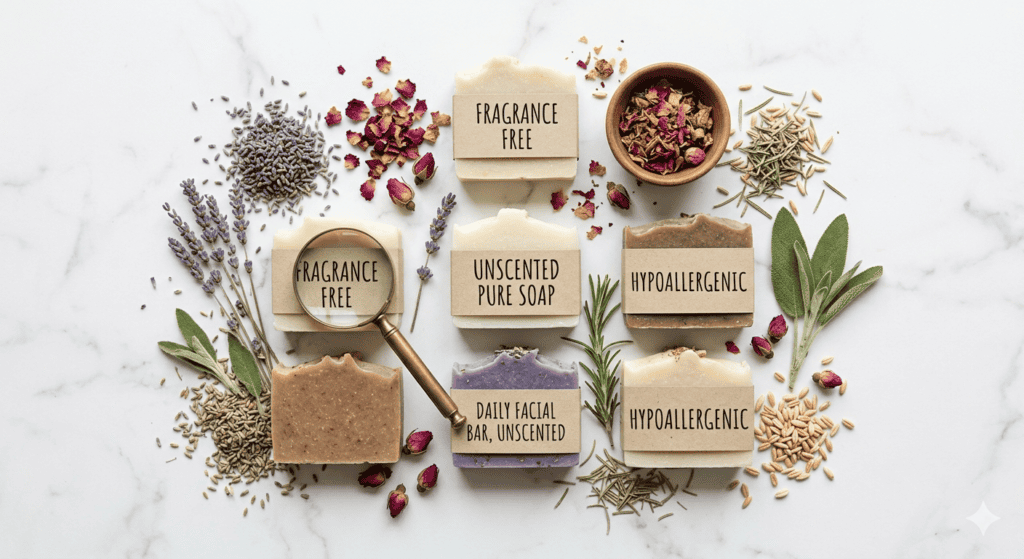
‘Fragrance’ on a soap label sounds simple. It is anything but. Under US and EU labelling regulations, the word ‘fragrance’ or ‘parfum’ is a trade secret umbrella term that can legally conceal hundreds of individual chemicals — many of which are undisclosed allergens, hormone disruptors (phthalates), and contact sensitisers. A single fragrance formulation can contain up to 3,000 different chemical compounds.
What does the science say?
A 2023–2024 review published in Cutis (American Medical Dermatology Journal) by Scheman and Adler — two leading researchers in the field of contact dermatitis — confirmed that fragrances are among the most prevalent contact allergens identified in clinical patch testing. The North American Contact Dermatitis Group’s 2019–2020 data (published in Dermatitis, 2023) found that fragrance mix I and balsam of Peru consistently rank in the top allergen series.
A PMC-published review (2023) in the journal Frontiers in Immunology estimated the population prevalence of fragrance sensitivity at 0.7% to 2.6% in the general population, with patch-test positive rates of 5–11% in dermatology clinic patients. Critically, the review noted that at least half of all fragrance-allergic individuals do not associate their symptoms with fragrance exposure — meaning millions of people are suffering reactions without knowing the cause.
A 2021 PMC study (JAMA Dermatology) found that personal-care-product related contact dermatitis increased 2.7-fold between 1996 and 2016, with fragrances as a primary driver of this increase.
⚠️ Real Story: The ‘Natural Fragrance’ Trap Many brands market soaps as ‘naturally scented’ with lavender, rose, or citrus. However, natural does not mean non-allergenic. Limonene and linalool — naturally occurring compounds in citrus and lavender — are among the most common fragrance allergens identified in clinical patch testing (IVDK data, 2018–2020). A patch test, not the word ‘natural,’ is the only reliable way to confirm you are not allergic to a specific scent compound.
How to spot it on a label
- ‘Fragrance’ or ‘parfum’
- ‘Natural fragrance’ (still a blend of undisclosed chemicals)
- ‘Essential oil blend’ (can contain limonene, linalool — known allergens)
- ‘Flavour’ (in lip or facial products)
| ✅ Fix Choose products labelled ‘Fragrance-Free’ — not ‘Unscented.’ ‘Unscented’ products may still contain masking fragrances to neutralise the chemical smell. Truly fragrance-free products will not list any form of fragrance on the ingredient list. If you love scent, test with a tiny patch on the inner arm before applying to the face or body. |
3. Parabens (Methylparaben, Propylparaben, Butylparaben)
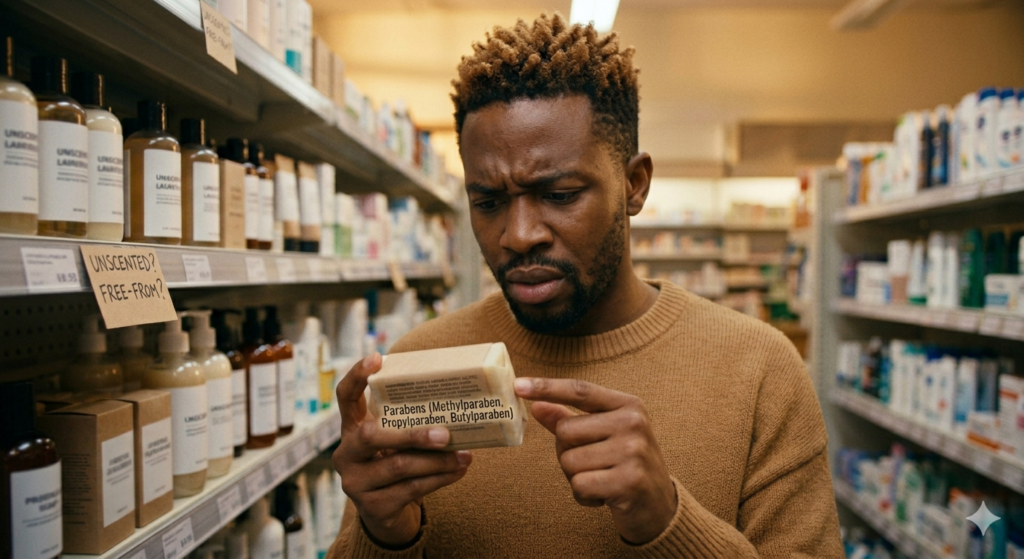
What is it?
Parabens are preservatives that prevent soap and cosmetic products from growing mould, bacteria, and yeast. They are cheap and highly effective, which is why they have been used in cosmetics since the 1950s. They are absorbed through the skin when you use them.
What does the science say?
A comprehensive 2024 review in the Journal of Dermatology (Lin, Lin, and Maderal, University of Miami) examined the toxicological evidence on parabens in personal care products. The review found that parabens function as endocrine disruptors — they mimic oestrogen in the body. Parabens have been detected in human breast tissue samples, and the review highlighted studies associating paraben exposure with disruption to filaggrin gene expression — the gene responsible for maintaining the skin barrier in atopic (eczema) patients.
A 2017 study in Environmental International found that exposure to phenols and parabens was associated with loss-of-function mutations in the filaggrin gene — meaning they may literally impair your skin’s ability to repair and maintain its own barrier. For someone with eczema, this is clinically significant: it means paraben-containing soaps could be making the underlying cause of eczema worse, not just triggering surface reactions.
A 2023 study in Cells (MDPI) by Głaz et al. assessed the effect of common cosmetic preservatives including parabens on healthy human skin cells in vitro and found statistically significant cytotoxic effects at concentrations found in commercial products.
| ⚠️ Consequence for Sensitive Skin Beyond skin irritation, parabens can contribute to systemic hormonal disruption, particularly with chronic daily use. For sensitive skin specifically, parabens may weaken the filaggrin-dependent barrier — making skin more permeable to other allergens over time. Children with atopic dermatitis are at heightened risk, as studies show higher urinary paraben metabolite levels in children who use emollient-containing personal care products frequently (Overgaard et al., Allergy, 2017). |
How to spot it on a label
- ‘Methylparaben,’ ‘ethylparaben,’ ‘propylparaben,’ ‘butylparaben’
- ‘Isobutylparaben,’ ‘isopropylparaben’
- Any ingredient ending in ‘-paraben’
| ✅ Fix Look for soaps preserved with sodium benzoate (effective, low sensitisation rate), potassium sorbate, or tocopherol (vitamin E). Some cold-process natural soaps are preserved with the soap’s own high pH — a method that does not require synthetic preservatives at all. |
4. DMDM Hydantoin and Other Formaldehyde-Releasing Preservatives
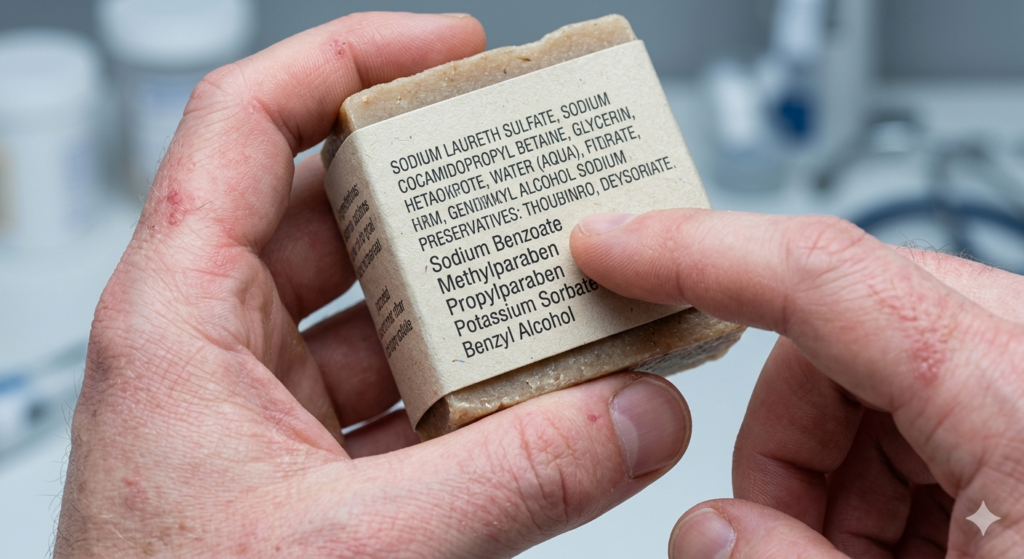
What is it?
DMDM hydantoin (along with quaternium-15, imidazolidinyl urea, and diazolidinyl urea) is a preservative that works by slowly releasing small amounts of formaldehyde to prevent bacterial and mould growth in cosmetic products. Formaldehyde is a known carcinogen and one of the most well-documented contact allergens in dermatology.
What does the science say?
A 2025 study published by Columbia University Mailman School of Public Health, in collaboration with Silent Spring Institute and Black Women for Wellness, found that DMDM hydantoin appeared in roughly 47% of skincare products and 58% of hair products that contained formaldehyde-releasing preservatives. A parallel study by Washington State Department of Ecology (2023) detected formaldehyde levels ranging from 39.2 ppm to 1,660 ppm in body products — with 24 out of 30 tested products exceeding 200 ppm, the concentration at which allergic reactions have been documented.
The Environmental Working Group (EWG) Skin Deep database notes that in the US, approximately 20% of cosmetics and personal care products contain a formaldehyde releaser, and the frequency of contact allergy to these ingredients is significantly higher among Americans compared to European populations — likely because several EU states have banned or restricted these compounds.
As of 2023–2024, California, Oregon, Washington, and Vermont have enacted bans on formaldehyde and certain formaldehyde-releasing preservatives in cosmetics. The FDA proposed a national ban on formaldehyde in hair straighteners in 2023, though it has not yet been enacted as legislation.
| ⚠️ Consequence for Sensitive Skin People exposed to formaldehyde-releasing preservatives can develop a formaldehyde allergy or an allergy to the ingredient itself. Once sensitised, they may react to levels that would not affect non-sensitised individuals. Repeated daily use creates cumulative exposure — small amounts from each product add up across your full skincare routine. For those with eczema or sensitive skin, this cumulative burden can trigger persistent, difficult-to-diagnose contact dermatitis. |
How to spot it on a label
- ‘DMDM hydantoin’
- ‘Quaternium-15’
- ‘Imidazolidinyl urea’
- ‘Diazolidinyl urea’
- ‘Sodium hydroxymethylglycinate’
- ‘2-bromo-2-nitropropane-1,3-diol’ (Bronopol)
| ✅ Fix Use EWG’s Skin Deep (www.ewg.org/skindeep) to search any soap by name and check for formaldehyde releasers before purchasing. Safer preservative alternatives include rosemary extract, vitamin E (tocopherol), and phenoxyethanol (at low concentrations). |
5. Triclosan and Triclocarban
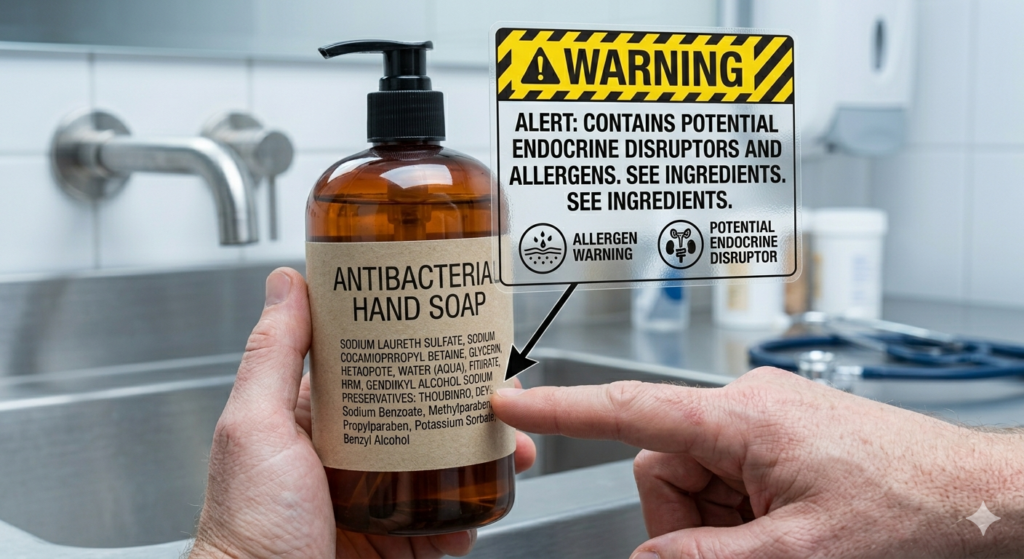
What is it?
Triclosan is an antimicrobial chemical added to ‘antibacterial’ soaps, body washes, and hand sanitisers to kill bacteria. It sounds useful — but the FDA banned it from consumer wash-off products in 2016 after determining there was no proven benefit over plain soap and water, and mounting evidence of harm.
What does the science say?
A 2023 study published in the Journal of Immunotoxicology by researchers at the National Institute for Occupational Safety and Health (NIOSH) and West Virginia University Medical School directly tested triclosan on a reconstructed human epidermis model. The study found that triclosan at 0.05–0.2% concentrations — typical of commercial products — increased epidermal permeability, disrupted the expression of genes responsible for forming the skin barrier, and altered the inflammatory cytokine profile of skin cells. These effects occurred after both single and repeated exposures.
Triclosan has been associated with allergic disease in humans and found to activate the NLRP3 inflammasome (a key driver of inflammation) in skin tissue. Despite the FDA’s 2016 consumer ban, triclocarban — a closely related antimicrobial — remains in some bar soap products in certain markets.
| ⚠️ Consequence for Sensitive Skin Triclosan does not just sit on the surface — it penetrates the skin and disrupts barrier gene expression at a cellular level. For sensitive skin, this means a soap marketed as ‘protective’ and ‘antibacterial’ can actively damage the very barrier you are trying to protect. Additionally, triclosan has been associated with antibiotic resistance — a serious public health concern beyond individual skin health. |
How to spot it on a label
- ‘Triclosan’ (banned in US consumer rinse-off products, but may appear in imported items)
- ‘Triclocarban’
- ‘5-chloro-2-(2,4-dichlorophenoxy)phenol’ (IUPAC name for triclosan)
| ✅ Fix Skip antibacterial soaps entirely for regular handwashing and bathing. The CDC and FDA both confirm that plain soap and water is equally effective for everyday hygiene and does not carry the risks of antimicrobial chemicals. If you need antimicrobial action (e.g., wound care), consult a dermatologist for appropriate medical-grade options. |
6. Methylisothiazolinone (MI) and Methylchloroisothiazolinone (MCI)
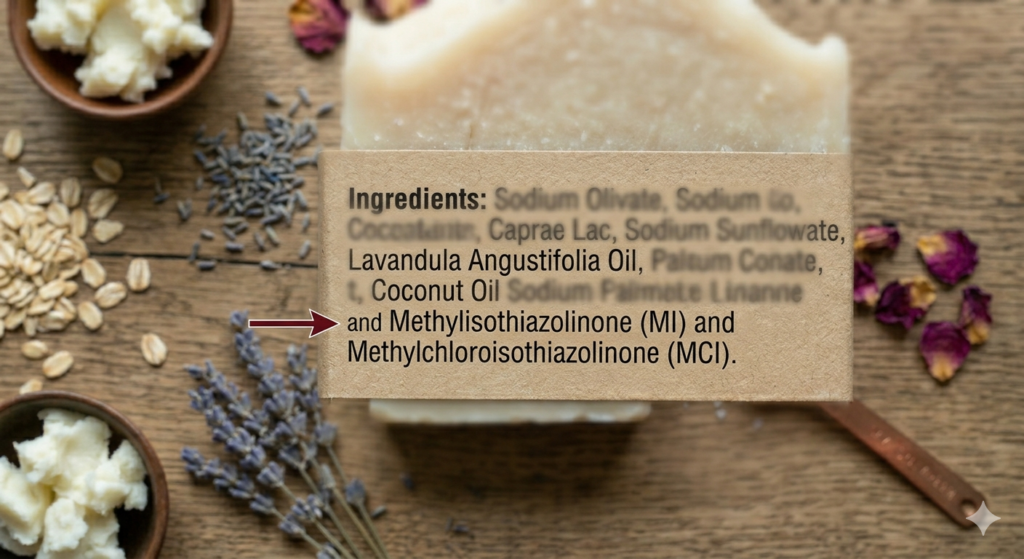
MI and MCI are preservatives used in liquid soaps, shampoos, and body washes. They are extremely effective at low concentrations — which is why they became popular after parabens fell out of favour. Unfortunately, they also became one of the fastest-growing causes of contact dermatitis in Europe and North America.
What does the science say?
A 2025 systematic review and meta-analysis published in the British Journal of Dermatology (Isufi et al., Copenhagen University Hospital) covering 11,593 children patch tested between 2010 and 2024 found that methylisothiazolinone had a pooled contact allergy prevalence of 4.3% in children — making it the sixth most common allergen in that population. This is notable because preservative allergies in children are largely preventable.
The European Scientific Committee on Consumer Safety (SCCS) issued opinions restricting MI in rinse-off cosmetics and effectively advising against its use in leave-on products at any concentration. Several EU countries responded by banning it from leave-on formulations. The North American Contact Dermatitis Group has flagged MI as a consistently positive allergen in annual patch test data.
| ⚠️ Consequence for Sensitive Skin MI and MCI are potent contact sensitisers — meaning a person can be exposed repeatedly without reaction, then suddenly develop a severe allergic response. Once sensitised, even tiny amounts trigger reactions. This is called ‘hapten sensitisation’ and is irreversible. Sensitive skin individuals who use MI-containing liquid soaps daily are at measurable risk of developing this lifelong allergy. |
How to spot it on a label
- ‘Methylisothiazolinone’ or ‘MI’
- ‘Methylchloroisothiazolinone’ or ‘MCI’
- ‘Kathon CG’ (trade name for MI/MCI blend)
| ✅ Fix Check for ‘isothiazolinone-free’ labelling, or use EWG Skin Deep to verify. Better-tolerated preservatives for sensitive skin include ethylhexylglycerin, benzyl alcohol (at concentrations under 1%), and sodium benzoate combined with potassium sorbate. |
7. Propylene Glycol
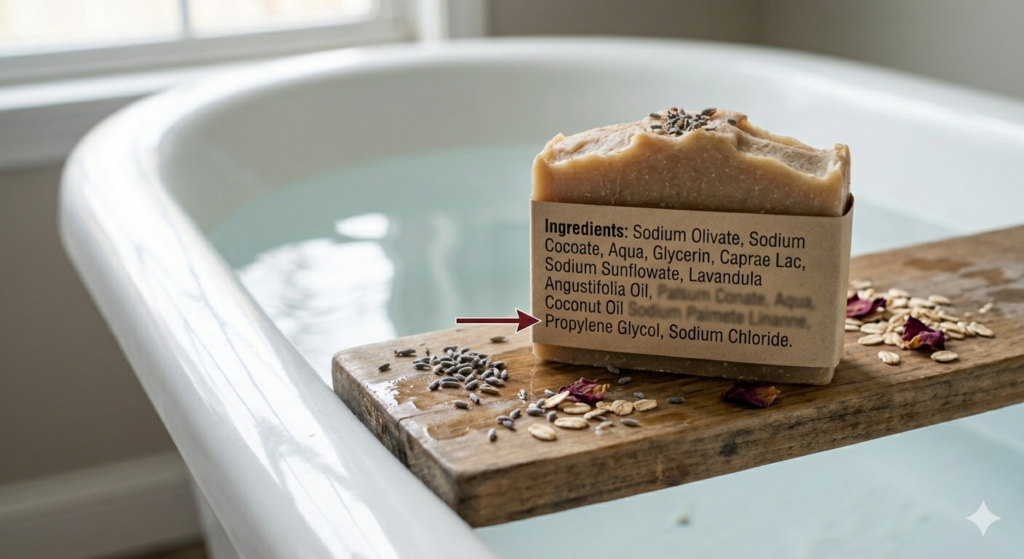
Propylene glycol (PG) is a humectant and solvent found in a vast range of soap and skincare products. It helps ingredients penetrate the skin and keeps products from drying out. It is generally considered safe for most people — but for those with already-compromised sensitive skin, it can be a significant irritant.
What does the science say?
A study published in the Journal of Allergy and Clinical Immunology found that children with atopic dermatitis had measurably elevated urinary propylene glycol metabolite levels, suggesting enhanced skin penetration compared to children without eczema. The ACDS patch test data notes propylene glycol as a relevant allergen in contact dermatitis, particularly when the skin barrier is already disrupted.
A 2023 JACI study by Sung et al. found an association between urinary phthalate and PG metabolite levels and skin barrier dysfunction in children, suggesting that compromised barrier skin absorbs these compounds at higher rates — creating a feedback loop where the ingredient penetrates more easily precisely because the skin is already impaired.
| ⚠️ Nuance: Not Harmful for Most, Risky for Some Propylene glycol is not dangerous for most people at normal concentrations. The risk is specifically for those with: (1) already broken skin barrier (eczema, dermatitis), (2) high-frequency product use (multiple daily applications), or (3) confirmed PG contact allergy (verified by patch test). If you have tested negatively for PG allergy and your skin is not acutely inflamed, this ingredient alone is unlikely to be your trigger. |
How to spot it on a label
- ‘Propylene glycol’ or ‘PG’
- ‘1,2-propanediol’
| ✅ Fix If you suspect PG sensitivity, a dermatologist-administered patch test will confirm it. If positive, seek products with glycerin or butylene glycol as humectants — these are generally better tolerated by sensitive skin. |
8. Denatured Alcohol (Alcohol Denat., SD Alcohol, Isopropyl Alcohol)
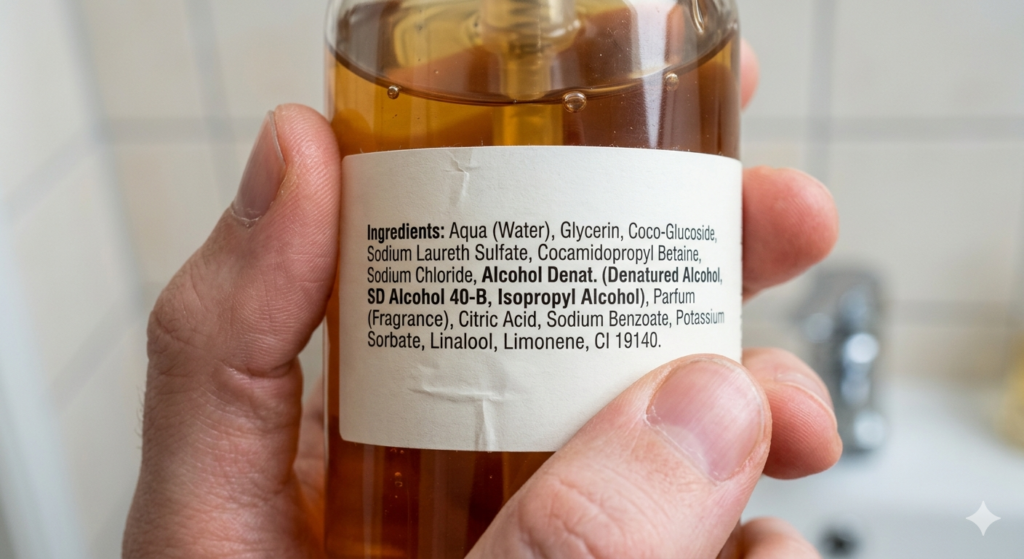
Alcohol in soap and skincare products serves several purposes: it helps ingredients absorb faster, gives a ‘cooling’ sensation, and acts as a preservative. However, when listed high on an ingredient list in wash-off soap, it can be highly drying and barrier-disruptive.
What does the science say?
Research published in the International Journal of Dermatology confirms that alcohol-based formulations applied repeatedly to skin cause transepidermal water loss (TEWL) — the rate at which moisture evaporates through the skin — to increase measurably, indicating barrier compromise. This effect is most pronounced in individuals with pre-existing atopic conditions.
| ⚠️ Important Distinction Not all alcohols are harmful. Fatty alcohols like cetyl alcohol, stearyl alcohol, and cetearyl alcohol are actually beneficial — they are moisturising and help smooth skin. The alcohols to avoid are: alcohol denat., SD alcohol, isopropyl alcohol, ethanol, and benzyl alcohol at high concentrations. These are the drying, irritating varieties. |
How to spot it on a label (harmful types)
- ‘Alcohol denat.’ or ‘denatured alcohol’
- ‘SD alcohol’ (SD alcohol 40, SD alcohol 3-A, etc.)
- ‘Isopropyl alcohol’
- ‘Ethanol’ (when listed in the first half of the ingredient list)
| ✅ Fix For sensitive skin, look for soaps where no alcohol appears in the first 5 ingredients. If you want a light, non-greasy texture, choose formulas with niacinamide, hyaluronic acid, or panthenol for hydration — none of which dry out the skin. |
Section 3: How to Read a Soap Ingredient Label (Step-by-Step for Beginners)
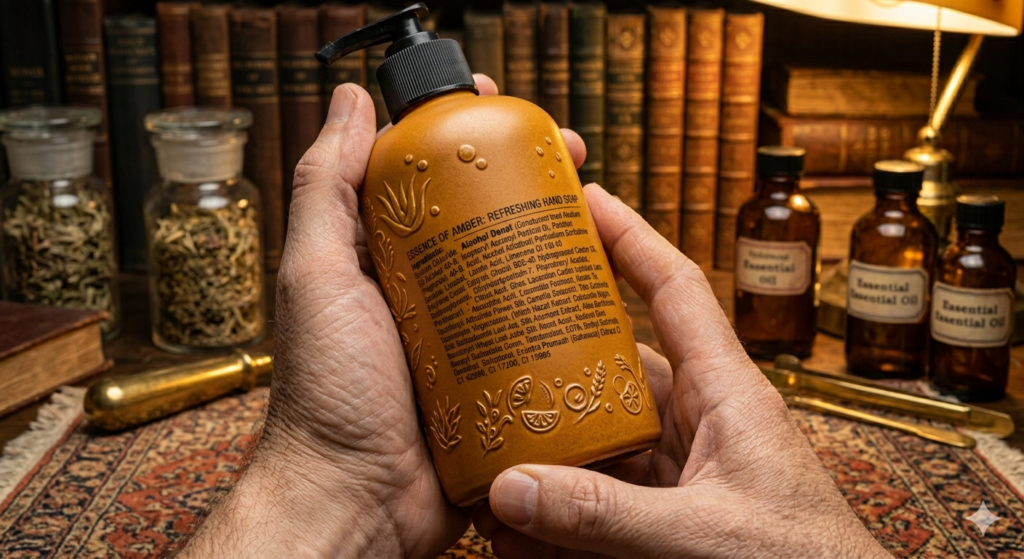
Ingredient lists on soap products follow a standardised international naming system (INCI — International Nomenclature of Cosmetic Ingredients). Ingredients are listed in descending order of concentration — the first ingredient is the most abundant, and the last is present in the smallest amount.
Here is a simple step-by-step process for checking any soap before you buy:
- Look at the first 5 ingredients. These make up the bulk of the product. If SLS or synthetic fragrance is near the top, the product likely has significant levels of these.
- Scan for the 8 ingredients on our avoidance list (SLS, fragrance/parfum, parabens, DMDM hydantoin, triclosan, MI/MCI, propylene glycol, alcohol denat.). If any appear, flag the product.
- Check EWG Skin Deep. Go to www.ewg.org/skindeep and search the product name. EWG rates products from 1 (safest) to 10 and flags individual concerning ingredients.
- Look for third-party certifications. MADE SAFE, EWG Verified, and the National Eczema Association (NEA) Seal of Acceptance all indicate a product has been reviewed for sensitive skin suitability.
- Do a patch test before full use. Apply a small amount to the inner arm. Wait 24–48 hours. If no reaction, the product is likely safe for your skin.
| 💡 Pro Tip: Shorter Is Usually Safer The more ingredients a soap has, the more potential allergens it contains. For highly sensitive skin, simple formulations with 5–10 ingredients are far less likely to contain a hidden trigger than complex 20+ ingredient products. Cold-process natural soaps often have minimal ingredient lists and no synthetic preservatives. |
Section 4: Frequently-Asked Questions
Q1: What ingredients in soap cause skin irritation?
The most common irritating ingredients in soap are sodium lauryl sulfate (SLS), synthetic fragrance/parfum, parabens, methylisothiazolinone (MI), DMDM hydantoin, triclosan, propylene glycol, and denatured alcohol. Each can cause irritation through different mechanisms — SLS through surfactant-mediated barrier disruption, fragrance through allergic immune response, and formaldehyde releasers through chemical sensitisation. The risk depends on: your specific skin condition, how often you use the product, and how much of your body surface area is exposed.
Q2: Is it safe to use antibacterial soap on sensitive skin?
For most people with sensitive skin, antibacterial soap is not recommended for daily use. Here is why: the active antimicrobial agents in antibacterial soaps — primarily triclosan and triclocarban — have been shown to disrupt skin barrier gene expression and trigger inflammatory responses (NIOSH study, 2023). The FDA removed triclosan from consumer rinse-off products in 2016 specifically because there was no proven benefit over regular soap and water for everyday hygiene. For someone with eczema, psoriasis, or rosacea, antibacterial soaps can damage the very barrier they are designed to protect.
Exception: In medical settings or for specific dermatological conditions (like active skin infections), a dermatologist may prescribe a specific antimicrobial wash. Always follow clinical guidance in those situations.
Q3: Can soap ingredients cause eczema?
Soap ingredients do not cause eczema — but they can trigger and significantly worsen eczema flare-ups in people who are genetically predisposed to the condition. Research confirms that SLS exposure alters skin microbiome balance and parabens may impair filaggrin gene function — the gene directly responsible for maintaining the skin barrier that eczema patients struggle to maintain. The National Eczema Association (NEA) maintains a list of products that meet their safety criteria (the NEA Seal of Acceptance), which excludes many common soap ingredients.
If you have eczema, dermatologists generally recommend: fragrance-free, dye-free, SLS-free, paraben-free soap; rinsing thoroughly after washing; applying an emollient (moisturiser) immediately after bathing while skin is still slightly damp; and consulting a board-certified dermatologist for a personalised recommendation.
Q4: What soap is best for people with extremely sensitive skin?
There is no single ‘best’ soap for all sensitive skin — because sensitivity varies significantly between individuals. However, the characteristics most consistently recommended by dermatologists for sensitive skin are:
- pH-balanced (pH 5.5 or close to skin’s natural pH)
- Fragrance-free (not just unscented)
- Free from SLS, parabens, MI, and formaldehyde releasers
- Containing simple, few ingredients
- Syndet bars or glycerin-based bars rather than traditional high-pH soap
Read more about syndet and glycerin options in our guide: Types of Soap and Their Benefits for Sensitive and Dry Skin
Q5: How do I know if my soap is causing my skin problems?
If you suspect your soap is the culprit for a skin reaction, use the following elimination method:
- Stop using your current soap for 2 weeks. Use only a lukewarm water rinse or a simple fragrance-free/SLS-free alternative.
- Track symptoms. Note whether redness, itching, or dryness improves.
- If symptoms improve, reintroduce your old soap. If symptoms return, it is almost certainly the soap.
- See a dermatologist for a formal patch test. This is the only medically validated way to identify exactly which ingredient is the trigger.
The American Contact Dermatitis Society’s Contact Allergen Management Program (CAMP) is a free online tool available through dermatologists to identify safe products for confirmed allergen sensitivities: www.contactderm.org
Q6: Is natural or organic soap always safer for sensitive skin?
No — and this is one of the most important misconceptions to address. The words ‘natural,’ ‘organic,’ ‘clean,’ and ‘green’ have no standardised legal definition in the US under FDA regulations. A 2022 study in JAMA Dermatology examined 1,651 ‘natural’ personal care products from three major US retailers and found 73 unique contact allergens across them — many from plant-derived ingredients like essential oils, botanical extracts, and natural emulsifiers.
Natural fragrances (limonene from citrus, linalool from lavender) are among the most common allergic contact dermatitis triggers. If you want safer soap, read the ingredient list regardless of how the product is marketed. Natural certification is not a substitute for knowing what is in your soap.
Q7: Can soap cause hormonal problems?
This is an area of active research. Current evidence shows that parabens (methylparaben, propylparaben, butylparaben) have weak oestrogenic activity — meaning they can bind to oestrogen receptors in the body. They have been detected in human breast tissue. However, the clinical significance of exposure through soap at typical concentrations remains debated.
The weight of evidence currently supports concern about cumulative, lifelong daily exposure across multiple products rather than from a single soap. Phthalates — which are released by some fragrance formulations — have stronger evidence of endocrine disruption, particularly in association with developmental outcomes in children (NIEHS research). The precautionary principle suggests choosing paraben-free, phthalate-free products, particularly for children and pregnant people.
Source: Lin R, Lin D, Maderal A. Toxic Ingredients in Personal Care Products: A Dermatological Perspective. Dermatology (2024). DOI: 10.1089/derm.2023.0215
Q8: What preservatives are safe for sensitive skin in soap?
Preservatives are necessary in liquid soap formulations to prevent dangerous bacterial and mould contamination. For sensitive skin, the best-tolerated options based on current dermatological data are:
- Sodium benzoate + potassium sorbate: Low sensitisation rate, widely tolerated
- Phenoxyethanol (≤1%): Better tolerated than MI, though some sensitivity exists — avoid in infants under 3 months
- Ethylhexylglycerin: Often used alongside phenoxyethanol, good tolerability profile
- Vitamin E (tocopherol): Antioxidant preservative, rarely sensitising
- Benzyl alcohol (≤1%): Generally tolerated, mild sensitisation profile
Preservative-free soaps (usually bar soaps with high pH) can be an option, but require careful hygiene in storage to prevent contamination.
Section 5: Real-World Evidence — Case Studies, Interviews, and Consumer Experiences
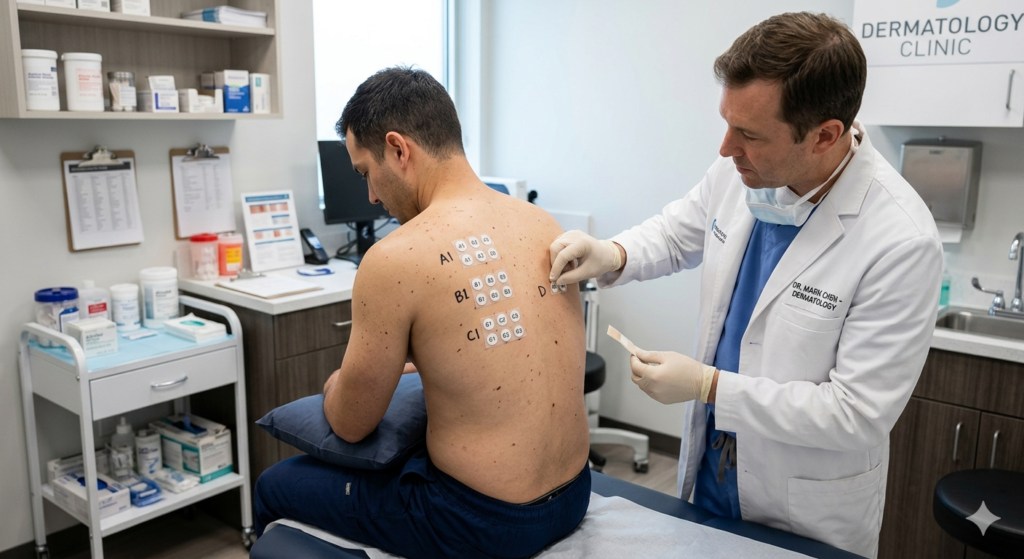
Case Study 1: The ‘Gentle’ Soap That Was Not Gentle
Source: British Journal of Dermatology clinical case (adapted for educational use). A 34-year-old woman with no prior skin history developed persistent perioral dermatitis and neck rash. Patch testing revealed sensitivity to methylisothiazolinone. The culprit: her ‘sensitive skin’ labelled liquid hand soap. After switching to an MI-free formulation, her dermatitis resolved completely within 6 weeks with no further medication needed.
What this teaches: Products marketed specifically for sensitive skin are not immune to containing contact allergens. MI was widely adopted as a ‘safe’ alternative to parabens before its allergenicity became clear — a cautionary example of how ingredient safety understanding evolves.
Case Study 2: Childhood Eczema and Preservative Load
Source: Overgaard et al., Allergy (2017) — Copenhagen University Hospital study. Children with atopic dermatitis who used emollient-containing personal care products frequently showed significantly elevated urinary levels of low-molecular-weight phthalate metabolites and parabens compared to children without eczema. The researchers concluded that compromised skin barrier function increases absorption of these compounds — and that the products intended to treat eczema may paradoxically increase systemic chemical burden.
Fix applied in the study: Switching to mineral oil-based emollients with no fragrance and no preservative-containing formulas reduced urinary metabolite levels by a statistically significant margin over 12 weeks.
Expert Voice: What Dermatologists Say
Dr. William Huang, board-certified dermatologist and adjunct professor at Duke University, noted in a 2026 NBC Select interview: “The dryness people associate with bar soaps typically comes from formulas with unbalanced pH levels — something many brands have now adjusted for.” He recommends pH-balanced formulations and cautions against assuming ‘antibacterial’ or ‘deep cleansing’ soaps are appropriate for sensitive skin.
The American Academy of Dermatology (AAD) official guidance on atopic dermatitis recommends: using a mild, fragrance-free bar or liquid soap; avoiding soaps with antibacterial ingredients; and bathing in lukewarm — not hot — water to prevent additional barrier disruption.
Section 6: The Safe Soap Shopping Checklist for Sensitive Skin
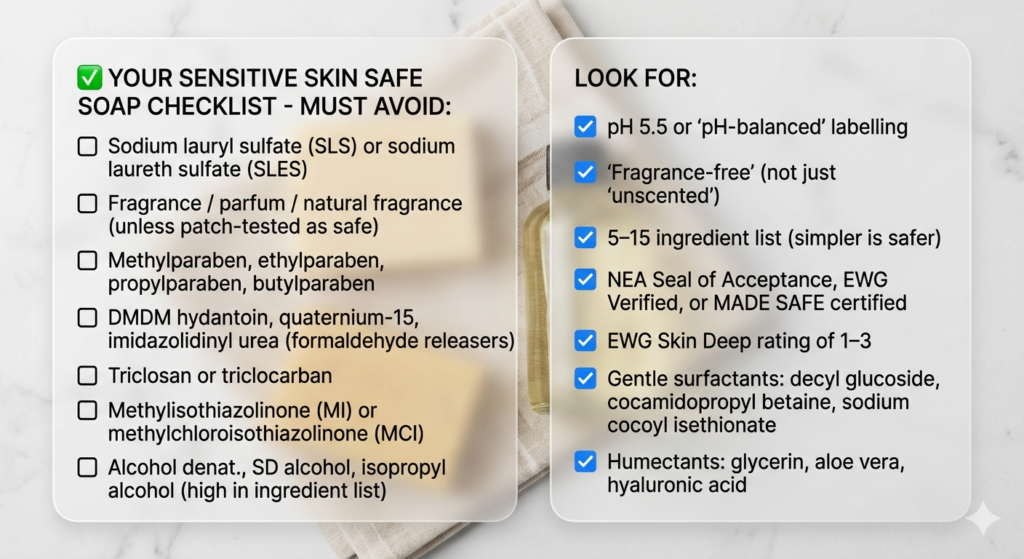
Print or screenshot this checklist before you shop:
| ✅ Your Sensitive Skin Safe Soap Checklist MUST AVOID: ☐ Sodium lauryl sulfate (SLS) or sodium laureth sulfate (SLES) ☐ Fragrance / parfum / natural fragrance (unless patch-tested as safe) ☐ Methylparaben, ethylparaben, propylparaben, butylparaben ☐ DMDM hydantoin, quaternium-15, imidazolidinyl urea (formaldehyde releasers) ☐ Triclosan or triclocarban ☐ Methylisothiazolinone (MI) or methylchloroisothiazolinone (MCI) ☐ Alcohol denat., SD alcohol, isopropyl alcohol (high in ingredient list) LOOK FOR: ☑ pH 5.5 or ‘pH-balanced’ labelling ☑ ‘Fragrance-free’ (not just ‘unscented’) ☑ 5–15 ingredient list (simpler is safer) ☑ NEA Seal of Acceptance, EWG Verified, or MADE SAFE certified ☑ EWG Skin Deep rating of 1–3 ☑ Gentle surfactants: decyl glucoside, cocamidopropyl betaine, sodium cocoyl isethionate ☑ Humectants: glycerin, aloe vera, hyaluronic acid |
Read Next:
For a deeper understanding of how soap type, pH, and ingredients affect your skin, explore these related guides:
Types of Soap and Their Benefits for Skin — The Complete Science-Backed Guide — Understand glycerin, syndet, herbal, medicated and toilet soaps and which suits your skin type.
Sources & References
- Mijaljica D, Spada F, Harrison IP. Skin Cleansing Without or With Compromise: Soaps and Syndets. Molecules. 2022;27(6):2010. MDPI. DOI: 10.3390/molecules27062010
- Leoty-Okombi S et al. Effect of SLS Applied as a Patch on Human Skin Physiology and Its Microbiota. MDPI Cosmetics. 2021;8(1):6.
- Skin Barrier Disruption by SLS — Expressions of Involucrin, Transglutaminase 1, Profilaggrin. Journal of Investigative Dermatology. ScienceDirect.
- Lin RR, Lin DA, Maderal AD. Toxic Ingredients in Personal Care Products: A Dermatological Perspective. Dermatology. 2024;35(2):121-131. DOI: 10.1089/derm.2023.0215
- Baur R et al. Triclosan Disrupts Keratinocyte Function and Skin Integrity. Journal of Immunotoxicology. 2023;20(1):1-11. DOI: 10.1080/1547691X.2022.2148781. PMC10364087
- Isufi D et al. Allergens in Contact Allergy in Children 2010–2024: Systematic Review and Meta-Analysis. Contact Dermatitis. 2025. DOI: 10.1111/cod.14753. PMC11965549
- Scheman A, Adler BL. Navigating Allergic Contact Dermatitis to Fragrance. Cutis. 2024;114(2):41-45. DOI: 10.12788/cutis.1070
- DeKoven JG et al. North American Contact Dermatitis Group Patch Test Results: 2019-2020. Dermatitis. 2023;34:90-104.
- Columbia University Mailman School of Public Health. Formaldehyde Risk from Common Personal Care Products. 2025.
- Safe Cosmetics — Formaldehyde and Formaldehyde-Releasing Preservatives. Campaign for Safe Cosmetics. 2026.
- EWG Skin Deep. DMDM Hydantoin Safety Profile. Environmental Working Group.
- Overgaard LEK et al. Children with Atopic Dermatitis and Emollient Use Have Increased Urinary Levels of Phthalate Metabolites and Parabens. Allergy. 2017;72(11):1768-1777.
- Głaz P et al. Effect of Commonly Used Cosmetic Preservatives on Healthy Human Skin Cells. Cells. 2023;12(7):1076.
- Prevalence of Contact Allergens in Natural Skin Care Products — US Commercial Retailers. JAMA Dermatology / PMC. 2022. PMC9475434
- Impact of Perfumes and Cosmetic Products on Human Health: A Narrative Review. PMC12425936. Frontiers in Public Health. 2025.
- American Academy of Dermatology. Atopic Dermatitis: Diagnosis and Treatment Recommendations. aad.org
- American Contact Dermatitis Society. Contact Allergen Management Program (CAMP). contactderm.org
© 2026 HealthSolutionBlog.com. This article is for educational and informational purposes only. It does not constitute medical advice. Always consult a board-certified dermatologist for personalised guidance on skin conditions and product safety.


5 thoughts on “Soap Ingredients to Avoid for Sensitive Skin: The Complete Science-Backed Safety Guide”