

Herbal soap sounds gentle, natural, and safer for skin — but that is not always true. Some herbal soaps can soothe dryness, acne, itching, or irritation. Others are just regular high-pH soap with a little plant powder added for marketing.
The real question is not “Is herbal soap good?” The better question is: which herbal ingredient helps which skin problem, and is the formula strong enough to matter?
Publications in traditional herbal skincare research peaked in 2024 with record output, according to a 2025 systematic review covering 1,593 published articles in the Web of Science database — a trend the authors describe as expected to continue.[1] The science is catching up with what traditional medicine practitioners have observed for centuries.
This guide breaks down the most evidence-backed herbal soap ingredients — including neem, turmeric, aloe vera, tea tree oil, colloidal oatmeal, lavender, charcoal, and sandalwood — and explains who should use them, who should avoid them, and how to read the label before buying.
Quick Answer
Herbal soap can benefit the skin when it contains meaningful amounts of proven ingredients such as colloidal oatmeal, aloe vera, tea tree oil, neem, or turmeric.
The best-supported herbal ingredients are: colloidal oatmeal for eczema and sensitive skin, aloe vera for hydration and healing support, tea tree oil for acne-prone skin, neem for antibacterial support, and turmeric for inflammation and uneven tone.
But “herbal” does not automatically mean safe. Fragrance oils, high-pH soap bases, harsh surfactants, and weak extract concentrations can make some herbal soaps irritating or ineffective.
Best Herbal Soap Ingredients by Skin Type
| Skin Concern | Best Herbal Ingredients | Use Carefully / Avoid |
|---|---|---|
| Dry skin | Aloe vera, colloidal oatmeal, glycerin base | Charcoal, strong essential oils |
| Acne-prone skin | Tea tree oil, neem, turmeric | Heavy oils, harsh high-pH soap |
| Eczema-prone skin | Colloidal oatmeal, aloe vera | Fragrance, lavender, tea tree oil, charcoal |
| Oily skin | Neem, tea tree oil, charcoal | Over-drying formulas |
| Sensitive skin | Fragrance-free aloe vera or colloidal oatmeal | Essential oil blends and perfume |
| Uneven tone | Turmeric, sandalwood, aloe vera | Products claiming fast whitening |
Section 1: What Is Herbal Soap? Plain English Explanation
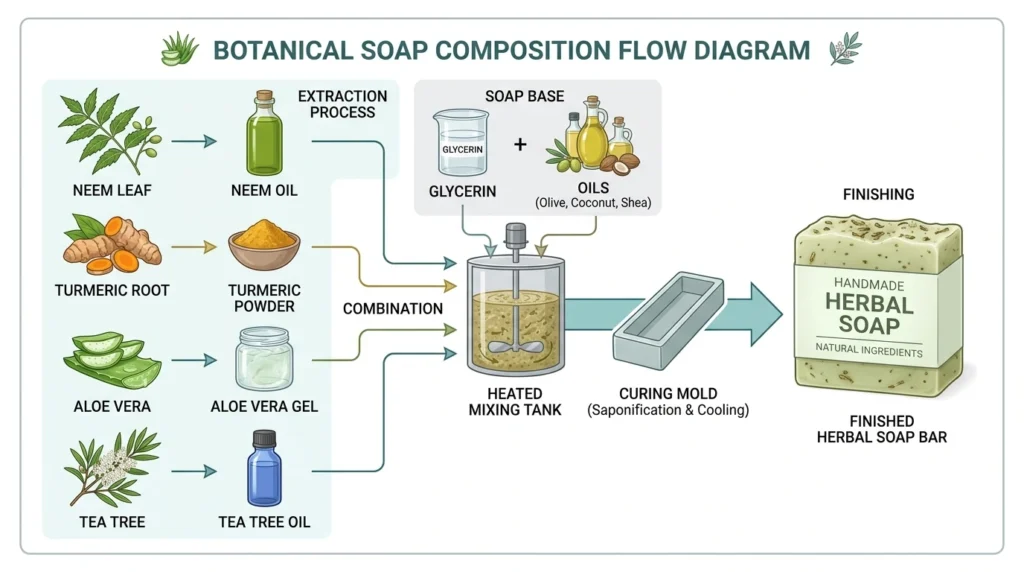
The term ‘herbal soap’ covers any soap formulation that incorporates plant-derived botanical extracts, essential oils, or powdered herbs as active ingredients. According to a 2023 formulation review published in Acta Scientific, herbal soap is formally defined as ‘a natural plant variation of traditional soap that is frequently made using botanical plants, herbs, and plant-based ingredients.’[2]
The base is typically a standard soap or glycerin base — to which botanical actives are added during or after the saponification process. High-quality herbal formulations use standardised plant extracts at effective concentrations rather than token amounts added for marketing purposes.
This is the critical distinction: a soap with 0.01% turmeric powder is not clinically equivalent to a soap with 5% curcumin extract. Concentration, extract quality, and bioavailability all determine whether a herbal soap delivers its claimed benefit — or is simply coloured and scented differently from regular soap.
Key concept: Phytoconstituents vs. Whole Plant Extracts Phytoconstituents are the specific active chemical compounds extracted from plants — curcumin from turmeric, azadirachtin and nimbidin from neem, acemannan from aloe vera, terpinen-4-ol from tea tree. Research increasingly focuses on these purified compounds because they allow dose-controlled clinical evaluation. When reading a herbal soap label, ‘extract’ is generally more clinically meaningful than ‘powder,’ and standardised extract with percentage concentration is most meaningful of all.
Section 2: The 8 Most Clinically Studied Herbal Soap Ingredients
The following ingredients are ranked by depth of peer-reviewed clinical evidence, not by popularity or marketing prevalence.
1. Neem (Azadirachta indica) — A Traditionally Used Antibacterial Botanical
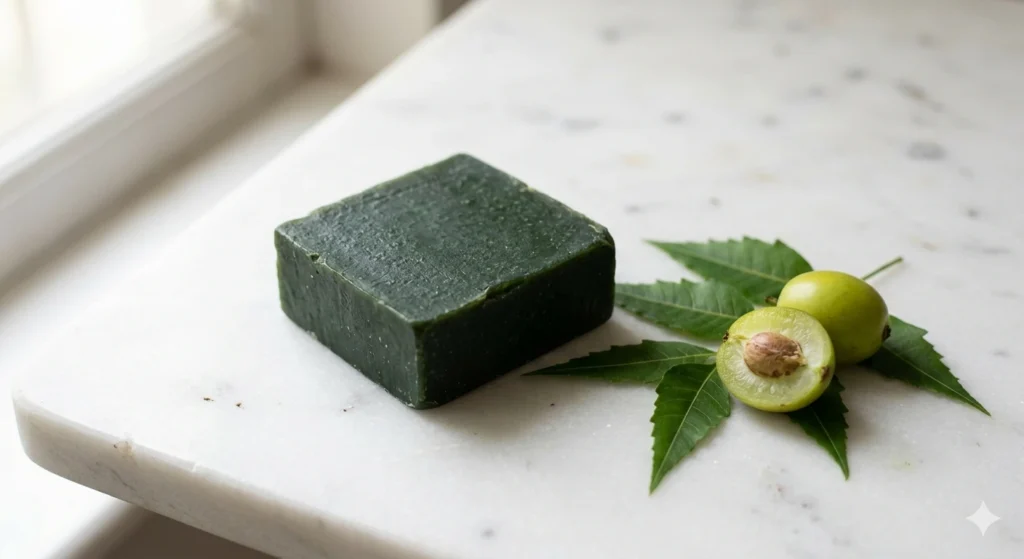
Neem is arguably the most pharmacologically documented herb in traditional medicine. Its active phytoconstituents — nimbidin, nimbin, salannin, margolone, and azadirachtin — give it a multi-spectrum profile that includes antibacterial, antifungal, antioxidant, anti-inflammatory, and insecticidal properties.[3]
A 2024 MDPI-published study on neem and turmeric-based topical formulations confirmed that neem’s active compounds — particularly nimbidin — demonstrate significant antibacterial action against Staphylococcus aureus, the primary pathogen implicated in eczema flare-ups and skin infections.[3] A separate study published in Research Journal of Tropical and Cosmetic Sciences confirmed the antibacterial activity of an aloe vera and neem soap against Staphylococcus aureus using standardised testing protocols.[4]
A World Journal of Pharmaceutical Research formulation study (2023) that specifically evaluated neem, aloe vera, tulsi, and vitamin C in a herbal soap base confirmed the combination’s anti-inflammatory, anti-hyperglycemic, antifungal, and antibacterial activity — attributing these primarily to neem’s phytochemical profile.[5]
Who benefits most from neem soap Acne-prone skin: neem’s antibacterial action targets Cutibacterium acnes and Staphylococcus aureus — the two primary bacteria in acne pathogenesis
Fungal skin conditions: neem has documented antifungal activity relevant to tinea, athlete’s foot, and ringworm
Eczema-prone skin: anti-Staphylococcal activity reduces the bacterial trigger most implicated in atopic dermatitis flares
Oily skin: nimbidin has mild sebum-regulating properties in animal and in vitro models
Honest limitation Most high-quality neem evidence comes from in vitro (laboratory) and animal studies. Head-to-head clinical trials on neem soap specifically in humans are limited in scale. The antimicrobial properties are well-documented at a chemical level; the clinical translation to ‘clear skin after 4 weeks of neem soap’ is extrapolated rather than directly proven at large-scale RCT level.
2. Turmeric (Curcuma longa / Curcumin) — Anti-Inflammatory and Antioxidant
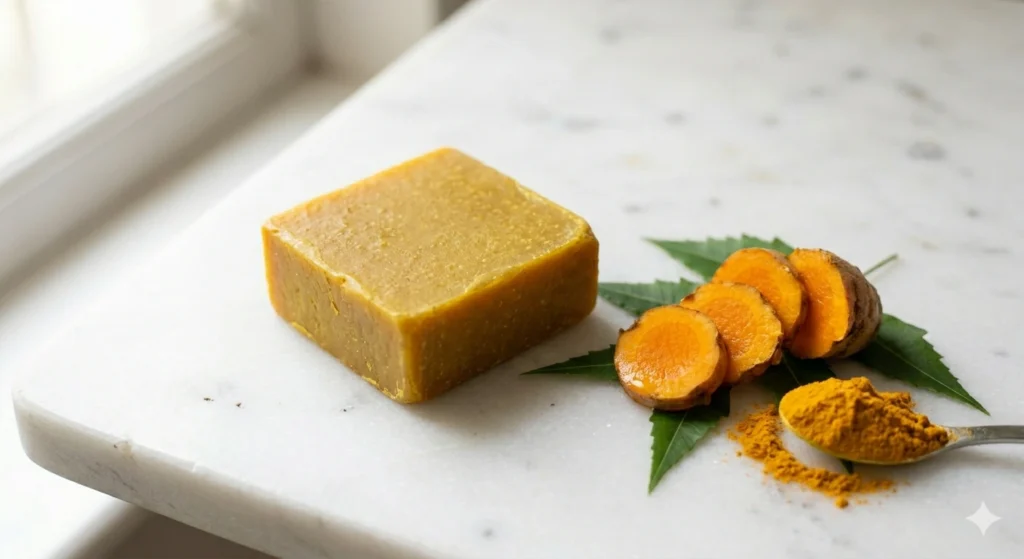
Curcumin — the primary polyphenol in turmeric — is one of the most extensively studied botanical compounds in dermatology. A comprehensive 2023 clinical review published in Karger Skin Pharmacology and Physiology (Di Lorenzo et al., University of Naples Federico II) reviewed all clinical studies on topical curcumin/turmeric application across multiple skin conditions.[6]
The Karger review found curcumin/turmeric effective in clinical studies for: eczema management, wound healing support, acne reduction, and radiodermatitis prevention. Crucially, clinical studies confirmed curcumin’s antioxidant, anti-inflammatory, and antimicrobial properties in topical application. Researchers noted that topical curcumin showed potential as a complementary skincare ingredient because of its anti-inflammatory and antimicrobial properties, though more large-scale clinical studies are still needed due to its safety profile and tolerability.[6]
Separately, ClinicalTrials.gov research led by Dr. Raja Sivamani at UC Davis showed that turmeric and curcumin inhibit lipid synthesis in human sebocytes — the cells responsible for producing sebum. This provides a mechanistic basis for turmeric’s observed sebum-regulating effect in acne-prone skin.[7]
A 2025 scoping review in PMC (PRISMA-ScR guidelines, searching PubMed, Scopus, Web of Science, and Cochrane) specifically on curcumin and wound healing confirmed anti-inflammatory and antibacterial mechanisms that support wound healing across multiple clinical trials — providing further evidence for curcumin’s skin repair properties.[8]
Who benefits most from turmeric soap Inflammatory acne:
curcumin’s anti-inflammatory pathway reduces inflammatory lesion severity
Post-inflammatory hyperpigmentation: curcumin inhibits tyrosinase — the enzyme that drives melanin overproduction after inflammation
Oily skin with acne: sebocyte lipid synthesis inhibition reduces sebum production at a cellular level
Ageing or dull skin: antioxidant activity reduces oxidative stress-driven skin ageing
Honest limitation Curcumin has notoriously poor bioavailability in topical formulations because it is water-insoluble. Standard turmeric powder in soap may not deliver effective curcumin concentrations to the skin. Nano-formulations and curcumin extracts significantly improve this — but these are rarely used in artisan herbal soaps. The clinical evidence cited above uses standardised curcumin extracts, not basic turmeric powder.
3. Aloe Vera (Aloe barbadensis miller) — Hydration and Wound Healing
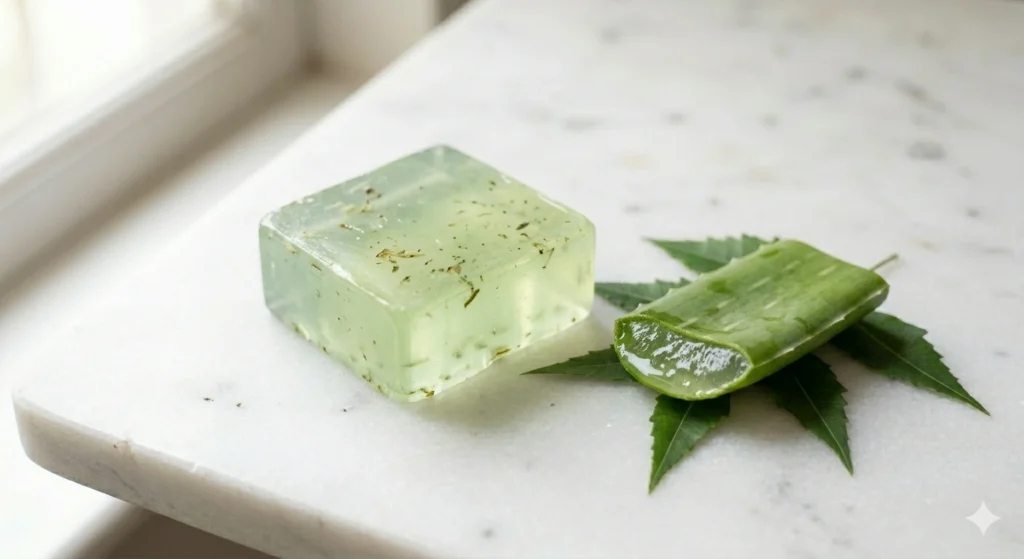
Aloe vera’s skin benefits are among the most rigorously documented of any botanical compound. A 23-trial systematic review published in PMC/NCBI (Hekmatpou et al., Arak University of Medical Sciences, Iran Journal of Medical Sciences, 2019) — covering databases including PubMed, MEDLINE, Scopus, and Cochrane Library — found aloe vera clinically used across burn wounds, postoperative wounds, psoriasis, genital herpes, chronic wounds, and pressure ulcers. The review concluded aloe vera ‘can be used to retain skin moisture and integrity and to prevent ulcers.’[9]
A 2024 meta-analysis and systematic review of 9 RCTs (random-effects model, GRADE-assessed evidence quality, PubMed/Embase/CENTRAL search) found aloe vera significantly reduced mean wound-healing time by 3.76 days (95% CI: -5.69 to -1.84) compared to other topical treatments.[10]
Key active compounds in aloe vera include acemannan (a polysaccharide with demonstrated immunomodulatory and wound-healing properties), aloin (anti-inflammatory), and aloesin (tyrosinase-inhibiting and skin-brightening). A double-blind, randomised, controlled trial published in the Journal of Cutaneous and Aesthetic Surgery (2024) confirmed topical aloe vera gel is associated with improved wound-healing outcomes of split-thickness skin graft donor sites — a clinical-grade wound healing outcome.[11]
Who benefits most from aloe vera soap Dry and dehydrated skin: acemannan forms a moisture-retaining film on the stratum corneumSun-damaged or burned skin: multiple RCTs confirm wound healing acceleration and pain reductionSensitive and reactive skin: anti-inflammatory compounds reduce erythema and irritationPost-acne or healing skin: wound-healing properties support recovery from breakouts and minor skin trauma
4. Tea Tree Oil (Melaleuca alternifolia) — Acne and Antimicrobial
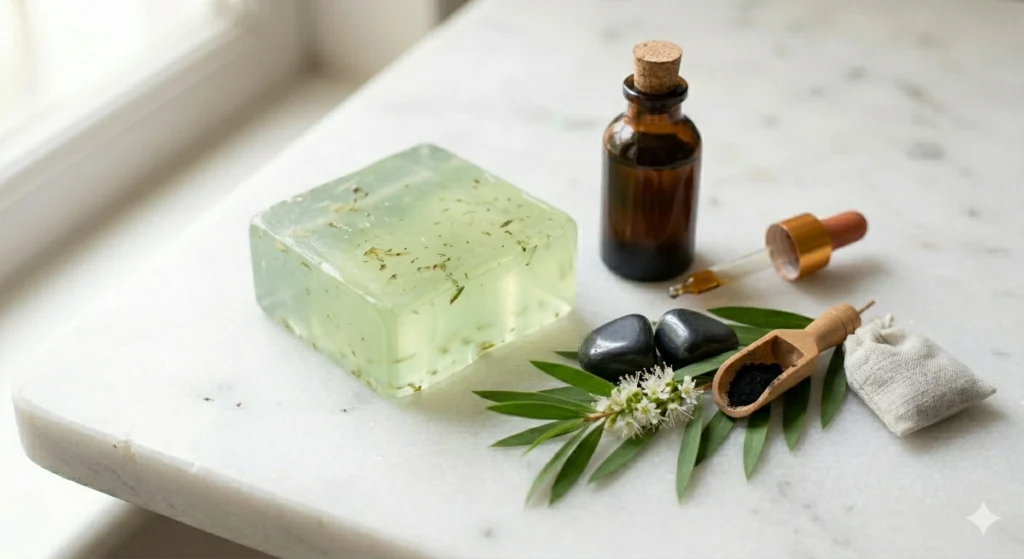
Tea tree oil (TTO) — extracted from the Australian plant Melaleuca alternifolia — contains approximately 100 chemical components, with terpinen-4-ol comprising roughly 40% of the oil. Terpinen-4-ol is the primary active responsible for tea tree’s broad-spectrum antimicrobial activity, operating through non-specific cell membrane damage to bacterial cells.[12]
A comparative review in ScienceDirect evaluated seven published studies on tea tree oil products for acne, including three double-blind trials. Six were comparative studies. The review confirmed: tea tree oil products showed statistically significant improvement in mild-to-moderate acne, and a 5% TTO gel performed comparably to benzoyl peroxide for reducing acne lesions with fewer side effects.[12]
A soap-specific antimicrobial comparison study (cited in Encyclopedia MDPI, 2023) tested TTO soap against triclosan and chlorhexidine soaps and found TTO soap achieved a log10 reduction factor of 4.18 — comparable to triclosan (4.31) and superior to reference soap (3.17) — while also carrying a pleasant aroma and no known antibiotic-resistance risk.[13]
Who benefits most from tea tree soap Acne-prone skin:
TTO specifically targets Cutibacterium acnes and Staphylococcus aureus without antibiotic-resistance risk
Oily skin with bacterial component: antimicrobial action reduces surface bacteria that worsen congestion
Fungal conditions: TTO has documented antifungal activity against Candida and dermatophytes
Body odour: antibacterial action on odour-causing bacteria makes TTO soap effective for body odour management
Honest limitation
Tea tree oil can cause contact dermatitis in approximately 1.4% of users.
Concentration matters: clinical studies used 5% TTO products; most commercial herbal soaps contain significantly less — reducing both efficacy and (slightly) allergen risk.
Do a patch test before using TTO soap on the face, particularly if you have reactive or sensitive skin.
5. Lavender (Lavandula angustifolia) — Antimicrobial, Calming, and Anti-Inflammatory
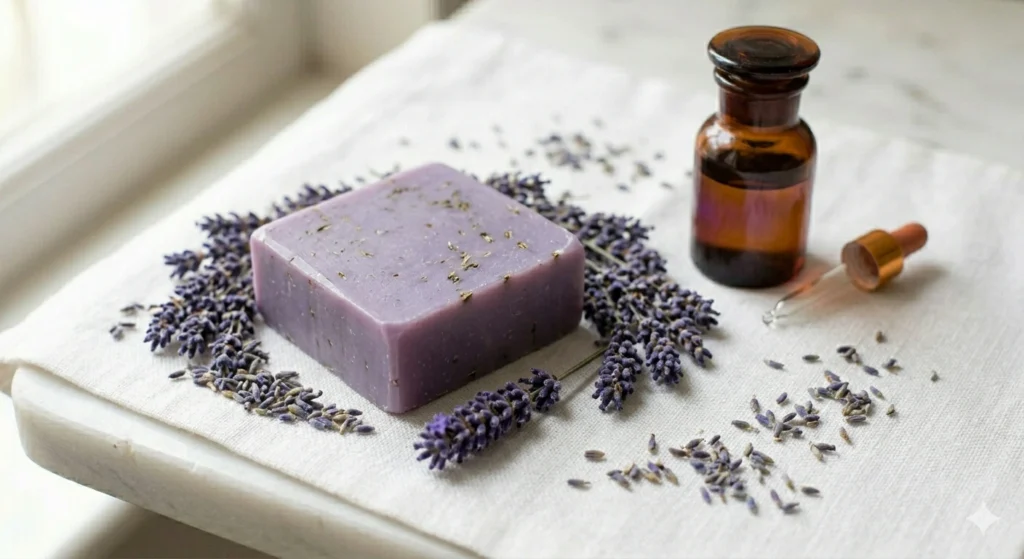
Lavender essential oil contains linalool and linalyl acetate as its primary active compounds, with documented antibacterial, antifungal, anti-inflammatory, and wound-healing properties. A 2025 Wiley Journal of Cosmetic Dermatology systematic review — covering 1,593 published articles on traditional herbal ingredients in skincare over four decades — confirmed lavender among the herbs with documented antioxidative properties, low toxicity, and multi-target skin health potential.[1]
Lavender-containing formulations have been evaluated in studies on acne, wound healing, and atopic dermatitis. A study evaluating tea tree and lavender oil combination on acne lesions (ResearchGate) found that lavender’s anti-inflammatory properties complemented tea tree’s antimicrobial action, with a 4-week trial showing improvement in both non-inflammatory and inflammatory lesions.[14]
Important: Lavender as a fragrance allergen Linalool and linalool hydroperoxides — oxidation products of linalool in lavender — are among the most common fragrance contact allergens documented in dermatology patch testing. This is fully covered in our companion article: Soap Ingredients to Avoid for Sensitive Skin. For sensitive or reactive skin, fragrance-free formulations are safer even when the fragrance is ‘natural.’
6. Activated Charcoal — Oil Absorption and Deep Cleansing Support
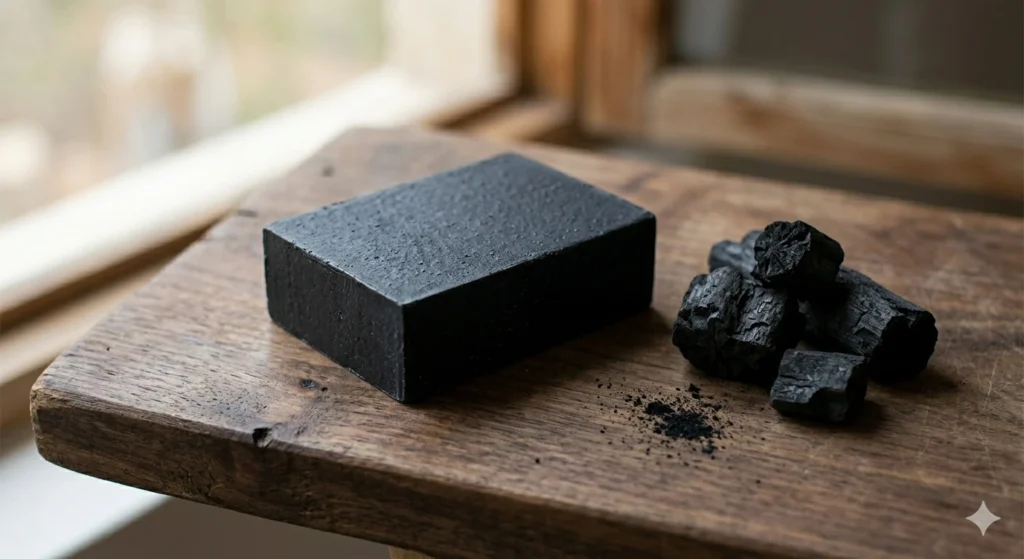
Activated charcoal is produced by high-temperature processing of carbon-rich materials (wood, bamboo, coconut shell) to create an extremely porous structure with a massive surface area — up to 3,000 square metres per gram. This porous structure works through adsorption (not absorption) — trapping dirt, oil, sebum, and surface bacteria onto its surface and removing them when the soap is rinsed away.
Despite popular marketing claims, activated charcoal does not “detox” the body or skin medically. Its role in skincare is primarily physical adsorption — helping lift excess oil, surface debris, and impurities from the skin during cleansing.
In herbal soap formulations, activated charcoal has been incorporated alongside neem, tea tree, and sandalwood in polyherbal face soap formulations. A formulation and evaluation study (ResearchGate, 2024) tested a polyherbal formulation including activated charcoal and tea tree oil against Staphylococcus aureus using agar well diffusion and found excellent antibacterial effect, supporting its use in acne-targeting soap formulations.[15]
The International Journal of Pharmaceutical Research (2024) formulation review confirmed activated charcoal’s suitability as a herbal soap ingredient for oily and acne-prone skin — noting its ability to reduce oiliness and surface bacteria without the systemic risks associated with chemical antibacterial agents.
Who benefits most from charcoal soap Very oily or congested skin: adsorbs excess sebum during cleansing without stripping the barrier entirely
Enlarged pores: removes surface debris that makes pores appear more visible
Acne-prone skin: removes Cutibacterium acnes-feeding sebum and surface bacteria
Urban/pollution-exposed skin: adsorbs surface particulate matter and environmental pollutants
Important: Activated charcoal soap is usually better suited for oily or acne-prone skin. If your skin is dry, sensitive, eczema-prone, or easily irritated, frequent charcoal soap use may worsen tightness and barrier dryness.
Honest limitation Activated charcoal soap is not recommended for dry, sensitive, or eczema-prone skin. Its strong adsorptive power removes oils indiscriminately — including protective skin lipids — which can worsen barrier function and increase TEWL in already-compromised skin. For dry skin, a glycerin-based herbal soap without charcoal is a significantly more appropriate choice.
Important: Activated charcoal can remove surface oil and debris, but it does not “detox” the skin in a medical sense. If your skin is dry, sensitive, or eczema-prone, charcoal soap may worsen tightness and barrier dryness.
7. Colloidal Oatmeal (Avena sativa) — Eczema Relief and Barrier Repair
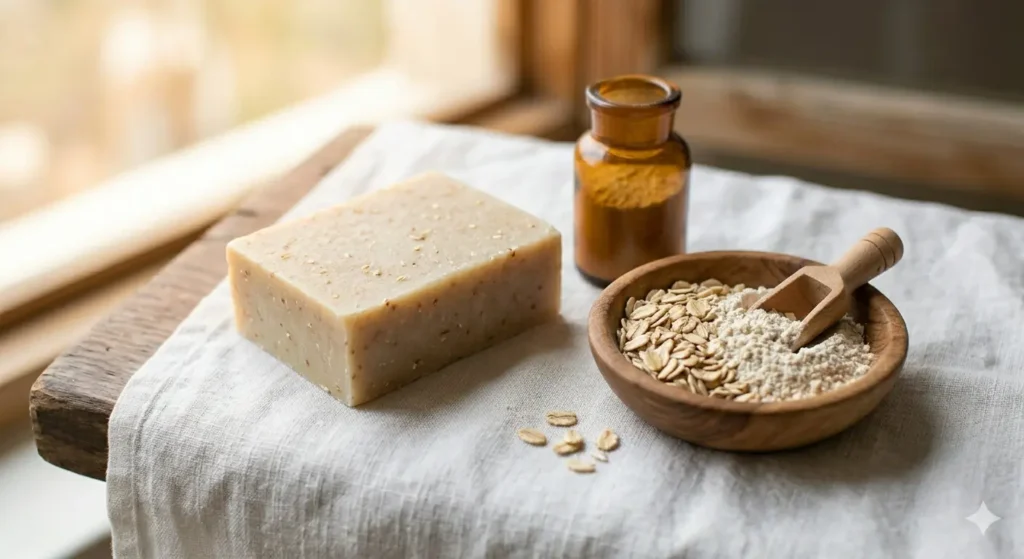
Colloidal oatmeal has one of the strongest regulatory endorsements of any cosmetic botanical ingredient. The US FDA approved colloidal oatmeal as an OTC skin protectant in 2003, and the American Academy of Dermatology (AAD) formally recommends it for atopic dermatitis management. Active compounds include avenanthramides (anti-inflammatory polyphenols), beta-glucan (film-forming, moisture-retaining), and saponins (mild cleansing without surfactant harshness).
A clinical review of colloidal oatmeal’s role in atopic dermatitis — cited across AAD guidelines — confirmed that avenanthramides inhibit NF-kB inflammatory signalling and reduce histamine-driven itch. Beta-glucan forms a protective film on the stratum corneum that reduces TEWL, soothes irritation, and supports barrier recovery. This makes colloidal oatmeal soap one of the most dermatologist-endorsed herbal soap options for eczema and sensitive skin.
The AAD explicitly recommends fragrance-free, dye-free cleansers containing colloidal oatmeal or similar barrier-supporting ingredients for atopic dermatitis management — making oatmeal herbal soap the rare category that a mainstream dermatology body endorses by ingredient name.
Who benefits most from colloidal oatmeal soap Eczema (atopic dermatitis):
AAD-recognised ingredient; clinically validated anti-inflammatory and barrier-repair mechanisms
Dry and very dry skin: beta-glucan reduces TEWL and forms a protective moisture-retaining layer
Sensitive skin: saponins cleanse gently; avenanthramides reduce reactivity and redness
Itchy or irritated skin: anti-histamine and anti-itch pathway via avenanthramide action
8. Sandalwood (Santalum album) — Anti-Inflammatory and Skin-Brightening
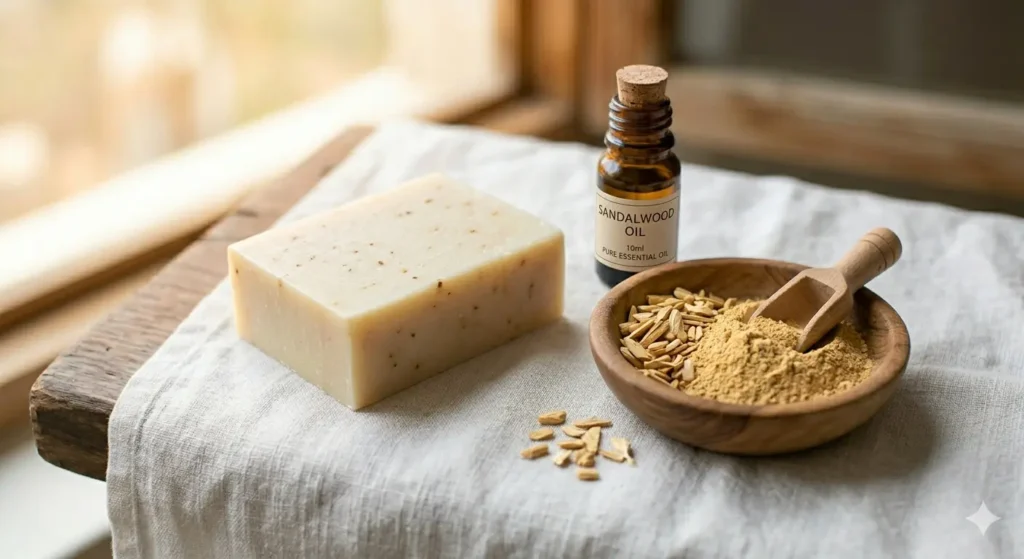
Sandalwood’s primary active compound, alpha-santalol, has documented anti-inflammatory, antimicrobial, and tyrosinase-inhibiting properties. A study cited in the Karger/Skin Pharmacology literature on topical herbal applications found sandalwood-containing formulations effective in radiodermatitis prevention — one of the clinical studies reviewed in the Di Lorenzo et al. 2023 Karger review.[6]
The 2025 Wiley Cosmetic Dermatology systematic review on traditional herbal skincare (Deng et al.) confirmed sandalwood among herbs with documented antioxidative, anti-inflammatory, and skin-protective properties across four decades of published research.[1]
Alpha-santalol’s tyrosinase-inhibiting activity makes sandalwood particularly relevant for hyperpigmentation and uneven skin tone — it interferes with the enzyme responsible for melanin production, reducing dark spots and post-inflammatory marks over time with consistent use.
Section 3: Herbal Soap Benefits by Skin Condition
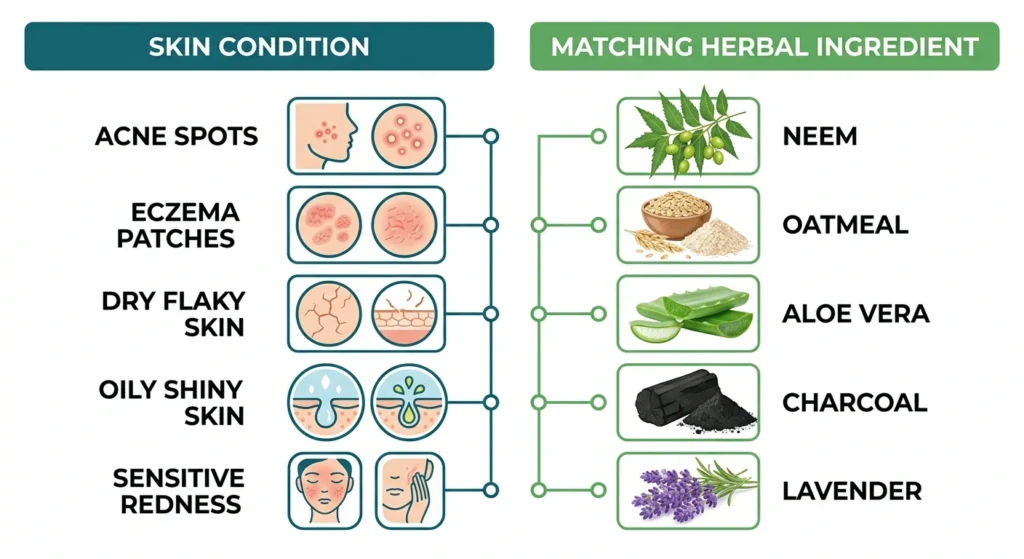
Acne-Prone Skin
Best herbal ingredients: tea tree oil, neem, turmeric, activated charcoal. Tea tree oil’s 5% gel was found comparable to benzoyl peroxide for mild-to-moderate acne[12] while neem directly targets S. aureus[3] and turmeric inhibits sebocyte lipid synthesis[7]. Charcoal removes sebum and surface bacteria mechanically. Avoid heavy oils or coconut-rich bases if comedone-prone.
Eczema (Atopic Dermatitis)
Best herbal ingredients: colloidal oatmeal, aloe vera, neem (for S. aureus control). Colloidal oatmeal is the AAD-recommended, FDA-approved OTC skin protectant. Aloe vera’s 23-trial systematic review confirms wound-healing and barrier-support properties.[9] Avoid fragrance (lavender, tea tree at high concentration), SLS, and activated charcoal — all can worsen eczema. For full ingredient avoidance guidance: Soap Ingredients to Avoid for Sensitive Skin.
Dry and Mature Skin
Best herbal ingredients: aloe vera, colloidal oatmeal, sandalwood. All three reduce TEWL, support moisture retention, and do not strip the barrier. Combine with a glycerin-rich soap base for maximum hydration. For a full explanation of glycerin’s role: Glycerin Soap vs Regular Soap for Skin.
Oily Skin
Best herbal ingredients: activated charcoal, tea tree oil, neem, turmeric. Charcoal mechanically removes excess sebum; tea tree and neem reduce the bacteria that thrive in oily, sebum-rich environments; turmeric targets sebum production at the cellular level. Avoid heavy botanical oils (olive, coconut) in the soap base for very oily skin.
Sensitive Skin
Best herbal ingredients: colloidal oatmeal, aloe vera (fragrance-free formulation only). Avoid: tea tree oil at high concentration (allergen risk 1.4%), lavender essential oil (linalool sensitisation), and any ‘natural fragrance’ blend. For a fragrance-free sensitive skin protocol, read our soap ingredients safety guide.
Hyperpigmentation and Uneven Skin Tone
Best herbal ingredients: sandalwood (alpha-santalol), turmeric (curcumin). Both demonstrate tyrosinase-inhibiting activity — reducing the enzymatic production of melanin responsible for dark spots and post-inflammatory hyperpigmentation. Results require consistent use over 8–12 weeks minimum and should be combined with daily SPF protection to prevent re-darkening.
Section 4: The Research Landscape — What the Data Shows Overall
It is worth stepping back from individual ingredients to look at what the overall herbal skincare research landscape tells us. A 2025 systematic review published in Wiley Journal of Cosmetic Dermatology (Deng et al.) — covering 1,593 published articles over four decades — found that research in traditional herbal skincare has surged dramatically, peaking in 2024 with record publication output, a trend expected to continue.[1]
The review’s key finding: ‘Active compounds derived from natural herbs show potential to prevent or delay skin aging and certain dermatological conditions, thereby reducing societal economic burdens.’ Importantly, the review also identified clinical efficacy and mechanism research as the priority research gap — meaning we have strong in vitro and animal data for many herbal ingredients, but randomised controlled trials in humans at scale are still catching up. Honest herbal soap claims should reflect this distinction.
The honesty principle: In vitro vs. Clinical Evidence Many herbal soap ingredient claims are based on in vitro (test tube/cell culture) or animal studies. These are scientifically valid starting points — but in vitro antimicrobial activity does not always translate to the same effect in a rinse-off soap product on human skin. The gold standard for clinical claims is an RCT (randomised controlled trial) in humans. Of the ingredients covered in this article, colloidal oatmeal, aloe vera, and tea tree oil have the strongest human RCT evidence base. Neem, turmeric, sandalwood, and charcoal have strong mechanistic and in vitro evidence with growing but not yet RCT-complete human clinical support.
Section 5: Case Studies and Expert Perspectives
Case Study 1: Polyherbal Soap for Psoriasis (Phytochemical-Based Formulation Study, 2024)
Source: Published in Journal of Neonatal Surgery, 2024. A psoriasis-targeted herbal soap formulation was developed incorporating neem, nutmeg, turmeric, licorice root, and aloe vera in a glycerin soap base. The researchers selected this combination specifically for their documented anti-inflammatory, antimicrobial, antioxidant, and barrier-supporting properties — each ingredient addressing a different component of psoriasis pathophysiology. The formulation was evaluated for physicochemical parameters, skin pH compatibility, and antimicrobial activity. The study confirmed the rationale that herbal combinations can target multiple disease mechanisms simultaneously — a key advantage over single-active pharmaceutical approaches.[4]
Case Study 2: Aloe Vera and Neem Antibacterial Soap — Standardised Testing
Source: Research Journal of Tropical and Cosmetic Sciences (peer-reviewed). A formulation combining aloe vera and neem was evaluated for antibacterial activity against Staphylococcus aureus using standardised agar diffusion testing. The soap showed confirmed antimicrobial activity. The study authors noted that the combination of neem’s phytoconstituents (nimbidin, azadirachtin) and aloe vera’s acemannan created a synergistic formulation addressing both surface bacteria and skin hydration simultaneously — making it particularly relevant for acne and eczema-prone skin management.[4]
Expert Perspective: What Dermatologists Say About Herbal Ingredients
The American Academy of Dermatology (AAD) officially endorses colloidal oatmeal as an OTC skin protectant and includes it in their atopic dermatitis management guidelines. For aloe vera, the AAD notes its wound-healing properties are clinically documented and considers it a complementary option alongside evidence-based therapies.
Dr. Rajani Katta — clinical professor at UT Health Science Center and published dermatology author — has noted that botanical ingredients with the strongest evidence base (colloidal oatmeal, aloe vera, tea tree at therapeutic concentrations) can complement conventional skincare regimens, but concentration, formulation quality, and the absence of harmful co-ingredients (fragrance, SLS, parabens) matter as much as the botanical itself.
Section 6: How to Read a Herbal Soap Label — Avoid Greenwashing
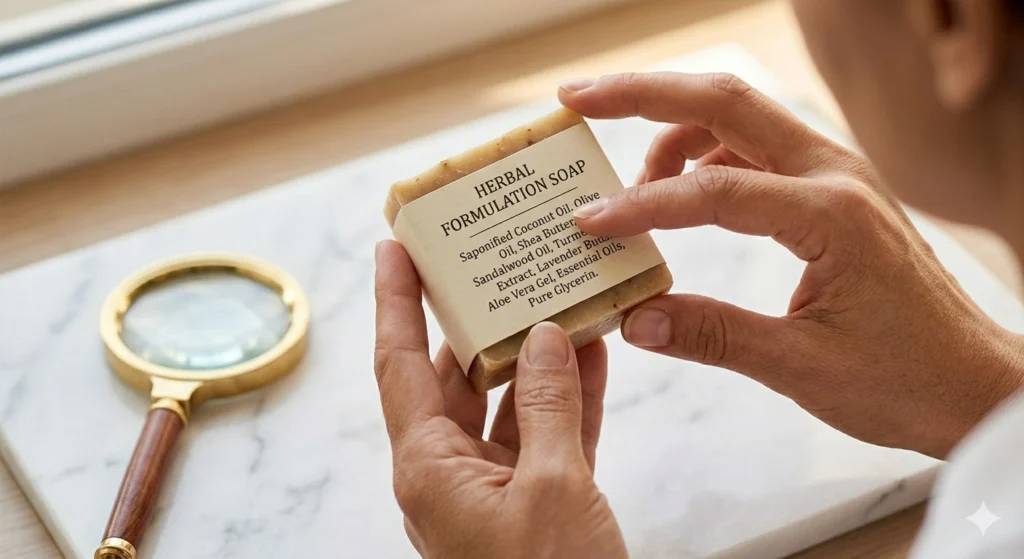
The herbal soap market has a significant greenwashing problem. Many products use minimal amounts of a botanically-named ingredient — sometimes less than 0.1% — purely to justify ‘neem soap’ or ‘turmeric soap’ labelling. Here is how to evaluate a label critically:
- Check ingredient position. INCI ingredient lists are in descending concentration order. If ‘neem extract’ or ‘Azadirachta indica leaf extract’ appears in the last three ingredients, the concentration is likely too small to be clinically meaningful.
- Look for standardised extracts. ‘Curcuma longa root extract’ is stronger labelling than ‘turmeric powder.’ ‘Standardised 95% curcuminoid extract’ is the most clinically relevant.
- Identify the soap base. A glycerin soap base is more beneficial for the skin than a sodium palmate/sodium cocoate base. A syndet base is even more so. The base affects pH and TEWL — the herbal additions operate on top of this foundation. For the full base comparison: What Is a Syndet Bar? and Types of Soap and Their Benefits for Skin.
- Check for harmful co-ingredients. A herbal soap that also contains SLS, parabens, DMDM hydantoin, or synthetic fragrance is not meaningfully ‘natural’ — its harmful co-ingredients undermine any botanical benefit. Full avoidance list: Soap Ingredients to Avoid for Sensitive Skin.
- Look for third-party certification. EWG Verified, USDA Organic (for botanical claims), COSMOS Organic (European standard), or NEA Seal of Acceptance for eczema-appropriate products are meaningful third-party markers.
Section 7: People Also Ask — Herbal Soap Questions Answered
Which herbal soap is best for sensitive skin?
For sensitive skin, fragrance-free colloidal oatmeal soap or aloe vera-based soap is usually safer than heavily scented herbal soap. Avoid lavender, citrus oils, tea tree oil, and “natural fragrance” blends if your skin reacts easily.
Can herbal soap remove dark spots?
Herbal soap may support uneven skin tone if it contains ingredients like turmeric, sandalwood, or aloe vera, but it will not remove dark spots quickly. Hyperpigmentation usually needs sunscreen, consistent skincare, and sometimes leave-on treatments.
Is herbal soap good for daily use?
Herbal soap can be used daily if it is gentle, fragrance-free, and not overly drying. Avoid daily use of strong charcoal, tea tree, or highly fragranced herbal soaps if your skin becomes tight, red, itchy, or flaky.
Is herbal soap better than regular soap?
It depends on which herbal soap, which ingredients, and which skin condition. A well-formulated herbal soap with meaningful concentrations of clinically studied botanicals — neem, aloe vera, colloidal oatmeal, or tea tree oil — can deliver measurable benefits beyond what regular alkaline soap achieves. However, a herbal soap with trace botanical amounts in an SLS-heavy, high-pH base is not meaningfully better than regular soap and may be worse for sensitive skin. The botanical itself is secondary to concentration, base quality, and formulation pH.
Can herbal soap be used on the face?
Yes, with ingredient-specific awareness. Aloe vera, colloidal oatmeal, and sandalwood soaps are appropriate for facial use across most skin types. Tea tree oil soaps are suitable for acne-prone facial skin if well-tolerated. Activated charcoal soaps can be drying for daily facial use — weekly use or oily-skin-only application is more appropriate. Turmeric soaps can temporarily stain the skin yellow if curcumin concentration is high — begin with a patch test. All herbal face soaps should be fragrance-free for sensitive or reactive skin types.
Which herbal soap is best for glowing skin?
‘Glowing skin’ is the result of even hydration, reduced inflammation, and minimised post-inflammatory hyperpigmentation — not a single ingredient effect. The most evidence-supported combination for this outcome: turmeric/curcumin (antioxidant, tyrosinase-inhibiting), aloe vera (hydrating, anti-inflammatory, skin-healing), and sandalwood (anti-inflammatory, additional tyrosinase inhibition). All three address the primary causes of dull, uneven skin tone: oxidative stress, inflammation, and uneven melanin distribution.
Is herbal soap safe for sensitive skin?
Not all herbal soaps are. Herbal does not automatically mean hypoallergenic or fragrance-free. Natural essential oils — particularly lavender (linalool), citrus (limonene), and tea tree (terpinen-4-ol at high concentrations) — are among the most common contact allergens in dermatology patch testing. For sensitive skin, the safest herbal soap options are: fragrance-free colloidal oatmeal soap (AAD-endorsed) or fragrance-free aloe vera glycerin soap. Both are gentle, evidence-backed, and free from the fragrance allergens most likely to trigger reactions.
Can herbal soap treat acne?
Herbal soap can support acne management — it cannot ‘treat’ acne in the clinical sense. Tea tree oil at 5% concentration showed comparable efficacy to benzoyl peroxide in one comparative study, and neem’s antibacterial action targets acne-relevant bacteria. But herbal soap is a rinse-off product — active contact time with skin is short (seconds to minutes). For significant acne, herbal soap is a complementary hygiene step, not a standalone treatment. Combine with a leave-on salicylic acid or benzoyl peroxide treatment under dermatologist guidance for moderate-to-severe acne.
Does herbal soap have side effects?
Yes — in specific circumstances. Tea tree oil can cause contact dermatitis (~1.4% of users). Lavender essential oil contains linalool — a documented allergen. Turmeric at high concentrations can temporarily yellow skin. Activated charcoal can strip the skin barrier and worsen dryness. Herbal soaps with essential oil blends can sensitise reactive skin over time. The solution: patch test any new herbal soap on the inner arm for 24–48 hours before applying to the face or body. Stop use immediately if stinging, redness, or rash develops.
How long does it take to see results from herbal soap?
Realistic timeframes based on the clinical evidence:
antimicrobial effects (surface bacteria reduction from tea tree, neem) occur within each wash but cumulative acne improvement requires 4–8 weeks of consistent use. Hydration improvement (aloe vera, colloidal oatmeal) is noticeable within days to 2 weeks. Hyperpigmentation reduction (turmeric, sandalwood tyrosinase inhibition) requires 8–12 weeks minimum of consistent use and daily SPF protection to prevent re-pigmentation. Eczema symptom improvement (colloidal oatmeal) varies by severity — mild cases may improve within 2–4 weeks; moderate cases require concurrent medical treatment.
Section 8: Your Herbal Soap Buying Checklist
Herbal Soap Shopping Checklist — print or screenshot before you buy
LOOK FOR:
Botanical extract in first 5 ingredients (not last 5) Standardised extract where possible (e.g. ‘95% curcuminoid extract’)
Glycerin or syndet base (not sodium palmate/cocoate as first ingredient)
Fragrance-free label for sensitive, reactive, or eczema-prone skin
NEA Seal, EWG Verified, or COSMOS
Organic certification pH 5.5-7 (test with pH strip dissolved in water; most herbal soaps pH 7-8)
AVOID:
‘Herbal’ or ‘botanical’ on front; synthetic chemicals dominate the INCI list
Fragrance, parfum, or essential oil blend in first 5 ingredients (for sensitive skin) SLS/SLES as primary surfactant — undermines barrier regardless of botanical content
DMDM hydantoin, parabens, methylisothiazolinone — see full guide linked below Herb listed only as ‘powder’ with no extract standardisation (low bioavailability)
Overclaiming: ‘cures eczema,’ ‘eliminates acne in 3 days’ — red flags for pseudoscience
Section 9: Related Guides in This Skin Health Series
This article is part of the HealthSolutionBlog.com skin science series. Internal links appear contextually throughout the article where most relevant. For easy reference:
- Types of Soap and Their Benefits for Skin — Complete Guide — all soap categories including herbal, glycerin, syndet, and medicated soap explained with skin-type matching
- Soap Ingredients to Avoid for Sensitive Skin — the 8 most harmful ingredients in soap, with peer-reviewed evidence and printable checklist
- Glycerin Soap vs Regular Soap for Skin — 5 clinical studies comparing glycerin soap to alkaline soap on TEWL, hydration, and pH
- What Is a Syndet Bar? The Science Behind pH-Balanced Soap — why pH-balanced synthetic surfactant bars outperform alkaline soap for sensitive and eczema-prone skin
Bottom Line
Herbal soap can absolutely benefit the skin — but only when the formula matches your skin type and contains ingredients that actually matter.
A gentle aloe vera or colloidal oatmeal cleanser may help dry or sensitive skin feel calmer and more comfortable. Neem or tea tree formulas may help oily or acne-prone skin. But heavily fragranced “natural” soaps can still irritate the skin barrier.
The smartest approach is simple: ignore marketing words, check the ingredient list, pay attention to how your skin feels after washing, and choose cleansers that support your skin barrier instead of stripping it.
Sources & References
Superscript citation numbers throughout the article link directly to their source. Full references below for reader and professional verification. All sources are peer-reviewed publications, institutional guidelines, or registered clinical trial databases.
Additional institutional sources: American Academy of Dermatology (aad.org) — colloidal oatmeal OTC skin protectant endorsement; FDA OTC Monograph on Skin Protectants (colloidal oatmeal); EWG Skin Deep (ewg.org/skindeep).
2026 HealthSolutionBlog.com. For educational and informational purposes only. Does not constitute medical advice. All herbal soap use should be assessed individually; consult a board-certified dermatologist for persistent skin conditions.


4 thoughts on “Herbal Soap Benefits for Skin: Ingredients, Science, and What Actually Works”