

If you’ve tried foot massagers, compression socks, or neuropathy creams and still struggle with burning, tingling, or painful feet at night, EMS and TENS therapy may be worth understanding.
Unlike traditional foot massagers, these devices use low-level electrical pulses designed to interact with nerves and muscles rather than mechanically kneading the feet.
But do they actually help diabetic neuropathy symptoms in real life? That’s where the evidence — and the limitations — matter.
| Quick Answer TENS therapy is currently the most clinically supported non-drug option for painful diabetic neuropathy, with the American Academy of Neurology rating it as ‘probably effective’ (Level B recommendation). EMS therapy shows strong promise for circulation improvement and muscle activation. Neither is a cure — but for many people with neuropathy, they meaningfully reduce pain and improve daily function. The best candidates are those who haven’t responded fully to medication, want a drug-free approach, or have poor circulation alongside nerve pain. |
Important: EMS and TENS devices do not work equally well for everyone. Some people experience meaningful pain reduction or circulation improvement, while others notice only modest changes. Device quality, consistency of use, neuropathy severity, and overall diabetes management all influence results.
What Are EMS and TENS — And Why Are They Different From a Regular Massager?
Most foot massagers work mechanically: rollers knead your tissue, air bladders compress your feet, or vibrating plates shake the surface. All of that is helpful, but it doesn’t touch your nerves directly.
EMS and TENS skip the middleman. They use small electrical pulses delivered through electrode pads or a stimulator mat to interact with your nervous system and muscle fibres at a deeper level.
That represents a different therapeutic approach from traditional mechanical massagers.
TENS — Transcutaneous Electrical Nerve Stimulation
TENS works by sending mild electrical impulses through the skin to the sensory nerve fibres underneath. The leading theory for why it reduces pain is called the gate control theory: the electrical signals essentially flood the nerve pathway with non-painful stimulation, which ‘competes with’ and partially blocks pain signals from reaching the brain.
In simpler terms — your nervous system can only process so many signals at once. TENS fills that bandwidth with something neutral, leaving less room for the burning and shooting pain signals that neuropathy generates.
EMS — Electrical Muscle Stimulation
EMS targets motor nerve fibres rather than sensory ones. Instead of blocking pain, it causes your foot muscles to contract rhythmically — mimicking the pumping action that happens naturally when you walk. This directly improves blood flow through the feet and lower legs.
For diabetics with both neuropathy and poor circulation (which is most people), this is significant. EMS creates rhythmic muscle contractions that may help stimulate blood flow in a way that partially mimics some aspects of normal muscle movement.
EPT — Electronic Pulse Therapy
Some devices, including the OSITO covered in our foot massager guide, combine a third modality called EPT (Electronic Pulse Therapy). EPT focuses specifically on improving local circulation through high-frequency micro-pulses. Think of it as a finer-grained version of EMS, targeting the microvascular bed in the foot tissue rather than large muscle groups.
Most at-home devices combine two or all three of these — which is actually part of why they perform better than standalone TENS units in real-world use.
Here’s how the three device types compare at a glance:
| Feature / Device Type | EMS Mat | TENS Unit | Traditional Massager |
| Mechanism | Muscle contraction | Nerve signal blocking | Physical kneading/pressure |
| Targets | Muscles + circulation | Pain nerve pathways | Surface tissue + circulation |
| Noise level | Silent | Silent | Low to moderate |
| Foot size restriction | None | None | Yes (most have size limits) |
| Heat function | Some models | Rarely | Many models |
| FSA/HSA eligible | Often yes | Often yes | Some models only |
| Requires setup | Minimal | Electrode placement | Just insert feet |
| Best for | Circulation + muscle weakness | Pain management | General relaxation + circulation |
| Clinical evidence for DPN | Moderate (growing) | Strongest among non-pharma options | Limited formal studies |
What Does the Research Actually Say?
Let’s be honest about what the evidence shows — and what it doesn’t. There’s a meaningful difference between ‘promising early research’ and ‘proven treatment,’ and you deserve to know which category EMS/TENS falls into for neuropathy.
The Strongest Evidence — TENS for Pain Relief
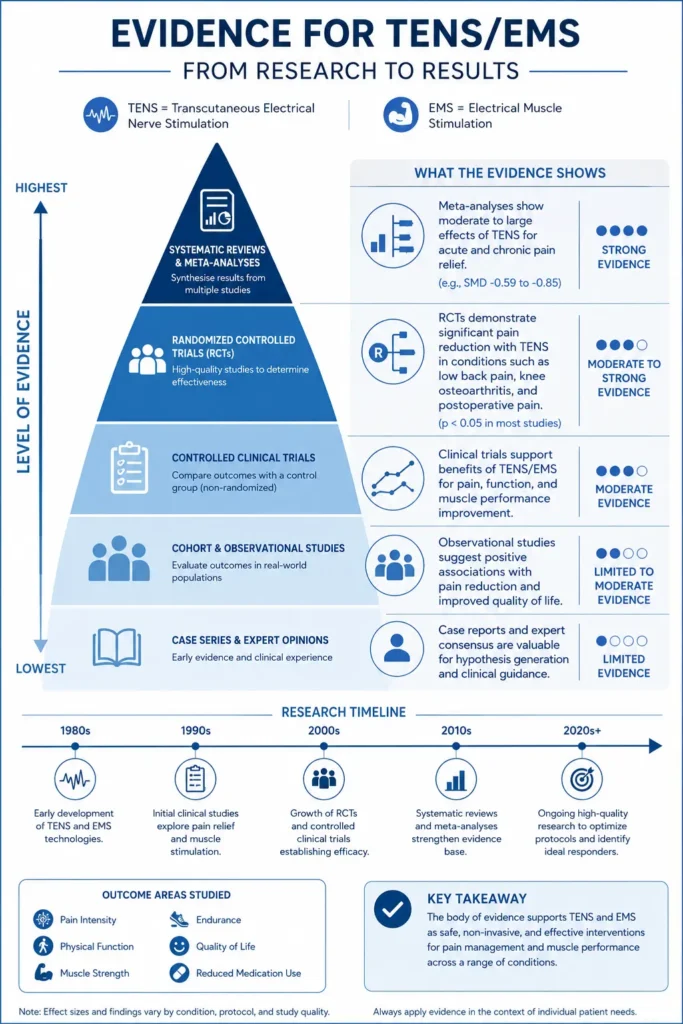
This is where the research is clearest. A 2025 systematic review and network meta-analysis published in the Journal of NeuroEngineering and Rehabilitation analysed multiple non-invasive stimulation therapies for diabetic neuropathy. Among all the interventions studied, only TENS showed statistically significant improvements in both pain severity and sleep disruption compared to control groups.
An earlier meta-analysis of randomized controlled trials found that TENS significantly reduced mean pain scores in patients with diabetic peripheral neuropathy at 4-week and 6-week follow-up points, with no adverse events recorded in any of the TENS groups.
The American Academy of Neurology has formally assessed TENS for painful diabetic neuropathy and concluded it is “probably effective” — a Level B recommendation. In medical evidence grading, Level B means multiple well-designed studies support the use, even if the evidence isn’t yet as complete as Level A.
EMS for Circulation — Solid Rationale, Growing Evidence
The evidence for EMS specifically targeting neuropathy pain is slightly less established than TENS — but the rationale for its circulatory benefits is strong and biologically clear.
EMS-induced muscle contractions in the feet increase venous return (the flow of blood back up from the feet toward the heart), deliver oxygen to nerve tissues, and stimulate local microcirculation. For diabetics whose neuropathy is partly driven by chronic poor blood supply to the nerves, this mechanism is directly relevant.
A 2022 study examining combined TENS and EMS treatment for diabetic peripheral neuropathy found improvements in both pain and circulation markers — and noted the combination approach outperformed either therapy alone in several measured outcomes.
The Honest Caveat
| What the research doesn’t yet confirm: Most studies are short-term (4–12 weeks). Long-term effects beyond 3 months are still being investigated.Sample sizes in many trials are small. Larger multicentre randomized trials are needed.Results vary between individuals — some people respond strongly, others see modest benefit.EMS/TENS does not reverse nerve damage or address the underlying cause of neuropathy (high blood sugar). The important takeaway: EMS and TENS are genuinely useful tools for managing neuropathy symptoms — not cures, and not replacements for blood sugar management or medication. Used alongside these, they can make a real difference for many people. |
How to Use an EMS/TENS Foot Stimulator Safely With Diabetes
Using an EMS or TENS device with diabetic neuropathy is safe for most people — but there are specifics that matter more for diabetics than for the average user.
Before Your First Session
- Inspect both feet for cuts, blisters, cracked skin, or open wounds. Never use a stimulator on broken skin.
- Check for active foot ulcers — these are an absolute contraindication. Seek medical care first.
- Read the device manual for your specific product. Settings and electrode placement vary between devices.
- If you use a pacemaker, insulin pump, implanted defibrillator, or any electronic implant — do not use EMS/TENS without explicit clearance from your doctor. This is not a theoretical caution; electrical interference with implanted devices is a real risk.
During the Session
- Start at intensity level 1 or the absolute lowest available setting. Always.
- Because neuropathy may reduce your ability to feel how strong the stimulation is, you can’t rely on comfort alone to judge intensity. Stay conservative.
- The sensation should feel like a gentle tingling or light muscle twitching — not painful, not sharp.
- Keep sessions to 20–30 minutes. Most devices auto-shutoff; if yours doesn’t, set a timer.
- Don’t use while sleeping or when your attention is elsewhere during a first session.
After Each Session
- Inspect your feet again for any redness, skin irritation from electrode contact, or unusual changes.
- If you notice bruising, increased pain, or skin breakdown — stop use and contact your doctor.
- Note how you feel for a few hours after. Some people experience temporary soreness; others notice immediate improvement in sensation or warmth. Track this in a simple log.
| How Often Is Safe? Most manufacturers recommend once or twice daily, 20–30 minutes per session. Research protocols typically used 30-minute sessions, 3–5 times per week. Starting less frequently (once every other day) and building up based on your response is a reasonable approach. Take at least one full day off per week. |
EMS/TENS vs. Shiatsu Foot Massager: Which Is Better for Your Specific Symptoms?
Here’s where things get practical. EMS/TENS isn’t automatically better than a shiatsu massager — it depends on what your main symptoms are.
| Your Main Symptom | Better Choice | Why |
| Burning / shooting nerve pain | EMS + TENS device | Targets the nerve pathways generating pain signals directly |
| Numbness and poor circulation | EMS device or combo mat | Muscle contractions actively pump blood through the feet |
| General tension and soreness | Shiatsu massager | Mechanical kneading relaxes tissue better than electrical pulses |
| Swollen feet or ankles | Air compression massager | Compression drives fluid movement; EMS helps but less powerfully |
| Cannot feel pressure or heat well | EMS/TENS device | No heat or pressure risk; electrical intensity can be finely controlled |
| Want relaxation and stress relief | Shiatsu with heat | EMS/TENS is therapeutic, not particularly soothing |
| Restricted foot size / wide feet | EMS/TENS mat | Flat mat accommodates any foot size; no enclosed chamber |
| Budget is tight | Budget shiatsu (e.g. HoMedics) | EMS/TENS devices with quality build often cost $80–$200+ |
For most people with moderate-to-severe diabetic neuropathy — especially those with both pain and poor circulation — a combination approach works best: an EMS/TENS device for therapeutic sessions, and a shiatsu massager for general comfort and relaxation on alternate days.
Who Should NOT Use an EMS or TENS Foot Stimulator
This section is short but important. Please read it.
| Absolute Contraindications — Do not use without doctor clearance: Pacemaker or implanted cardiac defibrillatorInsulin pump or any other implanted electronic devicePregnancyActive deep vein thrombosis (DVT) or blood clots in the legsActive foot ulcers or open wounds at the electrode siteEpilepsy (some electrical stimulation can trigger seizures) Use with extra caution and medical guidance: Severe or end-stage peripheral arterial disease (PAD)Significantly impaired kidney or liver functionActive cancer in the treatment areaMetal implants near the foot or lower leg |
The Bottom Line: Is an EMS or TENS Foot Stimulator Worth It for Neuropathy?

For people with painful diabetic neuropathy, yes — especially if you’re looking for a non-drug approach or you want something to complement your current treatment.
Among non-drug, at-home approaches studied for painful diabetic neuropathy, TENS currently has some of the strongest supportive clinical evidence.
It’s not perfect, and it won’t work identically for everyone. But ‘probably effective’ from the American Academy of Neurology is a real endorsement — one that, frankly, most supplements and alternative therapies don’t come close to earning.
EMS adds circulatory benefit that is biologically well-grounded and particularly relevant for diabetics whose neuropathy is partly driven by chronically inadequate blood flow.
Some newer devices combine EMS, TENS, and additional pulse-based circulation modes into one system, which may provide broader symptom support for some users.
| Who gets the most from EMS/TENS: People with burning, shooting, or electric-shock neuropathy pain (TENS is most effective here)Those with poor circulation alongside nerve symptoms (EMS addresses both)Anyone who wants a drug-free, non-invasive complementary approachPeople whose feet are too sensitive, swollen, or large for a standard massager chamberFSA/HSA account holders — qualifying devices let you use pre-tax money Who may do better with a traditional massager: Those whose main complaint is tension, general soreness, or stressAnyone who finds the electrical sensation uncomfortable, even at low levelsPeople primarily wanting relaxation rather than targeted pain therapy |
For our full review of the top-rated EMS/TENS device — including the OSITO EMS+TENS+EPT stimulator with FDA clearance and FSA/HSA eligibility — our detailed comparison of foot stimulators and massagers for diabetic neuropathy.
FDA clearance does not mean a device cures neuropathy or works equally well for every user. It means the device met regulatory standards for its intended use category.
Who May Notice Less Benefit From EMS or TENS?
- People with severe long-standing nerve damage
- Those expecting immediate or permanent results
- Users who do not use the device consistently
- People whose symptoms are primarily caused by uncontrolled blood sugar
- Those with advanced circulation problems requiring medical treatment
Electrical stimulation may help manage symptoms, but it does not replace diabetes management, foot care, or medical treatment for underlying vascular disease.
Signs an EMS or TENS Device May Not Be Right for You
- The electrical sensation feels painful even at low intensity
- Your skin becomes irritated after use
- You have active ulcers or broken skin
- You feel worsening pain after sessions
- You expect the device to replace medical treatment
- You dislike tingling or muscle twitching sensations
These devices can help some people manage neuropathy symptoms, but they are not comfortable or effective for everyone.
Frequently Asked Questions
Does electrical stimulation actually help diabetic neuropathy?
Current evidence suggests TENS may help reduce painful diabetic neuropathy symptoms for some people.
The American Academy of Neurology rates TENS as ‘probably effective’ for painful diabetic neuropathy (Level B recommendation), based on multiple randomized controlled trials.
A 2025 systematic review confirmed TENS significantly improved both pain severity and sleep disruption in diabetic neuropathy patients. EMS shows strong results for circulation improvement. Neither reverses nerve damage, but both can meaningfully reduce symptoms for many people.
What is the difference between EMS and TENS?
TENS (Transcutaneous Electrical Nerve Stimulation) targets sensory nerve pathways to block pain signals from reaching the brain.
EMS (Electrical Muscle Stimulation) targets motor nerve fibres to cause muscle contractions, which improves blood flow and circulation.
For diabetic neuropathy, TENS has stronger pain-relief evidence, while EMS has better-supported circulatory benefits. Most quality at-home devices now combine both.
How often should I use an EMS foot stimulator for neuropathy?
Most manufacturers recommend once or twice daily, 20–30 minutes per session. Research protocols typically used 30-minute sessions, 3–5 days per week.
A sensible starting point for diabetics is once daily, every other day, building frequency based on how your feet respond.
Always take at least one day off per week, and inspect your feet before and after every session.
Is an EMS foot mat safe if I have a pacemaker?
No — not without explicit clearance from your cardiologist.
Electrical stimulation devices can potentially interfere with pacemakers and implanted defibrillators.
This is a firm contraindication, not a precautionary suggestion. If you have any implanted electronic medical device, consult your doctor before using any EMS or TENS device.
Are EMS and TENS foot stimulators FSA or HSA eligible?
Many are — including the OSITO EMS+TENS device reviewed in our main foot massager guide.
FSA and HSA eligibility for these devices is generally stronger than for standard foot massagers because of their therapeutic and medical classification.
Always confirm with your FSA/HSA provider, as some plans require a letter of medical necessity. FDA-cleared devices like the OSITO have a stronger case for automatic eligibility.
Can I use a TENS machine if I have open wounds on my feet?
No. Never place electrode pads on or near open wounds, active ulcers, or broken skin.
For diabetic foot ulcers especially, the priority is wound care from a medical professional — not electrical stimulation.
Once the wound has fully healed and your doctor has cleared you, you can consider resuming use.
Does a TENS machine help with neuropathy numbness, or just pain?
TENS is most clearly effective for the painful aspects of neuropathy — burning, tingling, and shooting pain.
The evidence for improving numbness specifically is less consistent, though some people report improved sensation over weeks of regular use.
EMS may be more useful with the circulation issues that contribute to numbness than TENS alone. If numbness is your primary complaint, an EMS-focused or combination device may serve you better.
What is the best EMS/TENS device for diabetic neuropathy?
Devices that combine EMS and TENS features — including options like the OSITO foot stimulator — may offer broader functionality for people managing both pain and circulation-related symptoms.
It combines all three electrical modalities, carries FDA clearance (code K133929), is FSA/HSA eligible, and includes electrode pads that extend use to the calves, back, and shoulders.
| Medical Disclaimer & Affiliate Disclosure This article is for informational purposes only and does not constitute medical advice. The research cited is real and accurately summarised, but individual results vary significantly. Always consult a qualified healthcare professional before beginning any new treatment for diabetic neuropathy, especially if you have other health conditions. |




2 thoughts on “EMS and TENS Therapy for Diabetic Neuropathy: Does Electrical Stimulation Actually Work?”