
If you have eczema, you have probably been told to use ‘gentle’ soap. You may have tried several products with that word on the label and found that most of them still sting, dry, or trigger a flare. The problem is that ‘gentle’ means almost nothing on a soap label — it is a marketing description with no regulatory definition and no required testing.
What eczema skin actually needs from a cleanser is specific and measurable: a pH of 4.5–5.5, no SLS, no fragrance of any kind, a surfactant that does not strip the already-compromised lipid barrier, and — ideally — ingredients that actively support barrier recovery. Most soaps labelled ‘gentle’ or even ‘for sensitive skin’ do not meet all of those criteria.
If you want the broader foundation first, our guide to how soap type and pH affect every skin condition explains why syndet bars, glycerin cleansers, medicated cleansers, and traditional soaps behave differently on the skin.
⚡ Quick Answer: For eczema, the cleanser must be: fragrance-free (not just unscented), SLS-free, pH 4.5–5.5 or as close as possible, and ideally contain ceramides or glycerin to support barrier function.
The National Eczema Association Seal of Acceptance is the most reliable independent indicator of a cleanser meeting these requirements.
Many traditional alkaline bar soaps fail on the most important eczema-friendly criteria: low pH, fragrance-free formulation, and non-stripping surfactants.
Why Eczema Skin Reacts So Severely to Most Soaps
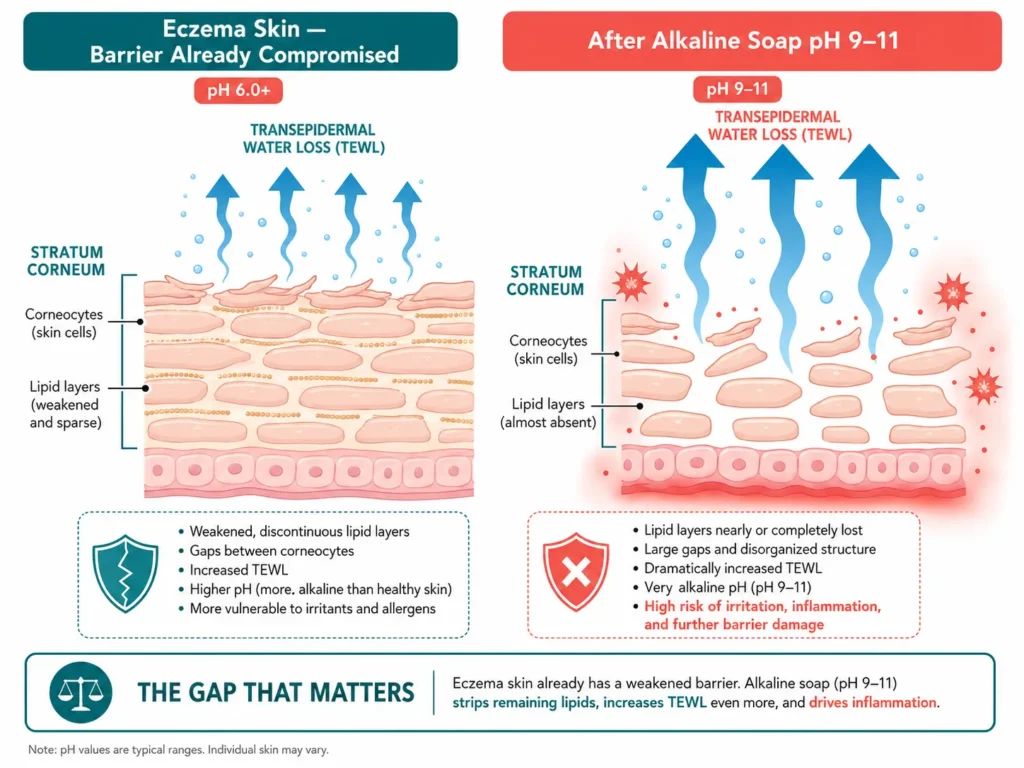
Eczema — or atopic dermatitis — is not simply dry skin. At its core it is a genetic barrier defect.
People with eczema have mutations or reduced expression of filaggrin, a protein that is critical for building the stratum corneum’s lipid matrix. The result is a structurally impaired skin barrier with three measurable consequences:
- Chronically elevated TEWL — moisture escapes continuously, even through uninflamed skin
- Elevated resting skin pH — eczema-affected skin typically has a higher surface pH (5.5–7.0) than healthy skin (4.5–5.5), creating conditions that favour inflammatory bacterial strains
- Compromised immune regulation — the impaired barrier allows environmental allergens to penetrate more easily, driving the inflammatory cycle
The critical implication for soap choice: because eczema skin’s barrier is already disrupted, it has no buffering capacity against the additional challenge of alkaline soap.
A pH 10 soap applied to healthy skin causes temporary disruption that recovers in 30–90 minutes. Applied to eczema skin, the same soap compounds existing barrier damage and may trigger or extend a flare.
🔬 Research: A 2022 review in Molecules (Mijaljica, Spada, Harrison — PMC8954092) confirmed that in eczema-affected skin, alkaline soap causes measurable loss of intracellular lipids, leaving skin red, rough, and scaly while exposing nerve endings that trigger itch.
The review specifically cited the itch-scratch-damage cycle that high-pH cleansers perpetuate in atopic skin.[1]
The SLS and Aqueous Cream Lesson
One of dermatology’s cautionary tales about surfactants and eczema involves aqueous cream — a product that was prescribed as an emollient for eczema for decades in the UK.
It was widely used as a soap substitute and leave-on moisturiser. In 2010, researchers discovered it contained sodium lauryl sulphate (SLS) at a concentration that was actually worsening eczema rather than treating it.
The BBC reported the findings, and subsequent studies confirmed that SLS — even in a ‘moisturising’ emollient base — increased skin permeability and reduced barrier function in eczema patients.
The National Eczema Society subsequently updated its guidance to avoid SLS in any product used on eczema skin. This remains the standard recommendation today.[2]
For a practical checklist of surfactants, preservatives, fragrance terms, and other irritants, read our guide to sodium lauryl sulphate and other soap ingredients that damage sensitive skin.
The NEA Seal of Acceptance — What It Actually Means
The National Eczema Association (NEA) Seal of Acceptance is an independent product evaluation that most people have seen on packaging without fully understanding what it tests. It is not a simple paid endorsement — products must meet specific criteria reviewed by a medical advisory board of dermatologists.
To earn the Seal, brands submit product and ingredient information for review, and products that meet the NEA’s scientific criteria are awarded the Seal. NEA also states that products must be validated yearly, and formula changes require another review.[5]
💡 Tip: The NEA Seal is the single most reliable shortcut for eczema-safe cleanser selection. It doesn’t replace reading the ingredient list, but for products that carry it, the major known eczema triggers have been independently reviewed.
Some recommendations carry the NEA Seal, while others are included because they match common eczema-friendly criteria such as fragrance-free, non-soap, or low-irritant formulation. Always verify the current label.
The 6 Best Soaps for Eczema
These product examples match the eczema-safe cleanser criteria discussed above: fragrance-free, non-stripping, low-irritant, and better suited to a compromised skin barrier than traditional alkaline soap. Always check the current label because formulas can change.
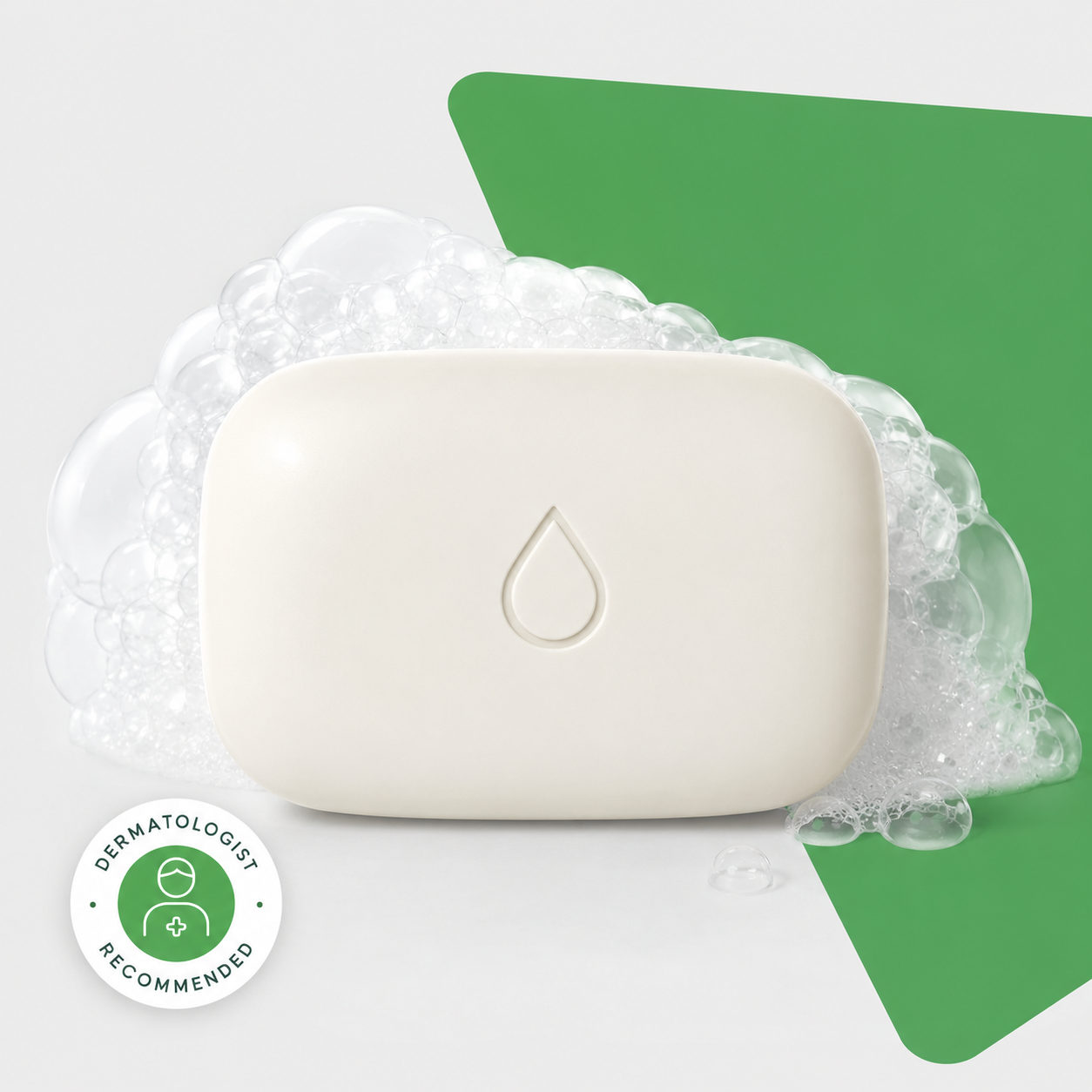
CeraVe Hydrating Cleansing Bar
A syndet-style cleansing bar with ceramides, glycerin, and hyaluronic acid for eczema-prone skin that needs barrier support.
Ceramide-focused cleansing is relevant because eczema-prone skin has impaired barrier lipids. A ceramide-dominant cleanser and moisturizer regimen has been studied for improving barrier-related outcomes in eczema-prone skin.[3]
- Fragrance-free formula.
- Includes ceramides and humectants.
- Good first choice for adult eczema-prone skin.
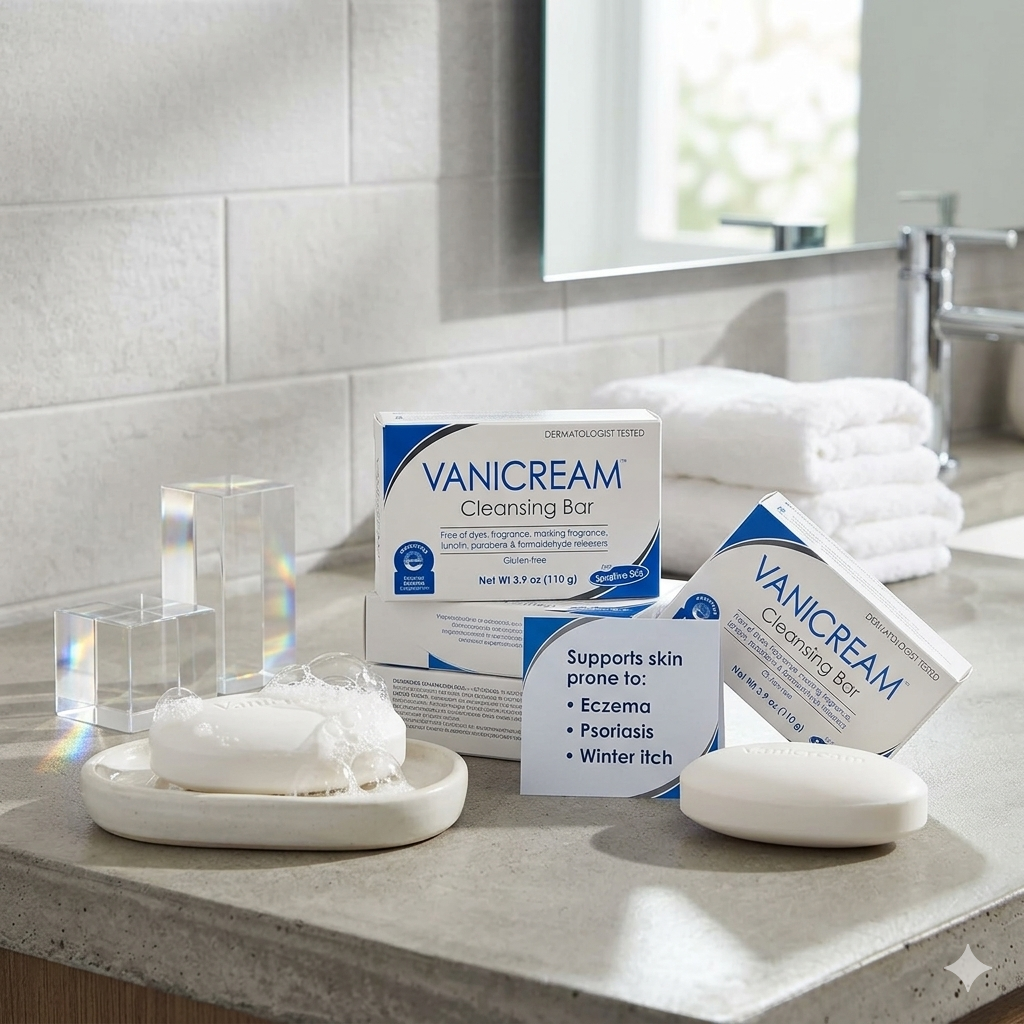
Vanicream Cleansing Bar
A minimal, fragrance-free cleansing bar for people who react to many common cosmetic ingredients.
- Free from fragrance and masking fragrance.
- Good option when ingredient tolerance is the main issue.
- Useful for simplifying an eczema routine.
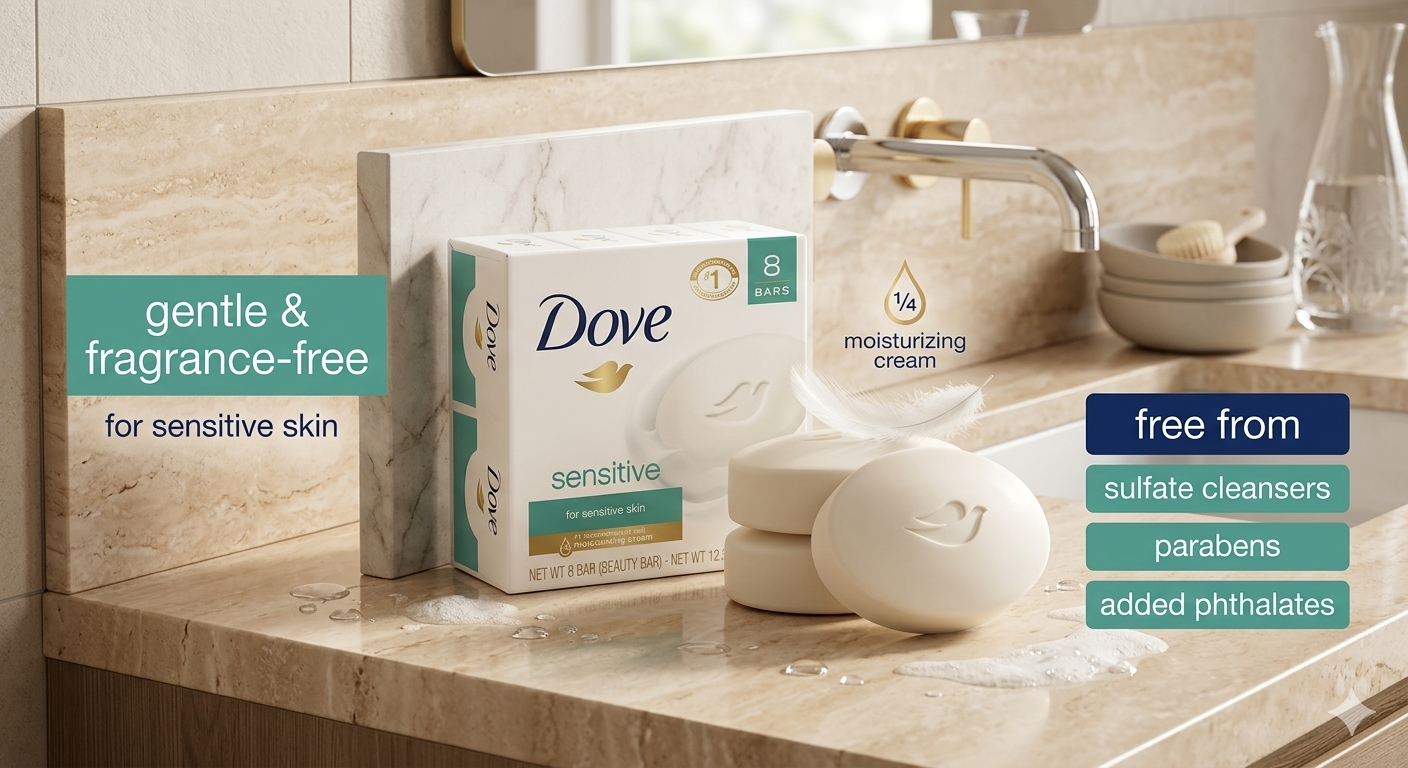
Dove Sensitive Skin Beauty Bar — Fragrance-Free
A widely available fragrance-free beauty bar for mild eczema-prone or sensitive skin when budget and daily family use matter.
- Choose the Sensitive Skin fragrance-free variant only.
- Better suited than harsh traditional soap for many sensitive users.
- Useful for families needing an affordable daily body cleanser.
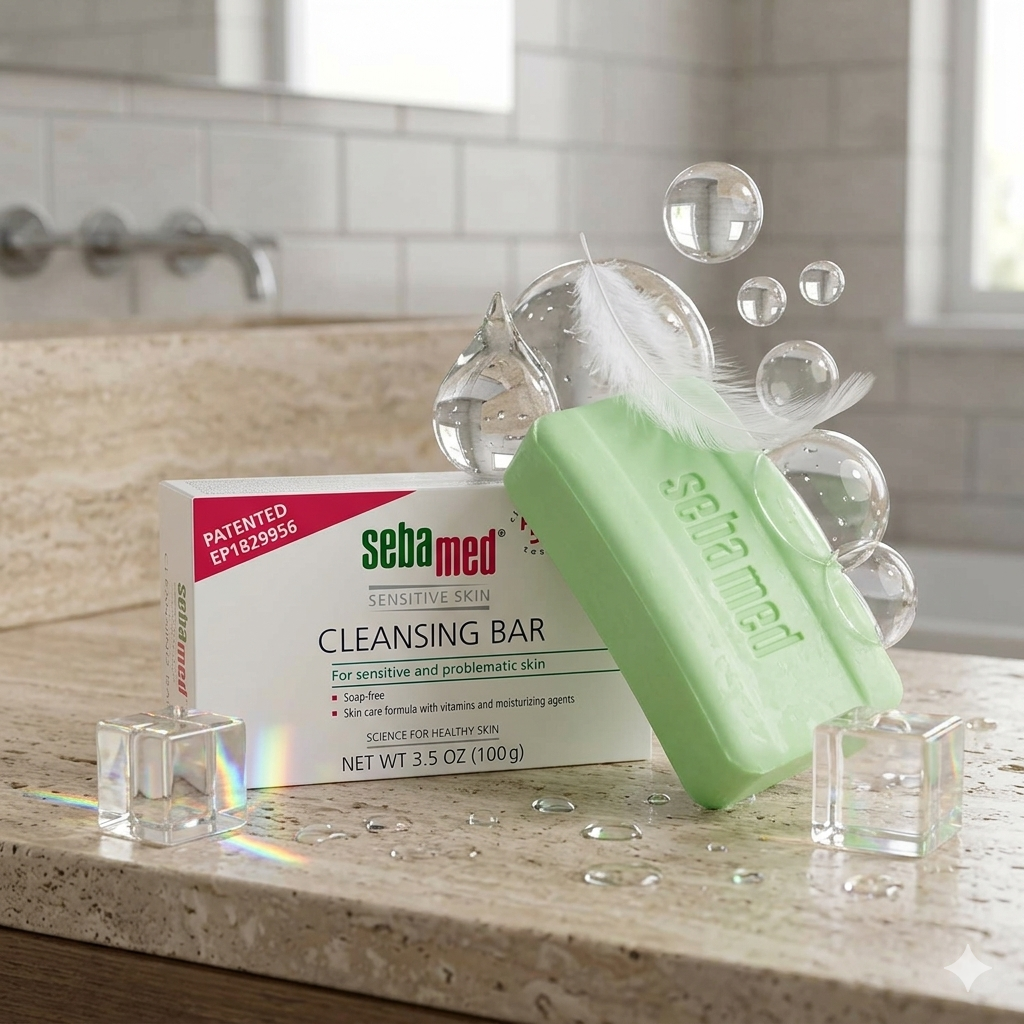
SEBAMED Soap-Free Cleansing Bar for Sensitive Skin
A soap-free cleansing bar for sensitive skin and readers who want a cleanser built around skin-compatible pH rather than traditional alkaline soap.
Sebamed is included because it is a soap-free cleansing bar built around pH 5.5, which matches the eczema-safe direction explained in the soap-and-syndet research above.[1]
- Soap-free cleansing approach.
- Useful when traditional soap leaves skin tight or irritated.
- Better fit for users prioritizing acid-mantle-friendly cleansing.
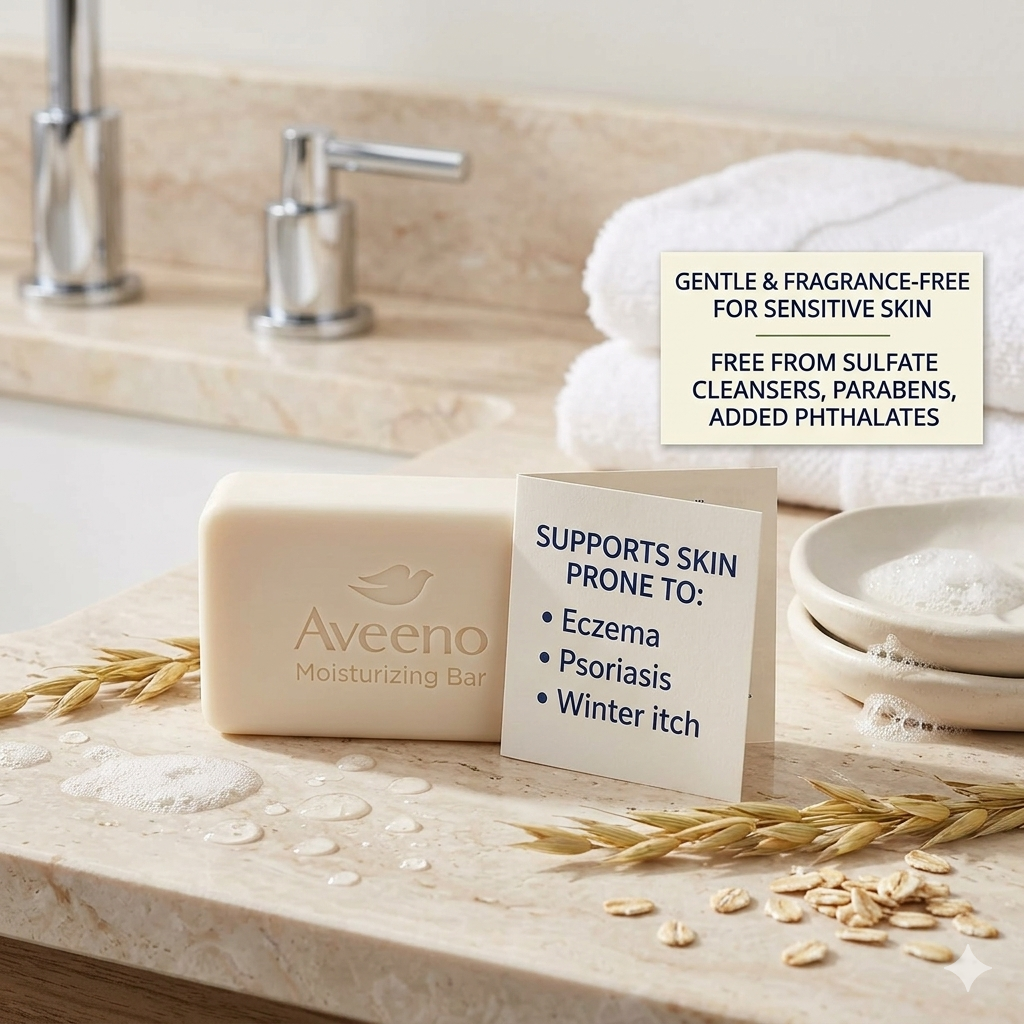
Aveeno Gentle Moisturizing Bar with Nourishing Oat
A fragrance-free, dye-free, soap-free facial cleansing bar with nourishing oat for dry, itchy, eczema-prone, or sensitive skin.
Colloidal oatmeal is listed by the FDA as an active skin protectant ingredient, which is why oatmeal-based eczema cleansers are more than just a “natural” marketing claim.[4]
- Oat-focused cleanser for dry, itchy skin.
- Fragrance-free, dye-free, and soap-free positioning.
- Useful when itch leads to scratching and barrier damage.
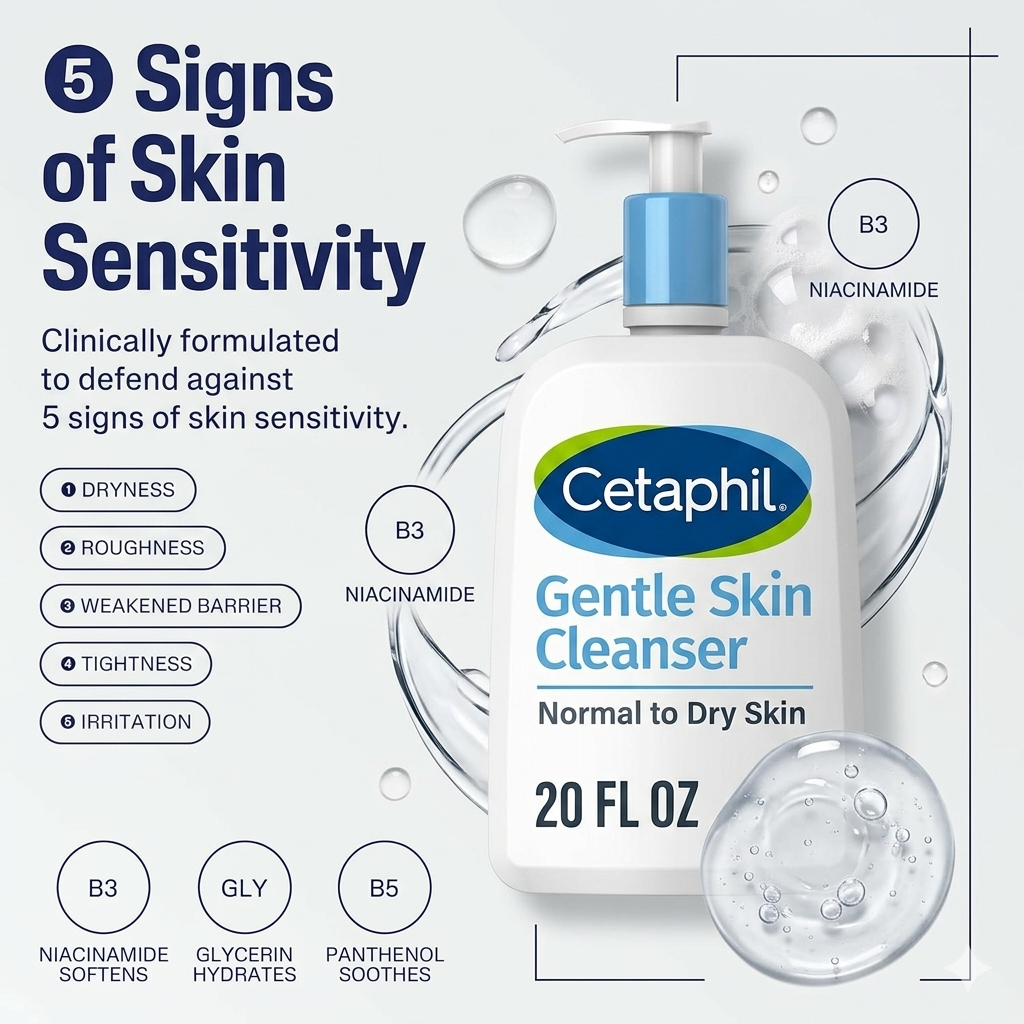
Cetaphil Hydrating Gentle Skin Cleanser
A fragrance-free, soap-free, non-foaming liquid cleanser for dry to normal sensitive skin, especially when facial eczema or flare-prone areas need low-friction cleansing.
During active eczema flares, a non-soap liquid cleanser may be easier to tolerate than rubbing a bar directly over inflamed skin. This is especially relevant for facial eczema, hand eczema, or areas where friction makes itching and irritation worse.
- Fragrance-free and soap-free positioning.
- Non-foaming liquid format reduces rubbing from bar contact.
- Good fit for face, hands, or very reactive areas.
Disclosure: This section is educational and not medical advice. Eczema can require prescription treatment, especially during active flares, infection, cracking, bleeding, or sleep-disrupting itch.
The Soak and Seal Method — The Bathing Protocol That Matters as Much as the Soap
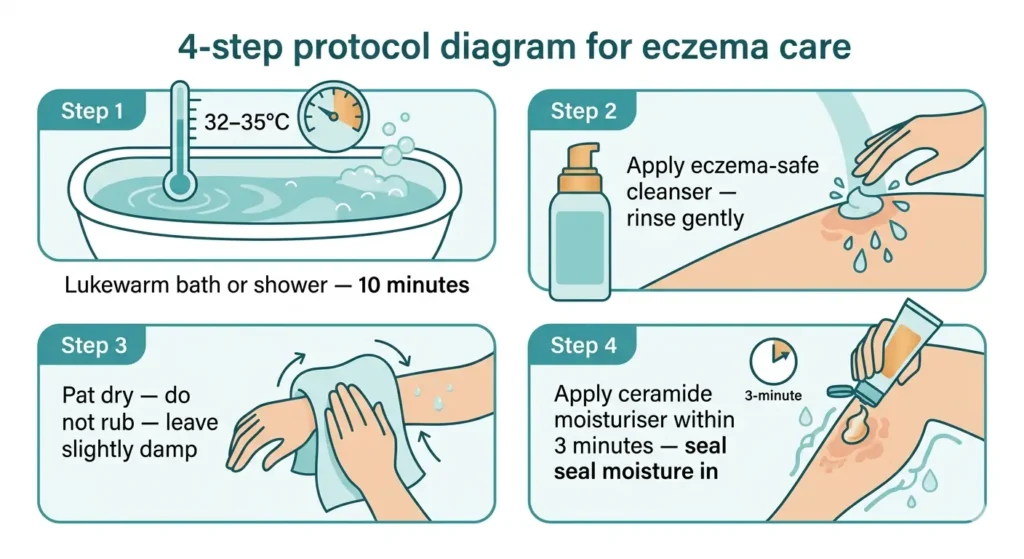
The soap you choose matters — but how and when you use it matters just as much. Dermatologists consistently recommend the ‘soak and seal’ method for eczema bathing because it uses the cleansing step as a moisture delivery opportunity rather than just a cleaning event.
🩺 Clinical Protocol:
The National Eczema Association describes soak and seal as a bathing-and-moisturizing method used in eczema care, especially before wet wraps in more severe cases.[6]
1. Bathe in lukewarm water (32–35°C / 90–95°F) for 10–15 minutes — warm enough to cleanse without stripping, cool enough to avoid vasodilation that worsens itch.
2. Apply your eczema-safe cleanser only to the necessary areas — armpits, groin, feet. Avoid lathering the full body with any cleanser.
3. Rinse thoroughly with clean water.
4. Pat dry gently — do not rub. Leave skin slightly damp.
5. Apply your ceramide-based moisturiser within 3 minutes of exiting the bath, while skin is still slightly damp.
This seals in moisture before the barrier can re-lose water.
Frequency: Daily or every other day. More frequent bathing without the seal step will worsen dryness.
⚠️ Watch Out: HOT showers are one of the most common eczema flare triggers. Water above 40°C removes significantly more intercellular lipids than lukewarm water — independent of soap type. If your eczema consistently worsens in winter or after showering, water temperature is often the first variable to address, even before changing your soap.
Eczema in Children vs Adults — Cleanser Requirements Differ
Eczema affects approximately 20% of children and 3% of adults globally. The cleanser requirements differ meaningfully:
Children with Eczema
- Skin barrierThinner and less mature, so irritation risk is higher.
- pH sensitivityUse low-pH, fragrance-free cleansers whenever possible.
- Fragrance riskAvoid fragrance completely, including essential oils.
- Bathing frequencyFollow clinician advice; many children do better with short lukewarm baths plus moisturizer.
- FormatLiquid cleansers may reduce rubbing on reactive skin.
- When to ask a doctorAlways ask a pediatrician for children under 2 or for active, infected, or worsening eczema.
Adults with Eczema
- Skin barrierMore mature, but still chronically compromised during eczema-prone periods.
- pH sensitivityLow-pH syndet or non-soap cleanser is still safer than alkaline soap.
- Fragrance riskAvoid fragrance and masking fragrance if flares are frequent.
- Bathing frequencyDaily showering can be acceptable if the soak-and-seal routine is done correctly.
- FormatBar or liquid can work; choose based on flare severity, friction tolerance, and location.
- When to ask a doctorSee a dermatologist for moderate-severe flares, cracks, bleeding, infection, or sleep-disrupting itch.
The rule is simple: children need extra caution, simpler formulas, and lower irritation risk. Adults have more flexibility, but fragrance-free and non-stripping still wins.
The reason pH matters so much is that eczema-prone skin already has a weakened barrier. For the deeper explanation, read why soap pH damages the skin barrier and what to use instead.
Quick Decision Guide — Which Eczema Soap to Start With
| Your Eczema Situation | Best First Choice | Why |
|---|---|---|
| Moderate eczema, daily adult use | CeraVe Hydrating Bar | Ceramides plus fragrance-free syndet-style cleansing. |
| Contact-allergen sensitivity | Vanicream Cleansing Bar | Minimal formula and broad irritant avoidance. |
| Active flare or facial eczema | Cetaphil Gentle Cleanser | Low-friction liquid format for reactive areas. |
| Itch-dominant eczema | Aveeno Gentle Moisturizing Bar | Nourishing oat is useful when itch and dryness are the main issue. |
| pH-focused routine | Sebamed Cleansing Bar | Soap-free pH 5.5 positioning supports a pH-focused routine. |
| Budget or family use | Dove Sensitive Bar | Accessible fragrance-free option for daily family use. |
Best overall starting point: CeraVe. Best for highly reactive skin: Vanicream. Best during active facial flares: Cetaphil Gentle Skin Cleanser.
If your eczema mainly feels dry, tight, flaky, and moisture-starved rather than itchy or inflamed, also read our guide to the best soap for dry skin — especially when eczema is primarily dryness-driven.
Frequently Asked Questions
Is bar soap bad for eczema?
Traditional bar soap is problematic for eczema due to its high pH (9–11) and frequent inclusion of SLS — both of which worsen the barrier disruption that defines the condition.
However, syndet bars formulated at pH 5.5–6.5 (like CeraVe or Vanicream) are specifically recommended for eczema and are genuinely beneficial for daily cleansing. The issue is traditional bar soap chemistry, not the bar format itself.
What should I wash eczema with?
A fragrance-free syndet bar or non-soap liquid cleanser at pH 4.5–6.5, containing no SLS, no parabens, and no formaldehyde-releasing preservatives.
The NEA Seal of Acceptance is the most reliable independent confirmation that a product meets these criteria. Apply immediately followed by a ceramide-based moisturiser within 3 minutes — the soap alone is only part of eczema skincare management.
Can I use any soap on eczema?
No. Traditional soaps — including most artisan, natural, and handmade bars — have a pH of 9–11 that actively damages the already-compromised eczema skin barrier.
Any soap containing fragrance (natural or synthetic) or SLS should be avoided. Stick to the NEA-approved and dermatologist-recommended syndet options listed in this guide.
How often should someone with eczema shower?
Daily or every other day using the soak and seal method — 10–15 minutes in lukewarm water (32–35°C), with cleanser applied only to necessary areas, followed immediately by ceramide moisturiser on damp skin.
More frequent showering without the seal step can worsen dryness and flares. The moisturiser applied after the bath is as important as the cleanser used during it.
Is natural soap better for eczema?
No — the opposite is often true. Natural soaps are made by saponification, which produces an alkaline product (pH 8.5–10) regardless of the ingredients used.
The high pH is more disruptive to eczema skin than a well-formulated synthetic syndet bar. Essential oils in natural soaps are also documented eczema triggers. For eczema, synthetic syndet bars formulated at pH 5.5 with no fragrance are consistently the safer choice.
Summary
Eczema skin has a structurally impaired barrier that cannot withstand the same pH disruption and surfactant challenge that healthy skin tolerates.
The right cleanser is not just ‘gentle’ — it must be specifically formulated at or near skin-neutral pH, contain no SLS or fragrance, and ideally provide ceramides or barrier-supportive ingredients.
All six products in this guide meet those criteria. CeraVe for ceramide support, Vanicream for the cleanest allergen-free formula, Sebamed pH 5.5 for the longest clinical history, Cetaphil liquid for active flares, Aveeno oatmeal for itch control, and Dove Sensitive for accessible daily value.
Pair any of them with the soak and seal bathing protocol and a ceramide moisturiser applied within three minutes of washing for the best possible outcome.
The soap is one variable in eczema management. A consistent routine — right cleanser, right water temperature, right moisturiser, right timing — makes a larger difference than any single product choice.
Sources
Sources include peer-reviewed dermatology research, FDA ingredient classification, and National Eczema Association guidance. Product labels can change, so always check the current ingredient list before use.
- Mijaljica D, Spada F, Harrison IP. Skin Cleansing without or with Compromise: Soaps and Syndets. Molecules. 2022.
- BBC News. Aqueous cream ‘aggravates eczema’. 2010.
- Levin J, et al. Ceramide-dominant cleanser and moisturizer regimen in eczema. 2021.
- U.S. FDA. Skin Protectant Drug Products for OTC Human Use — colloidal oatmeal classification.
- National Eczema Association. Seal of Acceptance Product Directory.
- National Eczema Association. Wet Wrap Therapy and Soak and Seal Method.
Medical Disclaimer: This article is for educational purposes only and does not constitute medical advice. Eczema is a medical condition — consult a board-certified dermatologist for personalised diagnosis and treatment.
RELATED ARTICLES: