

There’s a specific kind of discomfort that diabetics often describe first as ‘weird’ before they call it painful. A tingling in the toes that comes and goes. Feet that feel cold but aren’t. The sensation of wearing socks when you’re barefoot. The strange burning that wakes you at 3am when nothing is touching your feet.
These aren’t random or imaginary. They’re the early language of peripheral neuropathy — nerve damage caused by chronically high blood sugar. And they matter, because the window for slowing progression is widest when symptoms are still mild.
This article explains exactly what peripheral neuropathy feels like at each stage, how to tell it apart from other foot conditions, what the research says about managing it, and — critically — when symptoms signal something that needs urgent medical attention.
| Quick Answer Peripheral neuropathy in the feet typically starts with tingling, pins and needles, or mild burning in the toes — usually at night, usually in both feet equally. Over time this progresses to persistent burning or shooting pain, significant numbness, and eventually reduced or absent sensation. It affects approximately 60–70% of people with long-standing diabetes [1]. Symptoms that worsen at night, appear symmetrically in both feet, or involve numbness alongside pain are characteristic of diabetic neuropathy specifically and should be discussed with your doctor at the next available appointment. |
How Common Is This? The Numbers Behind Diabetic Neuropathy
Peripheral neuropathy isn’t a rare complication of diabetes — it’s the most common one. Understanding how widespread it is matters because many people dismiss early symptoms as normal ageing or tiredness.
| Key statistics Approximately 60–70% of people with diabetes develop some form of peripheral neuropathy during the course of their disease — that’s an estimated 15–18 million Americans [1] A 2025 systematic review and meta-analysis found painful diabetic peripheral neuropathy (PDPN) affects approximately 33.9% of diabetics (95% CI: 19.4%–48.5%) [2] A separate 2025 meta-analysis of 41 studies reported a pooled global prevalence of painful DPN at 46.7% among those already diagnosed with neuropathy [3] Around 50% of early peripheral neuropathy cases are asymptomatic — meaning damage is present before pain or tingling begins [4] Signs of neuropathy can appear even before a formal diabetes diagnosis, particularly in people with prediabetes [5] |
That last point is worth dwelling on. Half of people with diabetic neuropathy don’t know they have it yet — not because they have no symptoms, but because early damage doesn’t always produce sensation. Which is, counterintuitively, the most dangerous phase: you can have a cut, burn, or pressure injury on your foot and feel nothing.
What Does Peripheral Neuropathy Actually Feel Like? Symptom by Symptom
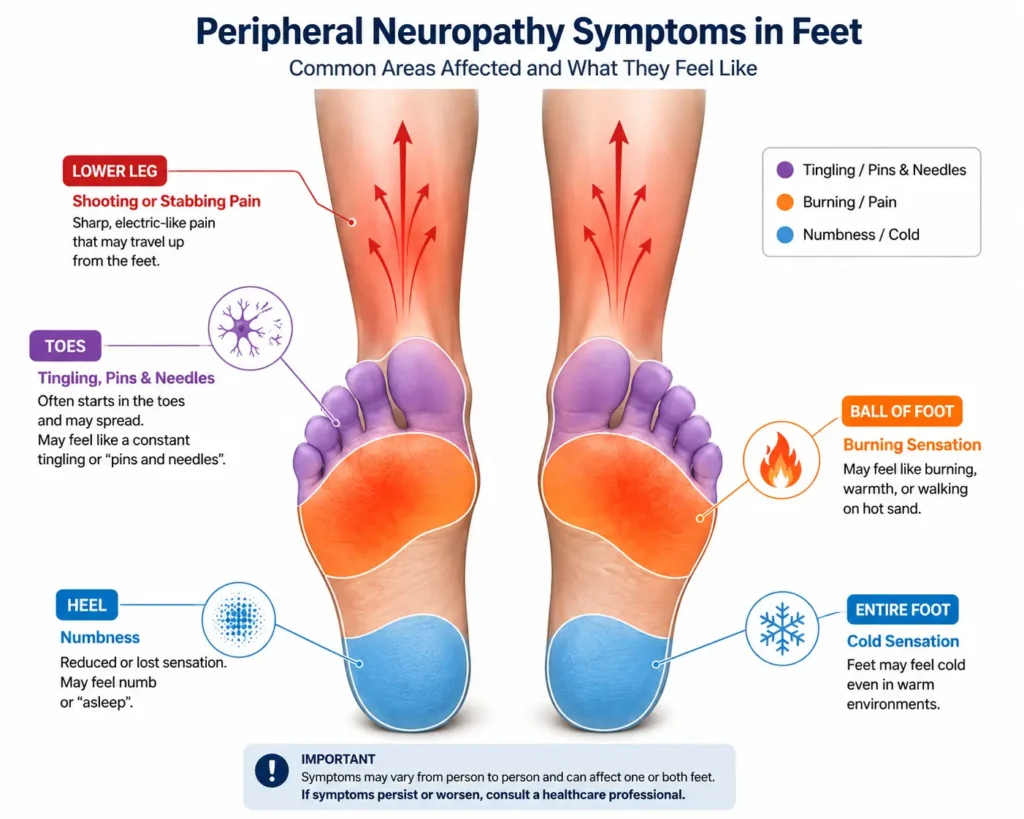
People with diabetic neuropathy describe their symptoms in strikingly similar ways across different stages of the condition. Here’s what each symptom actually represents — and why it happens:
Tingling and ‘Pins and Needles’
This is usually the first thing people notice. A fizzing, electric sensation in the toes or the ball of the foot — often described as exactly like the feeling of a limb ‘waking up’ after being sat on, except without a clear cause.
What’s happening: small sensory nerve fibres are beginning to misfire. They’re damaged enough to send abnormal signals but not yet too damaged to send any signals at all. This stage is clinically significant because it’s when intervention has the most impact.
Typical pattern: both feet simultaneously, starts in the toes and spreads upward in what neurologists call the ‘stocking-glove’ distribution — named because the affected area resembles where a stocking sits on the leg [5].
Burning Sensation — Especially at Night
The burning that wakes people at 3am is one of the most distressing and recognisable symptoms of diabetic neuropathy. It doesn’t feel like external heat — it feels like the foot itself is on fire, from the inside.
According to the American Diabetes Association, symptoms are often worst at night — particularly burning and shooting pain [6].
The reason is partly physiological: fewer competing sensory inputs during sleep mean the nervous system’s misfired signals dominate perception, and the slight drop in body temperature at night can intensify the sensation.
What’s happening: pain-transmitting C-fibres are being triggered without any actual tissue damage. The nerve is essentially generating a false alarm — repeatedly.
Shooting or Stabbing Pain
Some people describe sudden electric-shock sensations — sharp jolts that travel up through the foot or lower leg without warning. Others describe it as stabbing, like stepping on a nail that isn’t there.
These typically come from damage to the larger A-delta nerve fibres — the fast-signal fibres responsible for sharp, immediate pain. When these fibres misfire, the result is precisely that: sharp, immediate, unpredictable pain.
Numbness and Loss of Protective Sensation
This symptom gets less attention than pain but is medically more serious. Numbness means the nervous system can no longer reliably warn you about injury.
People with significant diabetic neuropathy have walked for days on broken glass, fractured feet, or severe burns without feeling them. The American Diabetes Association describes diabetic neuropathy as effectively ‘shutting off the foot’s natural alarm system’ [6].
Common descriptions from patients:
- “It feels like I’m walking on cotton wool”
- “I feel like I always have thick socks on, even barefoot”
- “My feet feel like they belong to someone else”
- “I can’t feel the floor properly when I walk”
Cold Feet or Strange Temperature Sensations
Autonomic nerve involvement in diabetic neuropathy affects the small vessels that control blood distribution to the feet, resulting in genuinely cold feet — not just a sensation of cold. Some people experience the opposite: a persistent burning heat with no external cause.
A particularly confusing symptom is when the feet feel cold to the patient but are normal temperature to the touch. This reflects disrupted temperature signalling in the nerve fibres, not actual circulatory cold.
Touch Sensitivity (Allodynia)
In the early-to-moderate stage of neuropathy, some people experience the opposite of numbness: hypersensitivity to touch so extreme that bedsheets feel painful. This is called allodynia — pain produced by stimuli that wouldn’t normally cause pain.
Both allodynia and numbness can coexist in different areas of the same foot, reflecting patchy nerve damage rather than uniform loss of function. This is one of the reasons diabetic foot assessment requires careful, systematic examination rather than a quick squeeze test.
Muscle Weakness and Balance Problems
As neuropathy progresses into motor nerve fibres, the muscles in the feet and lower legs begin to weaken. People find it harder to lift the front of the foot when walking — a condition called foot drop — or notice increased clumsiness and falls.
Balance is a compound system that depends heavily on sensory feedback from the feet. When that feedback is impaired, the brain loses critical information about body position, increasing fall risk significantly in older diabetics [4].
How Symptoms Progress: The Three Stages of Diabetic Peripheral Neuropathy
Neuropathy doesn’t arrive all at once. It develops gradually — usually over years — and the symptom picture changes significantly depending on what stage you’re in.
How Neuropathy Symptoms Usually Progress
Intermittent tingling or pins and needles
Typical timing: early diabetes years or even before diagnosis.
- Mild toe tingling that comes and goes.
- Occasional numbness or strange temperature feeling.
- Small sensory nerve fibres begin to misfire.
- Best window for slowing progression with medical care.
Burning, shooting pain, and reduced sensation
Typical timing: often after years of diabetes, but timing varies.
- Burning or stabbing pain, often worse at night.
- Greater numbness and reduced heat/touch sensitivity.
- Pain pathways misfire more often.
- Protective sensation starts becoming less reliable.
Significant numbness and higher foot-injury risk
Typical timing: long-standing or poorly controlled disease.
- Severe or total numbness may develop.
- Pain can decrease because nerves are too damaged to signal.
- Foot ulcers, infection, and unnoticed injuries become more likely.
- Needs regular professional foot checks.
Important: less pain does not always mean healing. In advanced neuropathy, pain can reduce because damaged nerves stop sending signals, while foot-injury risk increases.
| An important nuance Pain decreasing does not mean neuropathy is improving. In advanced stages, pain often reduces because the nerve fibres are too damaged to generate any signal — not because healing has occurred. This paradox catches many patients and even some clinicians off guard. If pain suddenly resolves without a change in blood sugar control, consult your doctor rather than assuming improvement. |
Neuropathy vs. Plantar Fasciitis vs. Poor Circulation: How to Tell the Difference
These three conditions share overlapping symptoms — burning, pain, and discomfort in the feet — but have different causes, risk profiles, and treatments. Confusing them delays proper care.
Neuropathy, Plantar Fasciitis, or Poor Circulation?
Practical clue: diabetic neuropathy is usually symmetric, worst at rest or night, and includes numbness. Plantar fasciitis is usually heel-focused. PAD often worsens with walking and improves with rest.
The most practically useful distinction:
diabetic neuropathy is symmetric (both feet), worst at rest/night, and produces numbness alongside pain.
Plantar fasciitis is asymmetric (typically one foot), localised to the heel and arch, and worst in the first steps of the morning. PAD produces cramping that appears during walking and disappears with rest.
Having all three simultaneously is possible — and not uncommon in long-standing diabetics.
If you’re unsure, this is exactly the kind of assessment your podiatrist or physician should help you work through.
See also our article on plantar fasciitis vs. neuropathy foot pain for a more detailed comparison.
When to See Your Doctor: Symptoms That Need Prompt Attention
| See your doctor urgently if you notice: A cut, blister, or sore on your foot that is not healing normally — even if it doesn’t hurt Any open wound, redness, or swelling that wasn’t there before, especially in a numb area Sudden increase in foot or leg pain that is significantly worse than usual Skin colour changes — darkening, black areas, or mottling — in the feet or toes Foot shape changes or a toe that has changed position or buckled Foot pain severe enough to prevent sleep or daily activity Loss of feeling in the feet if you haven’t been previously diagnosed or assessed for neuropathy The American Diabetes Association recommends all people with diabetes have their feet examined by a healthcare professional at least once per year, and more frequently if neuropathy is present [6]. |
What Actually Helps: Managing Peripheral Neuropathy Symptoms

There is currently no simple cure that fully reverses established diabetes-related peripheral neuropathy. But that does not mean nothing helps: blood sugar control, foot protection, appropriate medication, and symptom-focused therapies can reduce pain, protect the feet, and slow worsening when used consistently.[8]
1. Blood Sugar Control — The Foundation
This is not optional and it isn’t a cliché. Tight glycaemic control is the only intervention that addresses the root cause of neuropathy.
A landmark DCCT trial demonstrated that intensive glucose management in Type 1 diabetes reduced the development of neuropathy by 60%, and subsequent research confirmed similar benefits in Type 2 diabetes.
If neuropathy is progressing despite good HbA1c management, discuss with your doctor whether additional metabolic factors — blood pressure, lipids, kidney function — might be contributing.
2. Therapeutic Foot Massage and Electrical Stimulation
Gentle foot massage may help some people feel temporary relief by relaxing tight muscles, improving comfort, and reducing pain perception. But in diabetes, massage should be gentle, low-pressure, and avoided over wounds, swelling, skin infection, severe numbness, or suspected circulation problems.
For direct nerve-level intervention, EMS and TENS therapy has the strongest clinical evidence among at-home modalities — a 2025 network meta-analysis ranked TENS first among all non-drug neuromodulation therapies for pain reduction in diabetic neuropathy [7].
For our full breakdown of the best devices for neuropathy — including safe intensity settings for sensitive diabetic feet, FSA/HSA eligibility, and which device suits which symptoms — see our Best Foot Massager for Neuropathy and Diabetes guide.
3. Medications for Neuropathic Pain
Several medications are used for neuropathic pain management. These are prescribed decisions — not something to self-manage — but worth knowing about:
- Pregabalin (Lyrica) and gabapentin — first-line medications for neuropathic pain, working on calcium channels in pain pathways
- Duloxetine (Cymbalta) — an SNRI antidepressant also approved for diabetic neuropathic pain
- Topical capsaicin cream — depletes substance P in local nerve endings; useful for localised burning
- Tricyclic antidepressants (amitriptyline) — older but effective at low doses for sleep disruption from neuropathy
If you are currently experiencing significant neuropathy pain and haven’t been offered pharmacological treatment, discuss these options with your prescribing physician. They are underused in routine diabetes care.
4. Footwear and Daily Foot Care
Properly fitted shoes and a daily foot inspection routine are not glamorous, but they prevent the ulcers and infections that lead to amputations. For a complete daily checklist, see our Diabetic Foot Care Routine guide.
5. Physical Activity — Within Safe Limits
Regular walking and gentle movement improve peripheral circulation and slow neuropathy progression. The challenge for people with painful neuropathy is that walking is itself painful. Water-based exercise and cycling may offer cardiovascular and circulatory benefits with less weight-bearing stress on the feet.
For people whose foot pain limits walking, EMS/TENS devices may be worth discussing with a clinician as part of a symptom-management plan. They are not a replacement for safe physical activity, glucose management, footwear, or professional diabetic foot care. See our EMS and TENS Therapy for Diabetic Neuropathy article for the full breakdown.
The Bottom Line: Don’t Wait for the Symptoms to Get Louder
| Bottom Line Peripheral neuropathy in the feet is progressive but not inevitable in its worst forms. The earlier you act — on blood sugar, on foot care, on symptom management — the more function and protection you preserve. The tingling that seems minor right now is nerve fibres beginning to misfire. The numbness that seems like an improvement is nerve fibres losing the ability to signal at all. Neither should be ignored or normalised. Key takeaways: Symptoms are typically symmetric (both feet) and worst at night — this pattern strongly suggests diabetic neuropathy Numbness is medically more dangerous than pain because it removes your foot’s ability to alert you to injury If pain paradoxically improves without better glucose control, see your doctor — nerve fibres may be too damaged to signal Annual foot examination by a healthcare professional is recommended from the point of diabetes diagnosis [6] At-home management — massage, EMS/TENS, footwear, daily inspection — can meaningfully reduce symptoms when paired with medical care |
Related Articles
→ Best Foot Massager for Neuropathy and Diabetes
→ FSA and HSA Eligible Foot Massagers for Neuropathy
Frequently Asked Questions
What does peripheral neuropathy feel like in the feet?
The most common descriptions are: tingling or ‘pins and needles’ in the toes, burning sensations (especially at night), electric-shock or stabbing pain, numbness or a feeling of wearing thick socks when barefoot, and extreme sensitivity to touch.
Symptoms are typically present in both feet simultaneously and tend to be worst during rest or sleep.
Early-stage neuropathy often feels intermittent and mild — easy to dismiss. This is precisely when intervention is most effective.
What are the first signs of neuropathy in the feet?
The earliest signs are usually subtle sensory changes in the toes: mild tingling, occasional pins and needles, or a faint burning that comes and goes.
Some people first notice that their feet feel slightly numb or that temperature sensations seem off — cold water not feeling as cold, warm floors not feeling as warm.
These early changes can begin before a formal diabetes diagnosis and are worth reporting at any routine appointment.
Can neuropathy come and go?
Yes — particularly in early and moderate stages. Tingling, burning, and shooting pain can be intermittent, sometimes absent for days or weeks before returning. This unpredictability leads many people to delay seeking assessment.
Important: symptoms going quiet doesn’t mean the underlying nerve damage has resolved.
If symptoms disappear entirely without improved blood sugar control, mention this to your doctor — it can indicate advancing rather than resolving neuropathy.
Is numbness in the feet always neuropathy?
Not necessarily. Numbness can result from temporary pressure on nerves (sitting cross-legged, wearing tight shoes), circulatory problems, certain vitamin deficiencies (particularly B12), thyroid disorders, or lumbar spine issues compressing nerve roots.
However, in someone with diabetes — especially long-standing diabetes — new or persistent foot numbness should be assessed for neuropathy.
The stocking-glove pattern, bilateral symptoms, and association with other neuropathy symptoms help distinguish it.
Does neuropathy get worse at night?
Yes — this is one of its most characteristic features. Burning and shooting pain are consistently reported as worse at night, for several reasons: fewer competing sensory inputs mean misfired nerve signals feel more intense; a slight drop in body temperature can heighten burning sensations; and the stillness of sleep removes the distraction and movement that partially dampens pain during the day.
Evening foot massage with gentle heat is one of the most practically effective ways to reduce this nighttime disruption.
Can you reverse peripheral neuropathy in feet?
Established nerve damage from diabetic neuropathy cannot currently be reversed.
However, progression can be slowed or halted with tight blood sugar control — particularly in earlier stages.
Some people with early, mild neuropathy do experience symptom improvement with intensive glycaemic management.
The goal in most cases is symptom management, preventing complications (especially foot ulcers), and slowing further damage.
When should I see a doctor about foot numbness and tingling?
Any new or worsening numbness, tingling, or burning in both feet that persists for more than a few days should be discussed with your doctor, especially if you have diabetes.
Seek same-day or emergency care if you notice an unhealing wound, skin colour changes, sudden severe pain, or any area of black or darkening tissue on the foot — these can indicate serious complications including infection or compromised blood supply.
What helps diabetic foot pain at night?
Some people find gentle evening foot massage helpful for comfort before sleep, but avoid heat or pressure if you have severe numbness, wounds, swelling, or suspected circulation problems.
EMS/TENS therapy has stronger evidence than ordinary massage for painful diabetic neuropathy, but it should still be used carefully and ideally discussed with a healthcare professional.
Keeping feet at a comfortable temperature (neither cold nor hot), elevating the foot of the bed slightly, and wearing soft, seamless socks can all help.
Medically, if nighttime pain is disrupting sleep regularly, speak to your doctor about prescription options — pregabalin and duloxetine are specifically approved for painful diabetic neuropathy.
Sources & References
Sources include peer-reviewed studies, major diabetes organizations, and established medical institutions. This article is educational and does not replace professional medical assessment.
- UCSF Health. Diabetic Peripheral Neuropathy — Prevalence and Pathophysiology.
- Zhou P, Zhou JS, Li JJ, et al. Prevalence and risk factors for painful diabetic peripheral neuropathy: a systematic review and meta-analysis. Frontiers in Neurology. 2025.
- Prevalence and risk factors of painful diabetic neuropathy: A systematic review and meta-analysis. Diabetes Research and Clinical Practice. 2025.
- Kurz FT, et al. Diabetic Peripheral Neuropathy: Current Epidemiology, Diagnostic Advances, Biomarkers, and Management Strategies. Journal of Diabetes Research.
- Mayo Clinic. Diabetic neuropathy — Symptoms and causes.
- American Diabetes Association. Peripheral Neuropathy.
- Li L, Luo X, Liu Y, et al. Network Meta-analysis of Randomized Controlled Trials Assessing Neuromodulation Therapies for Painful Diabetic Neuropathy. Neurology and Therapy. 2025.
- Cleveland Clinic. Diabetes-Related Neuropathy: What It Is, Symptoms & Treatment.
| Medical Disclaimer This article is for educational purposes only and does not constitute medical advice. Symptoms of peripheral neuropathy require professional assessment — especially in people with diabetes. If you are experiencing foot numbness, pain, or wounds that are not healing, consult a qualified healthcare professional promptly. Never ignore a foot symptom because it doesn’t hurt — reduced sensation is itself a warning sign. |