

If your skin feels tight, itchy, or flaky after washing, your soap may be the cause — not just your skin type. Most people assume dry skin is simply their skin, when in reality the wrong cleanser is worsening an already-compromised moisture barrier with every wash.
This guide identifies the 7 best types of soap for dry skin, each backed by peer-reviewed research and dermatologist evidence. To understand why specific soap types matter for skin health, start with the full breakdown in our complete guide to types of soap and their benefits for skin — this article focuses specifically on the dry skin application of those categories.
Why Dry Skin and Traditional Soap Are a Bad Match
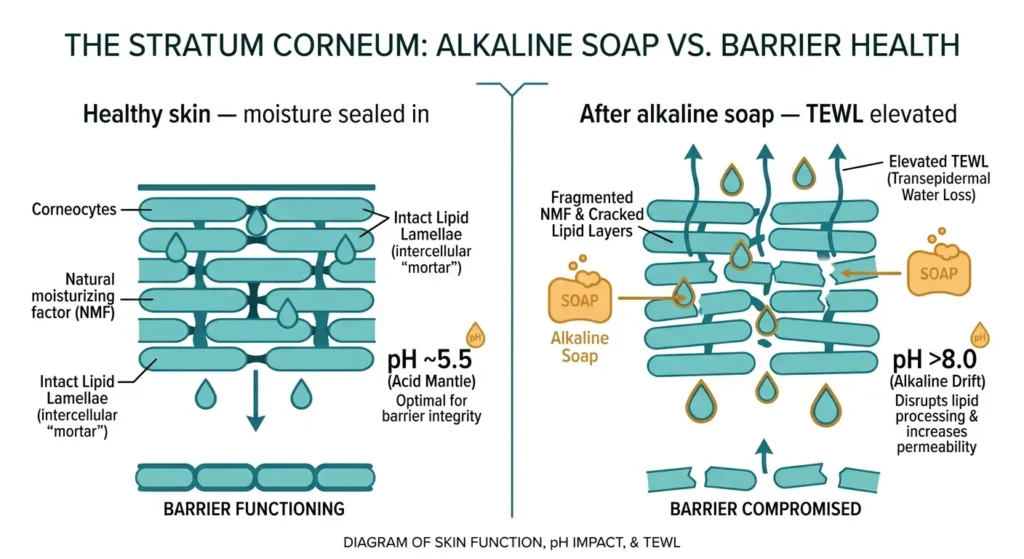
Dry skin — clinically called xerosis cutis — occurs when the stratum corneum (the outermost skin layer) loses its ability to retain water. Two mechanisms drive this: reduced natural moisturising factors (NMFs) inside skin cells, and impaired intercellular lipid structure that normally seals moisture in.
The measurable sign of a compromised barrier is elevated transepidermal water loss (TEWL) — the rate at which water evaporates through skin. Research published in Acta Dermato-Venereologica confirmed TEWL is significantly elevated even in areas of dry skin that appear clinically normal, indicating continuous moisture escape through a compromised barrier. [Source 1]
Traditional bar soaps (pH 8.5–11) worsen this through two mechanisms: saponifying the intercellular lipids that seal moisture in, and denaturing proteins that regulate skin cell maturation. A 2022 review in Molecules (MDPI) confirmed high-pH soaps cause measurable lipid dissolution, barrier disruption, and acid-mantle alteration that persists for hours. [Source 2]
This is why the pH and surfactant type of your soap matters as much as — or more than — the moisturising ingredients it contains. For the full science of pH and its impact on the skin’s acid mantle, our dedicated article on what a syndet bar is and how it protects your skin’s pH covers this in detail.
The Hot Shower Problem Nobody Mentions
Hot water (above 40°C / 104°F) removes significantly more intercellular lipids than lukewarm water — independent of soap type. For dry skin, a hot shower combined with an alkaline soap delivers a double barrier assault.
Dermatologist Dr. Janine Hopkins (Southlake, TX) notes that humectants like glycerin and hyaluronic acid attract and bind water in the stratum corneum, while occlusives like petrolatum form a protective barrier minimising TEWL. Both ingredient types are valuable for dry skin — which is why choosing a moisturising soap (not just a gentle one) makes a real difference. [Source 3]
Ingredients That Actually Help Dry Skin — and How to Find Them on a Label
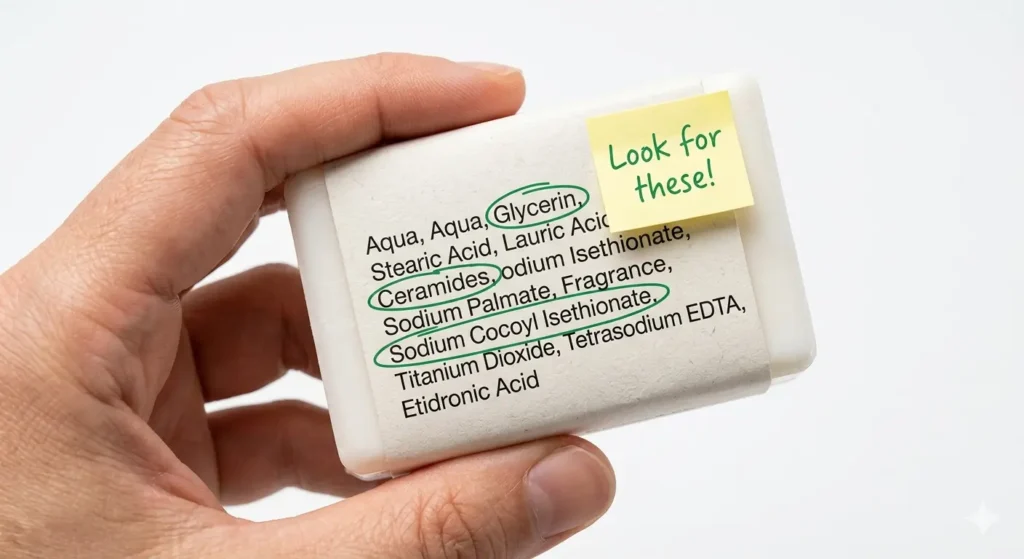
The ingredient list — not the front-of-pack marketing claims — is where a soap’s value for dry skin is determined. Here is what peer-reviewed evidence supports for dry skin specifically:
Seek these ingredients: Glycerin (glycerol) — the most clinically studied humectant, effective for eczema and psoriasis and should appear in the top 5 ingredients [Source 4]; ceramides (NP, AP, EOP) — the lipid ‘mortar’ between skin cells, shown in a 2021 randomised trial to measurably restore barrier permeability in eczema [Source 5]; sodium cocoyl isethionate (SCI) — the gentle primary surfactant in quality syndet bars; hyaluronic acid — holds up to 1,000× its weight in water; colloidal oatmeal — FDA-recognised skin protectant with anti-inflammatory and anti-itch action; shea butter and plant oils — emollient occlusives that slow TEWL; allantoin — promotes skin cell renewal and softening.
For the complete evidence-based list of ingredients that damage dry and sensitive skin — including SLS, parabens, and formaldehyde-releasing preservatives — read our dedicated guide: soap ingredients to avoid for sensitive and dry skin.
Why pH Is the Single Most Important Number
Your skin’s acid mantle sits at pH 4.5–5.5. Traditional soaps range from pH 8.5–11 — up to 1,000,000× more alkaline. For dry skin with an already-compromised barrier, even moderate pH disruption compounds existing moisture loss. Always choose soaps labelled “pH-balanced,” “syndet,” or “soap-free” — these are formulated at pH 5.5–7.0. For the full chemistry of how syndet bars preserve your skin’s acid mantle, see our article on what is a syndet bar and why it matters for dry skin.
The 7 Best Types of Soap for Dry Skin — Research Behind Each
These are ingredient-category recommendations backed by clinical evidence, with verified product examples and Amazon links for each category where available.
Glycerin Bar Soap — The Most Research-Backed Choice
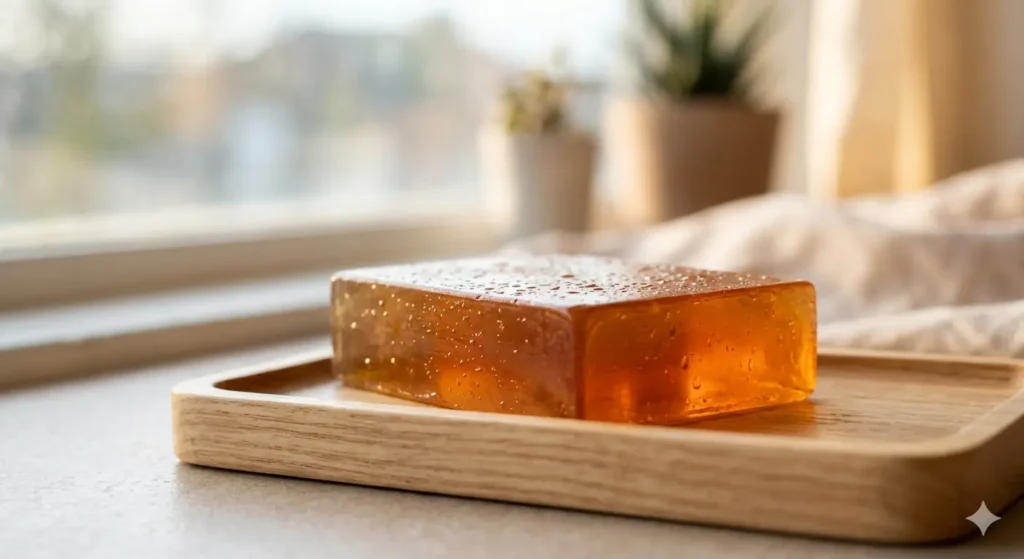
Glycerin bars retain or add back the glycerol that commercial soap manufacturers typically remove and sell separately to the cosmetics industry. As a humectant, glycerin draws moisture from the air and binds it to the stratum corneum — working with your skin’s natural moisture-binding system rather than stripping it.
Research by Dr. Wendy Bollag (Medical College of Georgia, 2021) published in the International Journal of Molecular Sciences found that glycerol promotes proper skin cell maturation through four developmental stages and measurably reduced psoriasis plaques in controlled conditions. [Source 4]
A separate placebo-controlled, double-blind, randomised trial (Breternitz et al., Skin Pharmacology and Physiology, 2008) confirmed measurable improvements in barrier function and clinical severity in atopic dermatitis patients using glycerol-based products — including reduced TEWL and improved stratum corneum hydration. [Source 6]
🛒 Get your best glycerin soap:
Dermisa Glycerin Bar + Aloe Vera · Glycerin + aloe vera · Paraben-free · All skin types Natural Vegan Glycerin Bar Set of 3 100% vegetable glycerin · Sulfate-free · Paraben-free Clearly Natural Essentials Glycerin Bar Soap, Unscented Maintain Skin’s Natural PHb balance, Long lasting hydrationSyndet Bars — The pH-Balanced Daily Choice
Syndet bars are soap-free cleansers formulated with synthetic surfactants that preserve the acid mantle — the single most recommended cleanser category by board-certified dermatologists for daily use on dry, sensitive, and compromised skin.
A 2024 peer-reviewed comparative study in Pharmaceutical Research (Pawar et al.) confirmed syndet bars preserve the skin’s acid mantle more effectively than traditional soap bars, with measurably lower post-wash TEWL elevation and faster pH recovery. [Source 7]
Dermatologists Dr. Deanne Mraz Robinson and Dr. Brendan Camp both endorse Vanicream Cleansing Bar as their preferred daily-use option for dry, eczema-prone, and psoriasis-prone skin. The key active surfactant — sodium cocoyl isethionate — cleanses at a pH that does not disrupt the acid mantle. [Source 8]
🛒 View on Amazon:
Vanicream Cleansing Bar for Sensitive Skin Fragrance-free · Sulfate-free · NEA Seal of Acceptance · Key ingredient: Sodium Cocoyl Isethionate CeraVe Hydrating Cleanser Bar Ceramides + Hyaluronic Acid · NEA Seal · Developed with dermatologists · Soap-freeCeramide-Infused Cleansing Bars — Best for Eczema-Prone Dry Skin
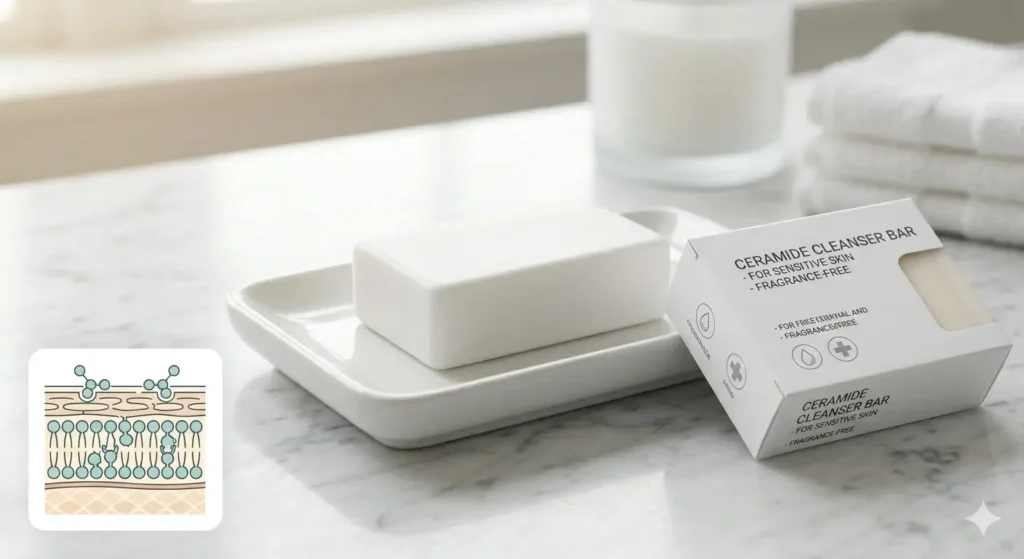
Ceramides are the primary lipid component of the stratum corneum — they form the moisture-sealing ‘mortar’ between skin cells. People with eczema and severely dry skin have significantly reduced ceramide levels in both affected and unaffected skin areas. Ceramide-based cleansers deliver exogenous ceramides that directly replenish this depleted system.
A randomised clinical trial published in PMC (2021) confirmed that a ceramide-dominant cleanser and moisturiser regimen measurably restored skin permeability barrier in adults with moderate eczema — with statistically significant reductions in TEWL and clinical severity scores. [Source 5]
A 2025 study (Xia et al., Journal of Cosmetic Dermatology) further confirmed that ceramide-containing glycinate-based cleansers reduce skin redness, repair barrier function, and reduce post-treatment skin sensitivity. [Source 9]
🛒 View on Amazon:
CeraVe Hydrating Cleanser Bar 3-Pack Ceramides + Hyaluronic Acid + 5% Moisturising Cream · NEA Seal · Soap-freeColloidal Oatmeal Bar — Best for Itchy, Inflamed Dry Skin
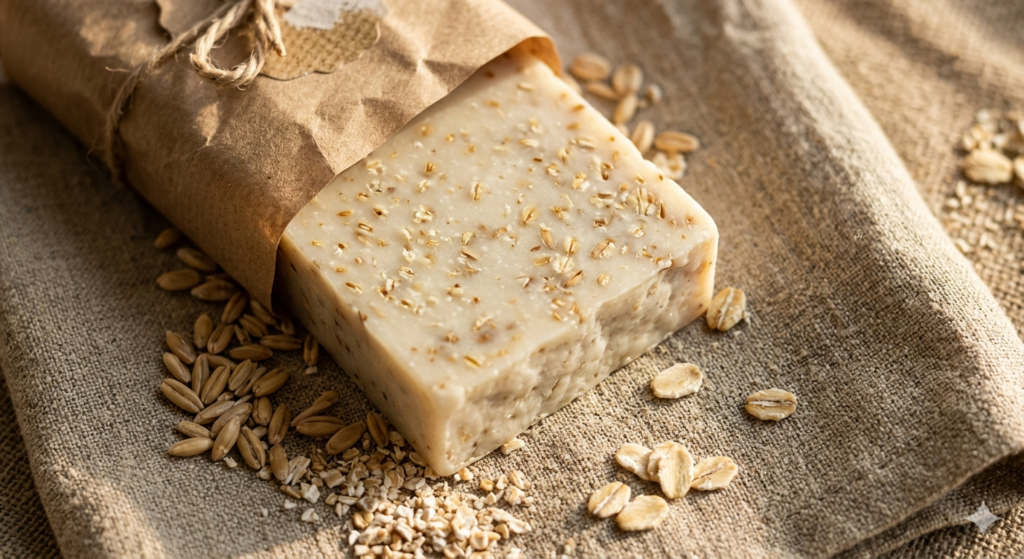
Colloidal oatmeal is the finely milled, water-dispersible form of whole oats — processing it this way makes active components bioavailable to skin. The FDA has recognised colloidal oatmeal as a skin protectant in rinse-off products at 0.003%–0.3%.
The primary active compounds — avenanthramides — are phenolic alkaloids unique to oats with measurable anti-inflammatory, antihistaminic, and anti-pruritic properties. A systematic review of randomised controlled trials confirmed their efficacy in reducing itch severity and skin roughness in mild to moderate atopic dermatitis.
Dermatologist Dr. Annabelle Garcia specifically recommends colloidal oatmeal as a primary ingredient for eczema-prone dry skin alongside ceramides and hyaluronic acid — because it both soothes inflammation and supports barrier recovery simultaneously. [Source 10]
🛒 View on Amazon:
Aveeno Moisturising Bar — Colloidal Oatmeal, Fragrance-Free Colloidal oatmeal + glycerin · Fragrance-free · Dye-free · Soap-free · Dermatologist recommended Cleure Glycerin Face & Body Bar (Oatmeal + Shea + Glycerin) Oatmeal + Shea Butter + Glycerin · SLS-free · Fragrance-free · Endorsed by Dr. Tahani Williams MDShea Butter Bar Soap — Best for Extremely Dry and Mature Skin

Shea butter (Butyrospermum parkii) is rich in oleic acid (45–50%), stearic acid (35–45%), and linoleic acid (3–8%) — fatty acids that closely resemble the skin’s own intercellular lipids, allowing shea butter to integrate readily into the stratum corneum as both an emollient and mild occlusive.
Dr. Julie Russak (board-certified dermatologist) notes that as skin matures, lipid production, barrier integrity, and cell turnover slow — leading to increased dryness and sensitivity. For mature dry skin, ingredients that actively restore lipid systems (shea butter, ceramides, fatty acids) are more therapeutic than humectants alone. [Source 3]
🛒 Amazon Search (shea-butter syndet bars):
Moiz Sy/ndet Bathing Bar | pH 5.5 | With Shea Butter, Aloe Vera & Vitamin E
Pure Castile Soap (Diluted) — A Natural Choice With Important Caveats

Pure castile soap is made from saponified plant oils — traditionally olive oil — retaining more unsaponified fats than tallow or palm-based soaps. However, undiluted castile soap is alkaline (pH 8.5–9.5) and will disrupt dry skin’s barrier the same as any traditional soap. Dilute significantly before use.
🛒 View on Amazon:
Dr. Bronner’s Unscented Baby Castile SoapOil-Based Cleansing Bars — Best for Very Reactive Dry Skin
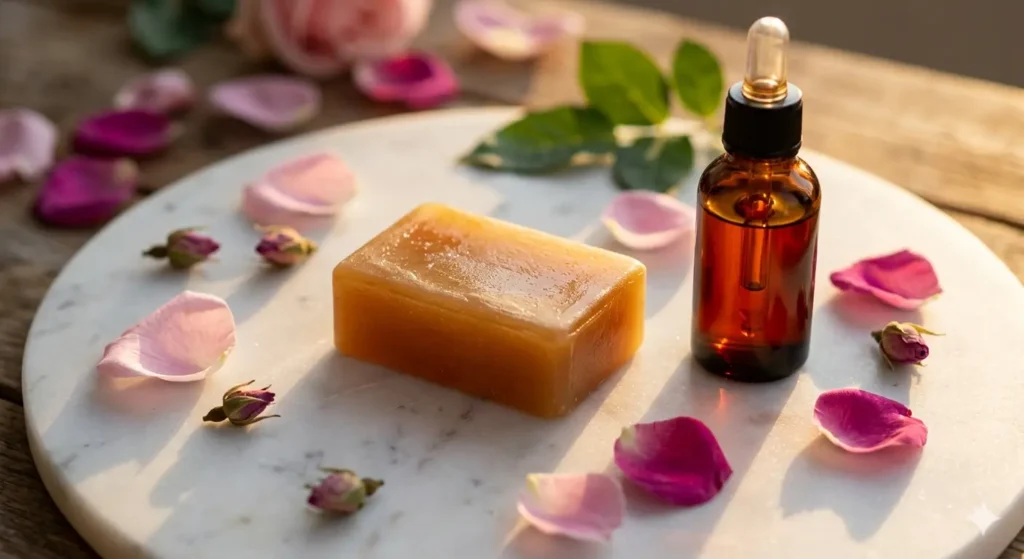
Oil-based cleansers work on a fundamentally different principle from surfactant soaps: plant oils dissolve oil-based impurities through the “like dissolves like” mechanism, with no surfactant stripping, no acid-mantle disruption, and no TEWL spike.
A 4-week clinical study on lipid-replenishing oil cleanser (published PMC, 2025) found a 27% reduction in TEWL and 89% increase in skin hydration after switching to an oil-based cleanser for adults with moderate to severe atopic dermatitis — with simultaneous 27% improvement in clinical severity scores. [Source 11]
This aligns with the 2025 clinical evidence showing 89% hydration improvement from lipid-replenishing cleansers. The mechanism: oil cleansers skip the surfactant step entirely, eliminating the primary cause of TEWL spikes in reactive skin.
🛒 Amazon Search:
Emu Joy Emu Oil Soap for Sensitive Skin – Natural Bar Soap with 100% Fully Refined Emu Oil, Calendula & ChamomileComparison Table: Which Soap Is Right for Your Dry Skin?
← Scroll left/right to see full table →
| Soap Type | Best Match | pH Range | Key Ingredient | Amazon Link | Avoid If |
|---|---|---|---|---|---|
| Glycerin Bar | Seasonal dryness, psoriasis, general dry skin | 5.5–7.0 | Glycerin (top-5) | Dermisa Glycerin Bar → | Very oily skin |
| Syndet Bar | ALL dry skin types, eczema, rosacea, daily use | 5.5–7.0 | SCI surfactant | Vanicream Bar → | If SLS is listed first |
| Ceramide Bar | Moderate–severe eczema, compromised barrier | 5.5–7.0 | Ceramide NP/AP/EOP | CeraVe Bar → | — |
| Oatmeal Bar | Itchy, inflamed, atopic dry skin | 5.5–7.0 | Colloidal oatmeal | Aveeno Bar → | Oat allergy |
| Shea Butter Bar | Mature, very dry, body skin, cracked hands | Varies — check | Shea Butter, Aloe Vera & Vitamin E | Moiz Sy/ndet Bathing Bar | pH 5.5 | With Shea Butter, Aloe Vera & Vitamin E → | High-pH traditional formulas |
| Castile (diluted) | Natural-ingredient preference | 8.5–9.5 — dilute | Olive oil unsaponifiables | Dr. Bronner’s Unscented Baby Castile Soap | Undiluted use |
| Oil-Based Bar | Very reactive, post-procedure, severe AD | Near-neutral | Refined Emu Oil | Emu Joy Emu Oil Soap for Sensitive Skin → | Full-body use (cost) |
For specific brand comparisons and pricing across all these categories, browse our expert-reviewed top 45 daily-use soaps for every skin type and budget.
How to Patch Test a New Soap for Dry Skin
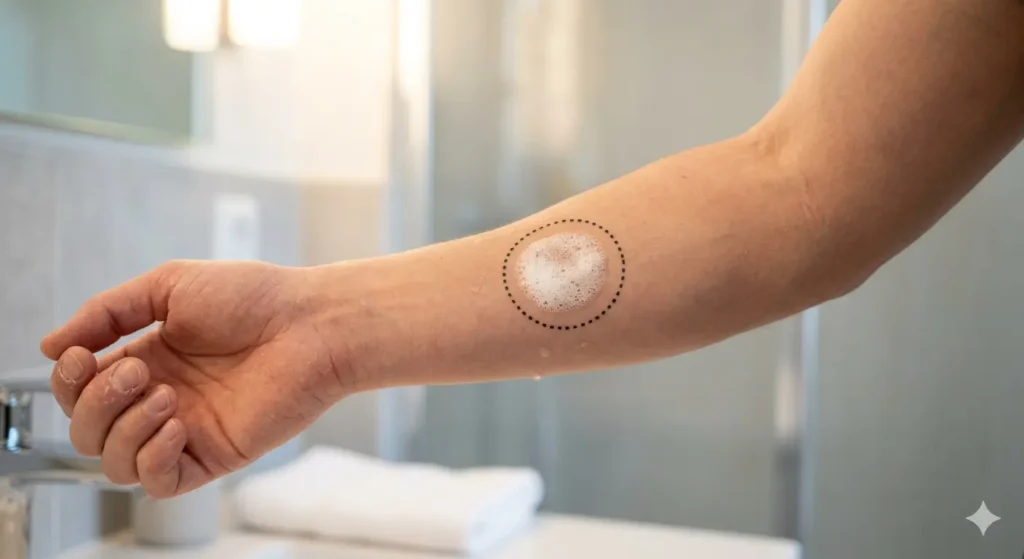
A new soap that worsens your barrier can trigger a reaction that takes days to resolve. Here is the standard protocol used in dermatology practice:
Apply a small lather of the new soap to a 2 cm area on your inner forearm or inside your elbow.
Leave it on for 60 seconds — this approximates normal face-washing contact time.
Rinse thoroughly and pat dry. Do not apply any product to the test area.
Wait 24 hours. Check for redness, itching, bumps, or tightness. Any reaction = do not use.
If no reaction, repeat for a second day before committing to daily face use.
Seasonal Soap Switching Guide for Dry Skin
Dry skin shifts with seasons — low winter humidity and summer air conditioning both increase TEWL. Adjust your soap choice accordingly:
| Season / Condition | Best Soap Type | Key Ingredient Priority | Post-Wash Essential | Avoid |
|---|---|---|---|---|
| Winter / low humidity | Ceramide syndet or shea butter bar | Ceramides + petrolatum post-wash | Ceramide moisturiser within 3 min | High-pH traditional bars |
| Summer / humid climate | Glycerin or oatmeal syndet | Glycerin + colloidal oatmeal | Light hyaluronic acid serum | Heavy occlusive oil cleansers |
| Air-conditioned environment | Ceramide or glycerin syndet | Humectant + occlusive combination | Occluded moisturiser on damp skin | Fragrance, alcohol-based cleansers |
| Eczema flare | Oil cleanser or ceramide bar only | Ceramides + zero fragrance | Prescribed emollient immediately | All traditional soap |
Final Thoughts: Choosing the Best Soap for Dry Skin
The best soap for dry skin is not necessarily the most expensive or the most heavily marketed — it is the one that protects your skin barrier while cleansing without stripping away moisture.
For most people with mild to moderate dryness, a fragrance-free glycerin bar or pH-balanced syndet bar provides the best balance between hydration and gentle cleansing. If you have eczema-prone or very reactive skin, ceramide-based cleansers and oil-based cleansing bars usually offer stronger barrier support with less irritation risk.
The most important rule is simple: avoid soaps that leave your skin feeling tight, squeaky, itchy, or flaky after washing. That sensation often means your skin barrier is losing moisture faster than it can repair itself.
When choosing a soap for dry skin, focus on:
- Fragrance-free formulas
- pH-balanced or syndet cleansers
- Glycerin, ceramides, colloidal oatmeal, or shea butter
- Sulfate-free surfactants
- Moisturising immediately after washing
Finally, remember that even the best soap cannot fully compensate for habits that continuously damage the skin barrier — especially very hot showers, over-cleansing, harsh exfoliation, and heavily fragranced skincare products.
Frequently Asked Questions About Soap for Dry Skin
Verified Sources
- Werner Y. (1986). Transepidermal water loss in dry and clinically normal skin in patients with atopic dermatitis. Acta Dermato-Venereologica. PMID: 2408409. pubmed.ncbi.nlm.nih.gov
- Mijaljica D., Spada F., Harrison I.P. (2022). Skin Cleansing without or with Compromise: Soaps and Syndets. Molecules, 27(6), 2010. doi.org/10.3390/molecules27062010
- Russak J., Hopkins J., Cox M. (2025). Dermatologists Name the Best Products for Dry Skin in 2025. New Beauty. newbeauty.com
- Bollag W.B. et al. (2021). Glycerol Improves Skin Lesion Development in Psoriasis Model. International Journal of Molecular Sciences, 22(16), 8749. doi.org/10.3390/ijms22168749
- Levin J. et al. (2021). A daily regimen of a ceramide-dominant cleanser restores skin permeability barrier in eczema: A randomized trial. PMC8459234. ncbi.nlm.nih.gov
- Breternitz M. et al. (2008). Placebo-Controlled, Double-Blind, Randomized Study of a Glycerol-Based Emollient on Eczematous Skin in Atopic Dermatitis. Skin Pharmacology and Physiology, 21, 39–45.
- Pawar M. et al. (2024). Comparative Study of Soap and Syndet Bars. Pharmaceutical Research, 8(3). medwinpublishers.com
- Dr. Deanne Mraz Robinson, Dr. Brendan Camp. NBC Select, Best Bar Soaps 2026. nbcnews.com/select
- Xia Y. et al. (2025). Effects of a Ceramide-Containing Glycinate-Based Cleanser. Journal of Cosmetic Dermatology. PMC12268312. ncbi.nlm.nih.gov
- Garcia A. (2024). Best Body Washes for Eczema. Women’s Health. plasticsandderm.com
- Topicrem DA PROTECT Clinical Study (2025). Lipid-Replenishing Regimen in Atopic Dermatitis. PMC12802814. ncbi.nlm.nih.gov
- MyPsoriasisTeam. Patient testimonials on glycerin soap. mypsoriasisteam.com


2 thoughts on “Best Soap for Dry Skin: 7 Dermatologist-Picks (2025)”