Best Soap for Eczema: 6 Fragrance-Free Options for Sensitive Skin

Most soaps make eczema worse — not because they are dirty products, but because their pH and surfactants actively disrupt the barrier that eczema skin cannot rebuild fast enough. This guide covers the 6 best soaps for eczema based on clinical evidence, NEA approval, dermatologist endorsement, and what the atopic dermatitis research actually says about cleansing compromised skin

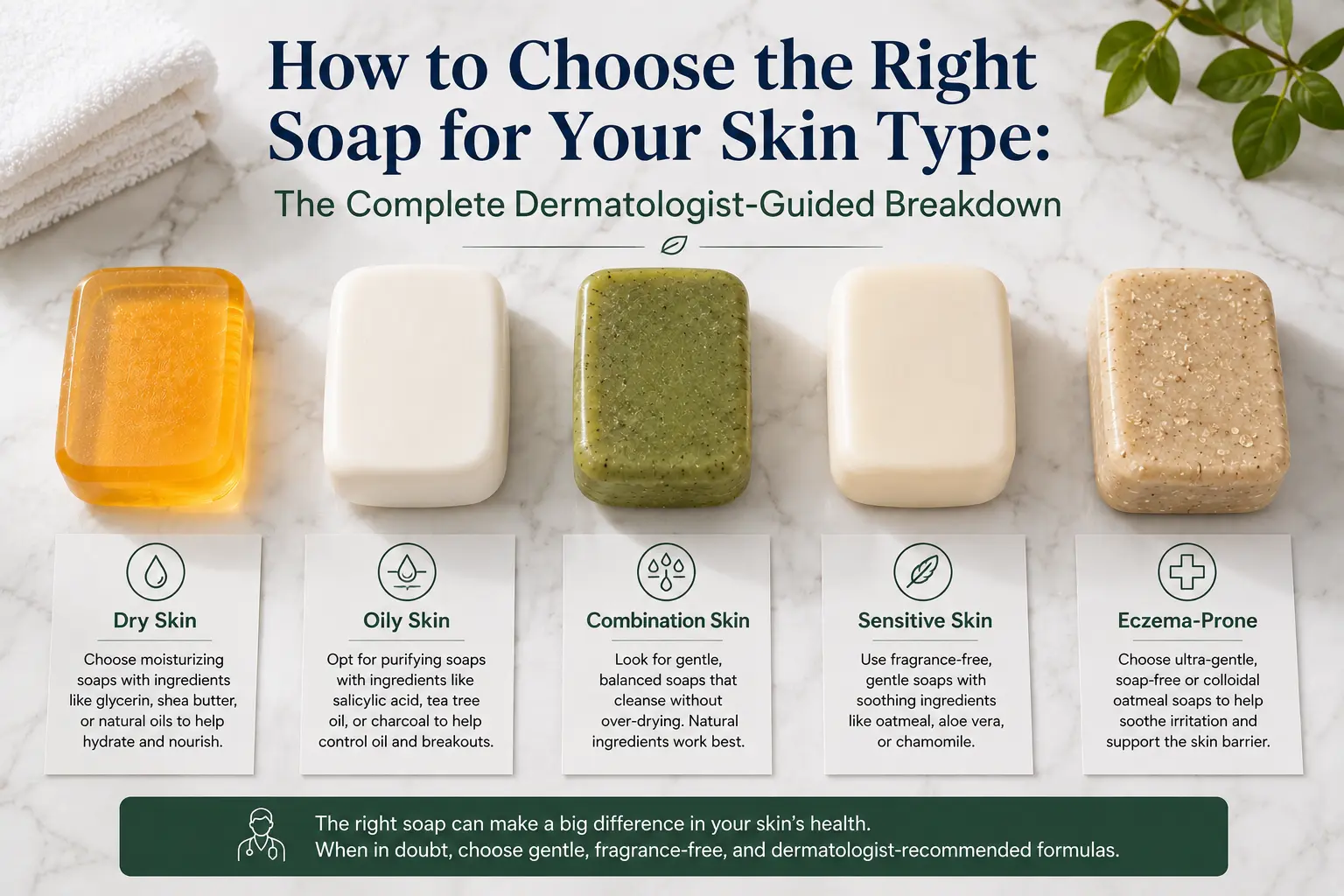
How to Choose the Right Soap for Your Skin Type: The Complete Dermatologist-Guided Breakdown

Several different soap types arranged by skin type label cards — glycerin soap for dry skin, salicylic acid soap for oily skin, colloidal oatmeal soap for sensitive skin, syndet bar for eczema-prone skin

Most people choose soap by smell or habit – and most people are wrong about their skin type. A 2024 dermatology study found over 80% of people misidentify their skin. This guide shows you how to identify yours accurately using two at-home methods, then matches each skin type to the right soap format, pH level, and ingredients. It also connects every article in our soap science series so you always know where to go next.

Medicated Soap for Acne: Does It Actually Work? A Dermatology-Backed Answer

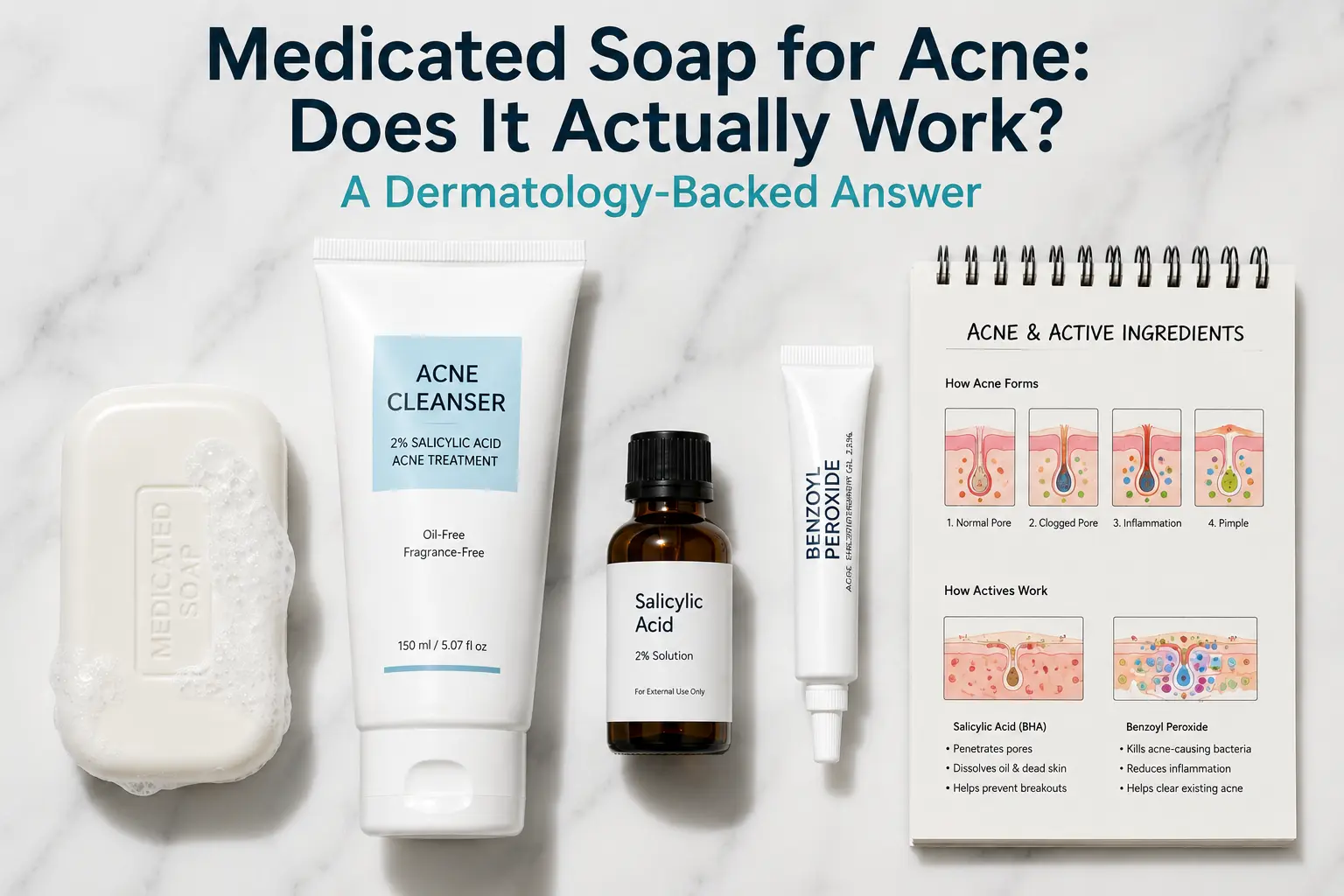
Medicated acne soap bar and liquid cleanser with active ingredients salicylic acid and benzoyl peroxide shown beside inflamed acne-prone skin

Most medicated acne soaps are rinsed off in under 60 seconds. That contact time matters — and most product labels never mention it. This guide explains which active ingredients (salicylic acid, benzoyl peroxide, sulfur, zinc pyrithione, tea tree) actually deliver results in rinse-off format, who benefits from medicated soap alone, and when you genuinely need a leave-on treatment too. All claims sourced from the 2024 JAAD Acne Vulgaris Guidelines and peer-reviewed clinical trials.

Natural Soap vs Chemical Soap: What Science Actually Says

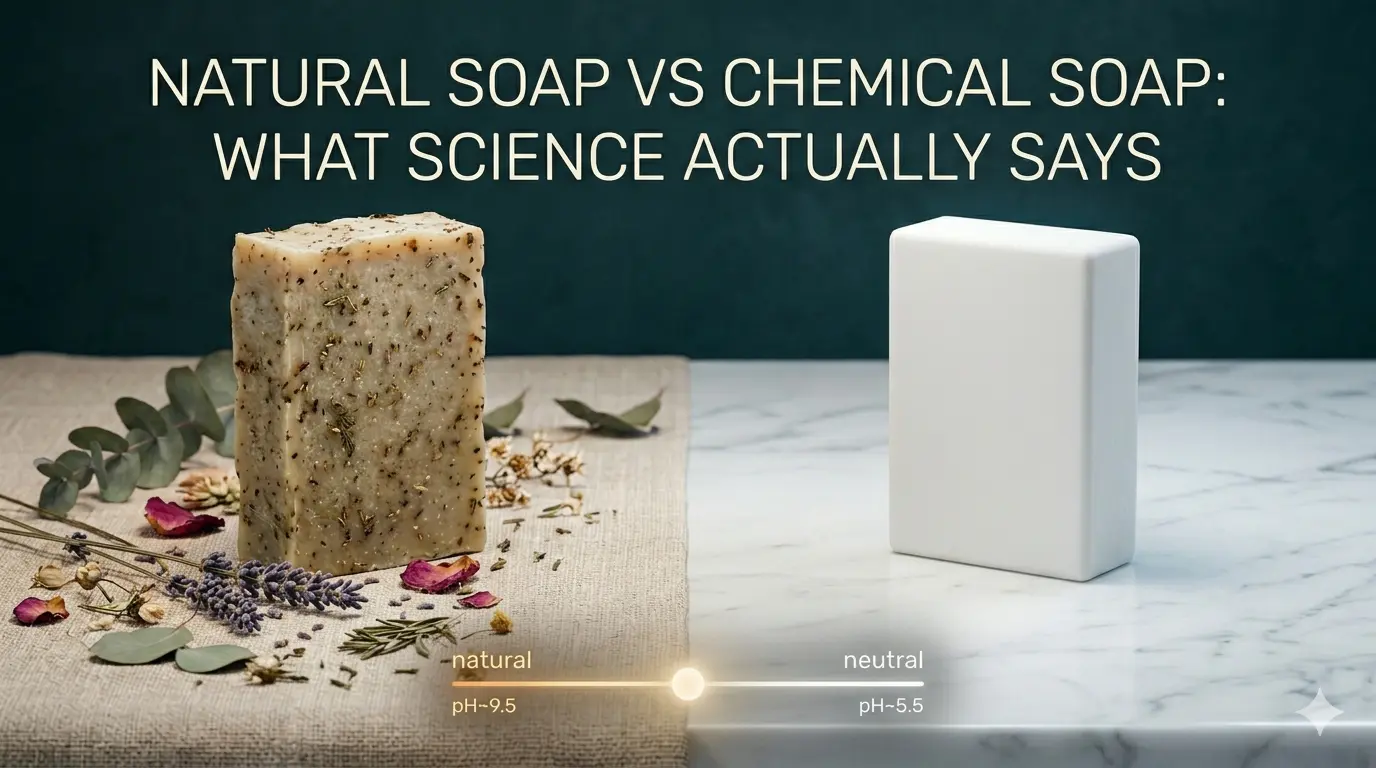
Natural soap vs chemical soap side by side comparison — handmade bar vs synthetic cleanser

): ‘Natural’ soap sounds safer. ‘Chemical’ soap sounds harmful. But those words on a label tell you almost nothing about how a soap will actually behave on your skin. This guide cuts through the marketing to examine what peer-reviewed research says about natural and synthetic soaps — including which is gentler, safer, and better for the environment

Herbal Soap Benefits for Skin: Ingredients, Science, and What Actually Works

ollection of herbal soap bars surrounded by botanical ingredients including neem leaves, turmeric, aloe vera, tea tree, and lavender on a natural wooden surface

Not all herbal soaps are equal — and ‘natural’ does not automatically mean effective or safe. This science-backed guide covers 8 clinically studied herbal soap ingredients, what peer-reviewed research actually shows about each one, which skin conditions benefit most, and how to spot greenwashing on a label. Sources include Karger Skin Pharmacology, Wiley Cosmetic Dermatology, PubMed NCBI, and a 23-trial systematic review on aloe vera.