

Most people with oily skin think the solution is obvious: wash more, use stronger soap, strip the oil away. Makes sense in theory. The problem is that your skin disagrees entirely.
When you over-strip oily skin with harsh or alkaline cleansers, the skin reads this as a threat and compensates by producing even more sebum.
Dermatologists call this rebound sebum overproduction, and it is one of the most common reasons people with oily skin find their condition worsening despite washing frequently with ‘deep cleansing’ soaps.
The right soap for oily skin is not the strongest one — it is the one that removes excess oil and impurities without triggering that rebound response. Here is what the evidence says about how to find it.
If you want the broader foundation first, our guide to types of soap and their benefits for every skin type explains how syndet bars, glycerin soaps, medicated soaps, herbal soaps, and traditional bars differ.
⚡ Quick Answer: Oily skin needs a cleanser that removes excess sebum without over-stripping the moisture barrier. The best options: pH-balanced syndet bars (pH 5.5–6.5), salicylic acid cleansers (for acne-prone oily skin), transparent soap bars, and niacinamide-containing face washes. Avoid high-pH traditional bar soaps — they cause the rebound oiliness that makes the problem worse.
If you want one practical starting point, choose a salicylic acid cleanser such as CeraVe Renewing SA Cleanser for oily, clogged, or acne-prone skin. If your skin is actively breaking out, La Roche-Posay Effaclar Medicated Gel Cleanser is stronger option. If your oily skin feels tight, irritated, or over-cleansed, switch temporarily to Vanicream Gentle Facial Cleanser.
Why Most ‘Deep Cleansing’ Soaps Make Oily Skin Worse
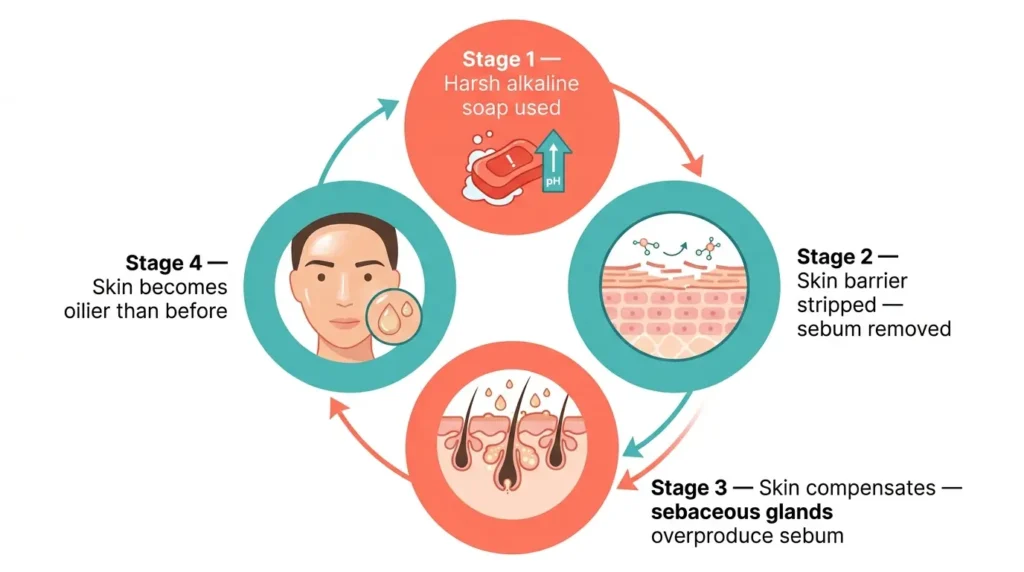
The rebound oiliness cycle is a real physiological response. Sebaceous glands — the oil-producing glands in your skin — are regulated by feedback mechanisms.
When the skin surface is stripped of its natural sebum layer, the glands interpret this as a deficit and increase production to compensate. Ironically, over-cleansing can leave oily skin oilier within hours.
Traditional bar soaps make this worse in a second way. Their high pH (9–11) disrupts the skin’s acid mantle and alters the local microbiome environment in a way that — for oily, acne-prone skin specifically — can increase colonisation by acne-triggering bacteria and worsen inflammation.
🔬 Research: Research published in the Journal of Investigative Dermatology (Brooks et al., 2025) confirmed that skin pH shifts directly influence sebaceous gland activity and the microbiome balance on oily skin. An elevated skin pH favours Cutibacterium acnes strains associated with inflammatory acne, while maintaining acidic skin pH (4.5–5.5) favours non-inflammatory strains. The cleanser you use determines which environment you create. [Source 1]
This is why cleanser pH matters so much. For the full breakdown of acid mantle damage, pH recovery, and barrier disruption, read our guide on why soap pH matters for every skin type.
In practical terms, this means the foam-and-scrub approach is counterproductive for most people with oily skin. The goal is precise, targeted cleansing — removing excess sebum and impurities while preserving the lipid and moisture components the skin actually needs.
What to Look for in a Soap for Oily Skin
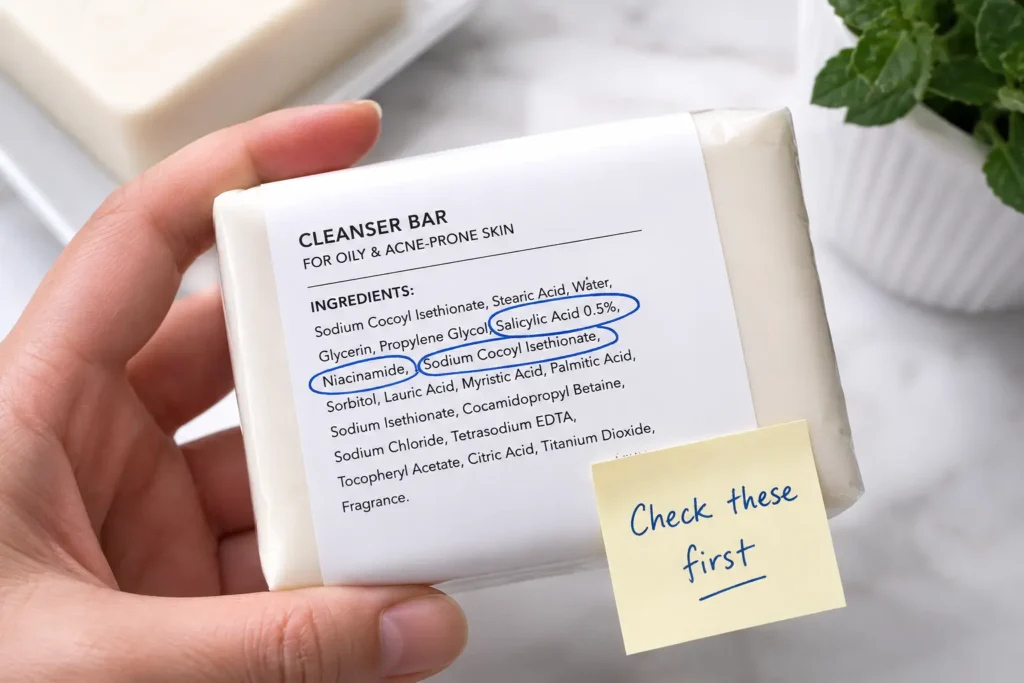
Ingredients that genuinely help oily skin
- Salicylic acid (BHA, 0.5–2%) — oil-soluble, penetrates pores, dissolves sebum plugs. The American Academy of Dermatology lists it as a first-line treatment for acne and congested, oily skin. Use at 0.5–1% in a daily cleanser; higher concentrations are more appropriate in leave-on products. [Source 2]
- Niacinamide (vitamin B3) — regulates sebum production at the gland level over 8–12 weeks of consistent use. A 2006 double-blind study in the Journal of Cosmetic and Laser Therapy confirmed that 2% topical niacinamide significantly reduced sebum production versus vehicle control. Increasingly included in syndet cleansers specifically for oily skin. [Source 3]
- Zinc (zinc PCA or zinc gluconate) — anti-inflammatory and mild sebum-regulating. Reduces the activity of 5-alpha reductase, the enzyme that stimulates sebaceous gland output. Often paired with niacinamide in oily-skin cleansers.
- Sodium cocoyl isethionate (SCI) — the preferred syndet surfactant for oily skin. Cleanses thoroughly at pH 5.5–6.5 without over-stripping. Gentler than SLS but more effective than low-lather options that may leave residual sebum.
- Glycolic acid (AHA, 2–5%) in a wash-off cleanser — exfoliates dead skin cells that trap sebum in pores. Particularly useful for oily skin with textural concerns or enlarged pores.
- Tea tree oil (at 5% concentration in properly formulated bars) — antimicrobial, reduces Cutibacterium acnes colonisation. Effective as an adjunct to salicylic acid for acne-prone oily skin, though patch testing is important as some people react to it.
What to avoid
- Sodium lauryl sulphate (SLS) high in the ingredient list — strips oil aggressively in the short term but triggers rebound oiliness. Common in ‘deep cleansing’ soaps marketed for oily skin.
- High-pH traditional bar soaps (pH 9–11) — disrupts acid mantle and favours acne-linked bacteria as described above
- Heavy oils (coconut oil, palm oil, olive oil in superfatted formulations) — comedogenic for most oily skin types; leave a residual film
- Synthetic fragrances — add no cleansing benefit and are a documented cause of allergic contact dermatitis
The 6 Best Types of Soap for Oily Skin — Evidence Behind Each
These are ingredient-category recommendations, not specific brand endorsements. Each includes Amazon product examples with affiliate link guidance.
1. Salicylic Acid Syndet Bar — Best Overall for Oily, Acne-Prone Skin
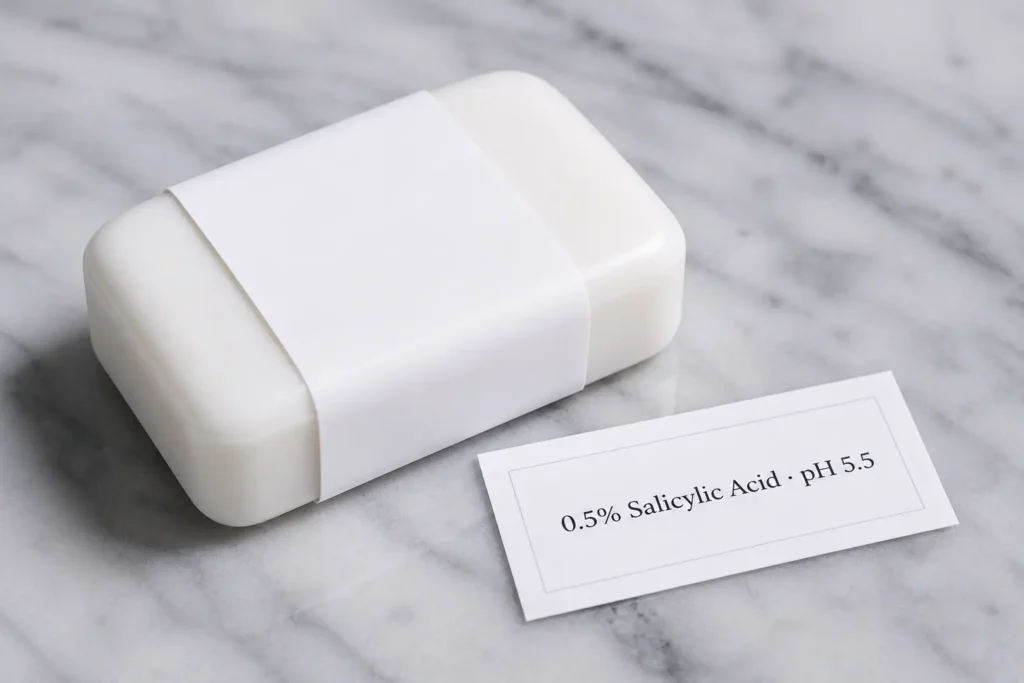
- Best for: Oily skin with active breakouts, blackheads, congested pores
- pH range: 5.5–6.5
- Why it works: BHA is oil-soluble, meaning it penetrates the sebum layer inside pores rather than working only on the surface like water-soluble ingredients
Salicylic acid at 0.5–1% in a syndet cleansing bar gives you the pore-clearing benefit of BHA at a skin-compatible pH — without the barrier disruption of traditional acne soaps.
The key is combining it with a syndet surfactant base rather than traditional soap: in an alkaline soap base, salicylic acid is less effective because it is less ionised at high pH.
“Standard bar soaps are usually highly alkaline, which strips the skin of natural oils and disrupts its acidic pH. Dermatologist-recommended ‘bars’ are actually syndet bars — formulated to be soap-free and pH-neutral, cleansing without dryness or irritation.” — BHSkin Dermatology, 2025 [Source 4]
💡 Tip: For salicylic acid cleansers: a 30–60 second contact time before rinsing significantly increases efficacy. Lather, apply to face, wait, then rinse — rather than washing straight off.

CeraVe Renewing SA Cleanser
A salicylic acid cleanser for oily, rough, clogged, or acne-prone skin. Better for readers who need pore-clearing support without jumping straight to harsh scrubs.
- Salicylic acid helps loosen dead skin and clogged pores.
- Includes barrier-supporting ingredients like ceramides.
- Good fit for oily skin that also feels rough or congested.
2. Transparent Soap Bar — Best for Mildly Oily Skin Without Acne
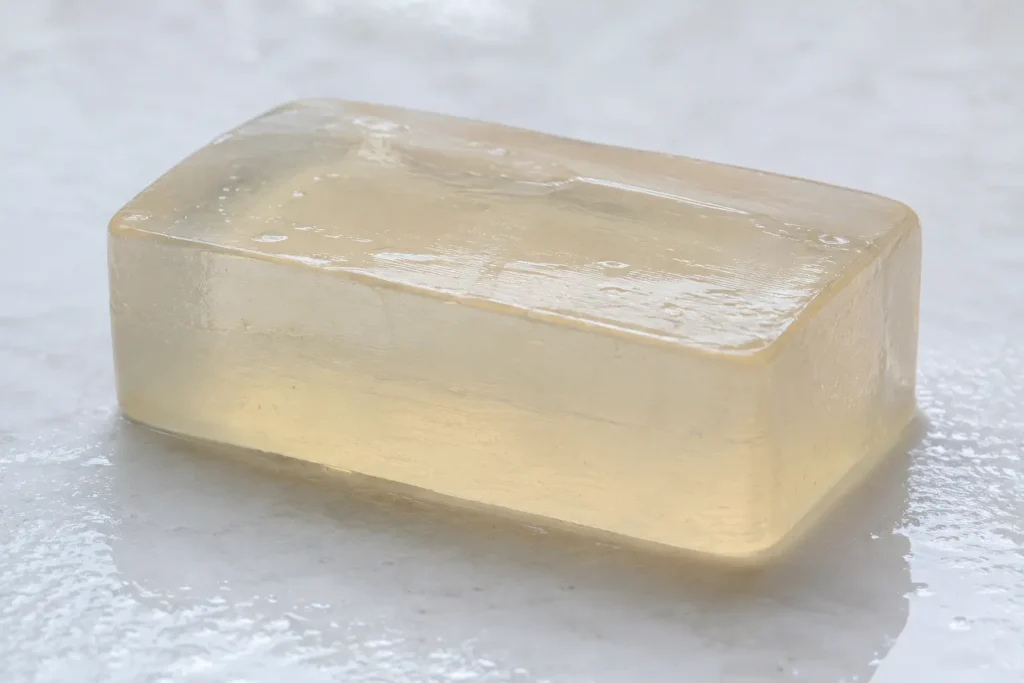
- Best for: Mildly to moderately oily skin without active acne
- pH range: 8.0–9.5 — higher than syndets but lower than typical traditional bars
- Why it works: Transparency comes from the removal of excess fats (lower ‘superfatting’), leaving a cleaner rinse and less residual oil film
Transparent soap bars undergo a manufacturing process involving alcohol that removes undissolved particles and reduces the lipid content compared to opaque bars. This makes them more thorough cleansers for oily skin — they remove sebum effectively without leaving the moisturising film that superfatted soaps deposit.
The main limitation: they are still alkaline (pH 8–9.5), so they will cause some acid mantle disruption. For daily face washing, a syndet bar is the better long-term choice. Transparent bars are most appropriate for body use or as an occasional clarifying wash.

Neutrogena Original Transparent Facial Bar
A classic transparent facial bar for mildly oily skin or people who prefer a simple bar cleanser without acne-medication intensity.
- Transparent bar format with a clean-rinsing feel.
- Better for mild oiliness than inflamed acne.
- Use carefully if your skin feels tight after bar cleansers.
3. Niacinamide Syndet Bar — Best for Oily Skin With Uneven Tone or Large Pores
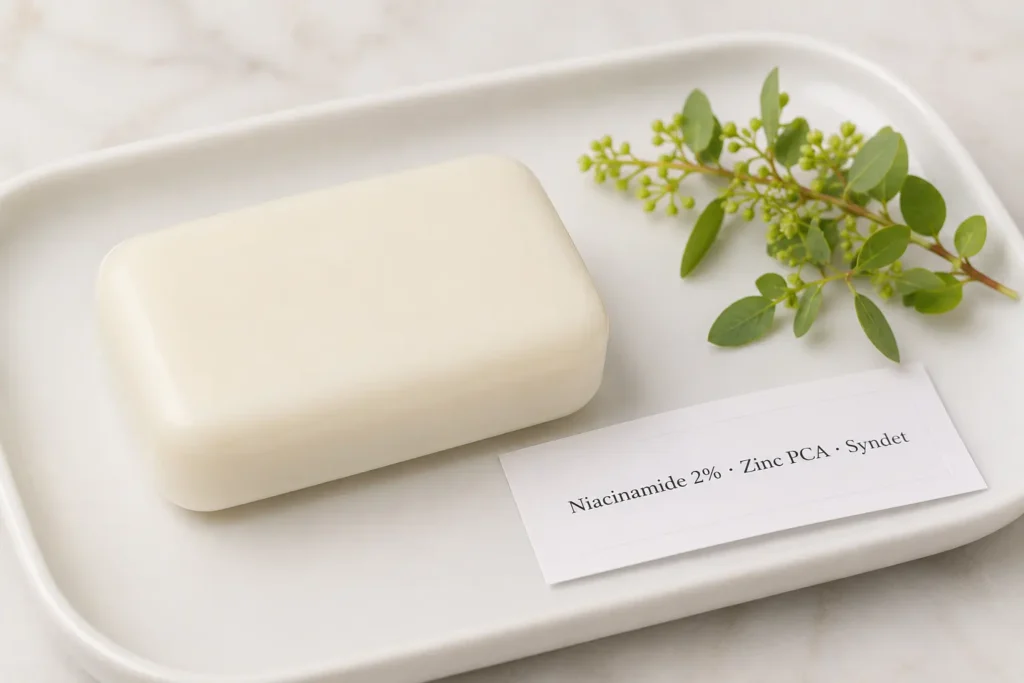
- Best for: Oily skin with enlarged pores, post-acne marks, uneven tone
- pH range: 5.5–6.5
- Why it works: Niacinamide regulates sebaceous gland output over time, minimises pore appearance, and reduces post-inflammatory hyperpigmentation
Niacinamide works differently from salicylic acid — it does not unclog pores directly but regulates the rate of sebum production at the gland level and inhibits the transfer of melanin to skin cells (the mechanism behind post-acne dark spots).
When included in a syndet cleanser, even the relatively short contact time during washing provides some benefit, though leave-on formulations deliver more.
Pairing a niacinamide cleanser with a niacinamide serum gives the most consistent sebum regulation results. The cleanser maintains a clear, balanced surface; the serum provides the sustained dose that drives the sebaceous regulation.

Vanicream Gentle Facial Cleanser
A gentle backup cleanser for oily skin that becomes tight, irritated, or dehydrated from stronger active cleansers.
- Useful during barrier-repair weeks.
- Good for oily skin that is also sensitive or reactive.
- Not an oil-control treatment, but helps prevent over-cleansing damage.
4. Glycolic Acid Face Wash — Best for Oily Skin With Textural Concerns
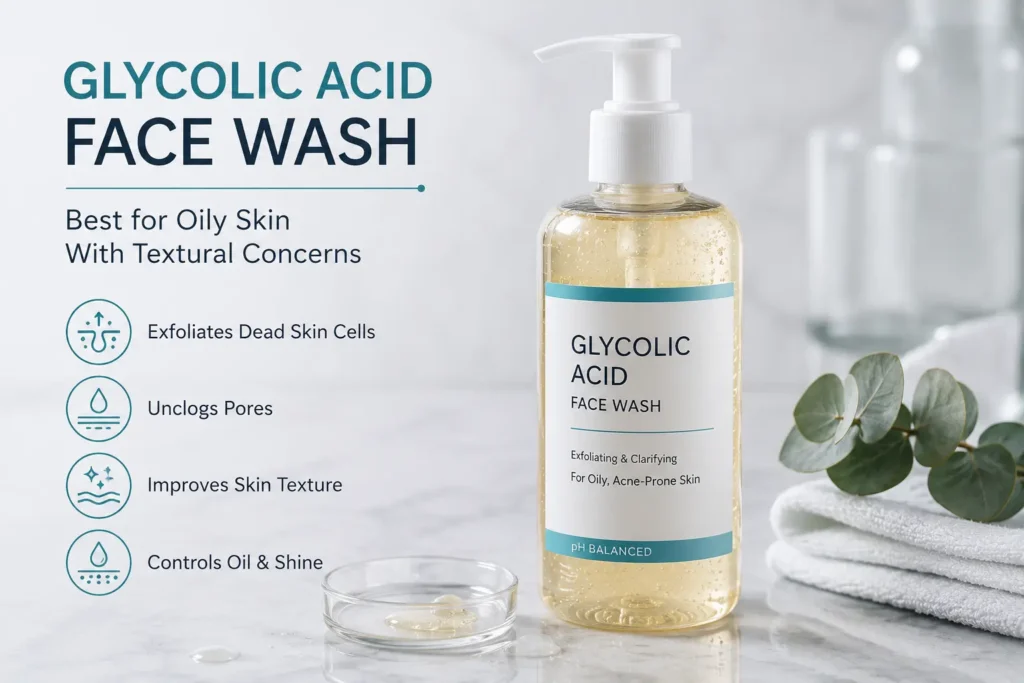
- Best for: Oily skin with rough texture, enlarged pores, mild acne scarring
- pH range: 3.5–5.0 for glycolic acid to be active — usually in liquid form rather than bar
- Why it works: AHA exfoliation removes dead cell buildup that traps sebum and enlarges pore appearance
Glycolic acid cleansers are more commonly liquid than bar format — the water activity in a bar makes it difficult to maintain the low pH required for glycolic acid to be effective.
For oily skin with textural concerns, a glycolic acid gel or foam wash is the preferred delivery format.
Use at 2–5% concentration, two to three times per week maximum for daily face washing.
Daily use can thin the skin barrier over time, which counterproductively increases sensitivity and potential for irritation — particularly relevant for oily skin that is also dehydrated (a common combination).

Paula’s Choice Skin Balancing Oil-Reducing Cleanser
A low-foam cleanser for oily or combination skin that needs oil removal without the harsh stripped feeling.
- Good for enlarged pores and excess shine.
- Useful when oily skin is also slightly dehydrated.
- Better as a daily balancing cleanser than an aggressive exfoliating wash.
⚠️ Watch out: Oily skin can still be dehydrated. Dehydration is a lack of water, not oil. Over-cleansing removes the water-binding components of the skin alongside the sebum. If your oily skin feels simultaneously tight, you are likely dehydrating it through over-cleansing rather than addressing the oiliness.
5. Tea Tree Oil Bar — Best Natural Option for Oily, Acne-Prone Skin
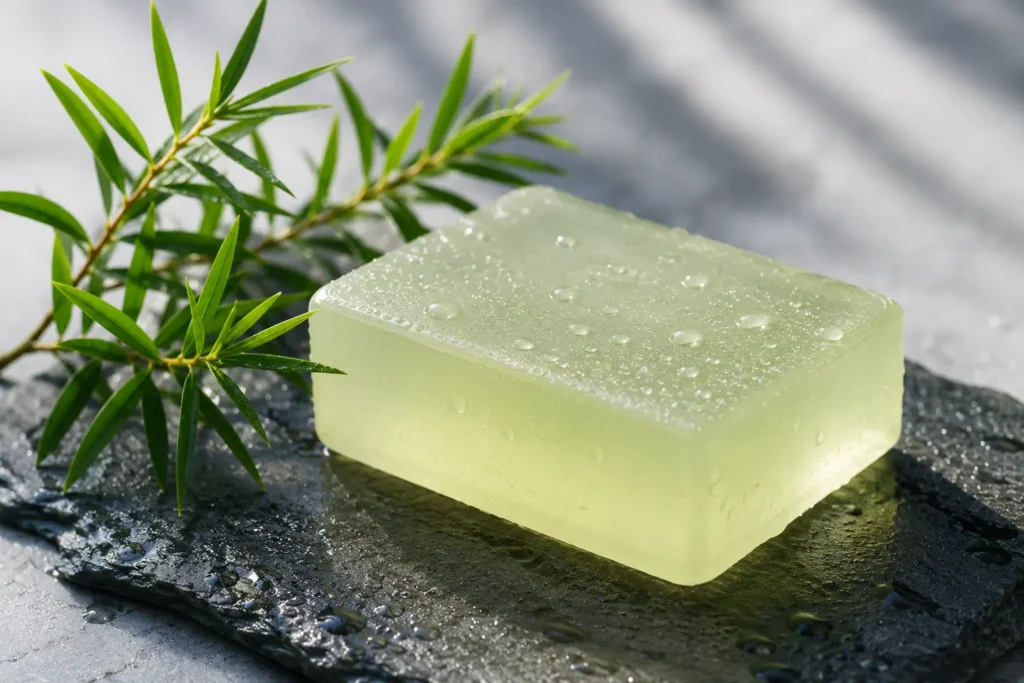
- Best for: Oily, acne-prone skin that prefers plant-derived ingredients
- pH range: Varies — check that bar uses SCI or syndet base, not traditional saponified soap
- Why it works: Tea tree oil (Melaleuca alternifolia) has documented antimicrobial activity against Cutibacterium acnes at 5% concentration
A randomised controlled trial published in the Medical Journal of Australia confirmed that 5% tea tree oil gel was as effective as 5% benzoyl peroxide for mild to moderate acne, with fewer side effects — though with slower onset of action. [Source 5]
In a wash-off bar format, the contact time is shorter, which reduces efficacy somewhat compared to leave-on gel.

The Body Shop Tea Tree Skin Clearing Facial Wash
A popular tea tree cleanser for oily and blemish-prone skin, especially for readers who prefer plant-derived skincare.
- Tea tree-focused cleanser for oily skin.
- Popular option for blemish-prone routines.
- Patch test first if your skin reacts to fragrance or essential oils.
⚠️ Watch out: Patch test essential for tea tree oil. It is a potent essential oil that causes contact dermatitis in a documented subset of users — around 1–3% of the population. Apply a small amount to your inner arm for 48 hours before using on your face. If any redness, stinging, or bumps appear, do not use.
Also note: tea tree oil bars made with traditional soap bases are still alkaline (pH 8.5–10). Look for tea tree formulations in a syndet base for best results on oily skin.
- Search Amazon: ‘tea tree soap bar syndet fragrance free’ — verify SCI or sodium lauroyl sarcosinate as first surfactant. Tag: &tag=YOUR-ASSOCIATE-TAG
6. Low-Foam Syndet Cleanser for Combination Skin — Best for Oily T-Zone Only
- Best for: Combination skin — oily forehead, nose, chin with normal or dry cheeks
- pH range: 5.5–7.0
- Why it works: Low-foam, non-stripping surfactants clean the T-zone without over-drying the drier C-zone
Combination skin is arguably the most mismanaged skin type in terms of cleanser selection. Most people treat the entire face the same way, when in reality the T-zone (forehead, nose, chin) and the C-zone (cheeks, temples, jawline) often have genuinely different skin characteristics.
A practical approach that dermatologists use: apply a salicylic acid cleanser only to the T-zone where sebum is concentrated, and a gentler syndet or glycerin cleanser on the C-zone where skin may be drier.
Two cleansers sounds complicated but takes only 30 extra seconds and addresses the actual skin situation rather than forcing one product to solve two different problems.

La Roche-Posay Effaclar Medicated Gel Cleanser
A stronger acne-focused cleanser for oily skin with breakouts, clogged pores, and visible shine.
- Uses salicylic acid for acne-prone oily skin.
- Better for active breakouts than simple oiliness.
- Use carefully if your skin is sensitive or already peeling.
💡 Tip: For combination skin, the ‘two-zone washing’ method: apply your oily-skin cleanser to the T-zone with one hand, apply a gentler cleanser to cheeks with the other, lather both, then rinse together. One wash step, two targeted products.
Comparison Table: Best Soap Options for Oily Skin
| Soap / Cleanser Type | Best For | pH / Formula Note | Key Ingredient | Best Use |
|---|---|---|---|---|
| Salicylic Acid Syndet | Oily skin with active acne | Usually best when pH-balanced and soap-free. | Salicylic acid 0.5–2% | Daily or alternate-day cleansing depending on tolerance. |
| Transparent Facial Bar | Mildly oily skin or body use | Often more alkaline than syndets. | Low-residue glycerin-style bar | Occasional face use or regular body cleansing if tolerated. |
| Niacinamide Cleanser | Oily skin with large pores or uneven tone | Look for gentle, non-stripping formulas. | Niacinamide + zinc PCA | Daily cleansing with moisturizer afterward. |
| Glycolic Acid Wash | Oily skin with rough texture | Usually liquid; active at lower pH. | Glycolic acid 2–5% | Two to three times weekly, not aggressive daily use. |
| Tea Tree Oil Cleanser | Mild acne-prone oily skin | Choose syndet-style bases when possible. | Tea tree oil | Patch test first; avoid if reactive or fragrance-sensitive. |
| Low-Foam Syndet Cleanser | Combination skin and oily T-zone | Usually gentler than high-foam cleansers. | SCI, glycerin, mild surfactants | Daily use, especially when cheeks feel dry but T-zone is oily. |
Simple takeaway: oily skin usually needs controlled cleansing, not aggressive stripping. Salicylic acid helps clogged pores, niacinamide supports oil balance, and syndet formulas reduce the risk of rebound oiliness.
If you want actual brand examples across different skin types, see our complete guide to the top 45 daily-use soaps for all skin types.
Product Comparison: Which Oily-Skin Cleanser Fits You Best?
Use this quick comparison after reading the ingredient sections above. The best choice depends on whether your oily skin is clogged, acne-prone, sensitive, dehydrated, or combination-type.
| Product | Best For | Main Strength | Use Carefully If | Link |
|---|---|---|---|---|
| CeraVe Renewing SA Cleanser | Oily, rough, clogged, acne-prone skin | Salicylic acid plus barrier-supporting ingredients | Your skin becomes dry, tight, or irritated | Check on Amazon |
| Neutrogena Original Transparent Facial Bar | Mild oiliness and simple bar cleansing | Clean-rinsing transparent bar format | Bar soap leaves your face tight or dry | Check on Amazon |
| Vanicream Gentle Facial Cleanser | Sensitive, reactive, or over-cleansed oily skin | Gentle backup cleanser for barrier repair weeks | You need strong oil-control or acne treatment | Check on Amazon |
| Paula’s Choice Skin Balancing Oil-Reducing Cleanser | Oily and combination skin | Low-foam oil balancing without harsh scrubbing | You specifically need salicylic acid acne treatment | Check on Amazon |
| Desert Essence Thoroughly Clean Face Wash | Oily skin that prefers a tea-tree-style cleanser | Botanical-style cleansing for oily, blemish-prone skin | You react to essential oils, fragrance, or strong botanical formulas | Check on Amazon |
| La Roche-Posay Effaclar Medicated Gel Cleanser | Oily skin with active acne and clogged pores | Acne-focused salicylic acid cleansing | Your skin is sensitive, peeling, or already dehydrated | Check on Amazon |
Best overall starting point: CeraVe Renewing SA Cleanser. Best stronger acne-focused option: La Roche-Posay Effaclar Medicated Gel Cleanser. Best backup when oily skin becomes irritated or dehydrated: Vanicream Gentle Facial Cleanser.
How Often Should You Wash Oily Skin?
Twice daily — morning and evening — is the dermatologist standard for oily and acne-prone skin. Washing more frequently than this increases the risk of rebound sebum production.
In the morning, a gentle rinse with your oily-skin cleanser removes overnight sebum accumulation. In the evening, a slightly more active cleanser (salicylic acid or niacinamide) addresses the day’s pollutants, sunscreen, and sebum.
After exercise or heavy sweating, a simple water rinse or a very gentle syndet wash is sufficient in most cases. Full-strength acne cleansers used three or more times daily tip the balance from effective toward disruptive.
⚠️ Watch out: If your oily skin feels tight, itchy, or stinging after washing — even with a product marketed for oily skin — you are over-cleansing or using a formula too aggressive for your actual barrier condition. Switch to a plain syndet bar for one week and observe whether symptoms resolve before reintroducing active ingredients.
Frequently Asked Questions
Can I use bar soap on oily skin?
Yes, but the type of bar soap matters enormously.
Traditional bar soaps (pH 9–11) over-strip oily skin and trigger rebound sebum production, making oiliness worse over time.
Syndet bars and salicylic acid bars formulated at pH 5.5–6.5 are the evidence-backed choice — they cleanse thoroughly without disrupting the skin barrier or the sebum-regulation feedback mechanism.
Does washing oily skin more often help?
No — frequency beyond twice daily is counterproductive. Each wash removes sebum, which signals the sebaceous glands to produce more. Washing three or four times daily accelerates this cycle. The goal is consistent, pH-appropriate twice-daily cleansing, not frequent cleansing.
What is the best soap for oily skin and acne?
A salicylic acid syndet bar or gel cleanser at pH 5.5–6.5 is the most evidence-supported option.
Salicylic acid (BHA) is oil-soluble, penetrates pores, and dissolves sebum plugs — the primary mechanism behind blackheads and non-inflammatory acne.
It is the first-line topical acne ingredient recommended by the American Academy of Dermatology for mild to moderate acne.
The syndet base ensures this is delivered at a pH that does not trigger rebound oiliness.
Is transparent soap good for oily skin?
Yes, with caveats. Transparent soap bars have a lower lipid content than opaque bars, making them more thorough cleansers for sebum removal.
However, most are still traditional alkaline soaps (pH 8–9.5), so daily face washing will cause some acid mantle disruption over time. They are more suitable for body use or occasional clarifying washes.
For daily facial use, a syndet bar is the better long-term option.
Can oily skin be dehydrated?
Yes — and it is more common than most people realise.
Oily skin and dehydrated skin are not opposites. Oily skin produces excess sebum (oil), but can simultaneously lack water in the stratum corneum — especially if harsh or alkaline cleansers are regularly used.
Signs: skin feels oily but also tight, rough, or dull. The fix is a gentle pH-balanced cleanser plus a lightweight hydrating moisturiser, not more aggressive cleansing.
Is salicylic acid safe for daily use in a cleanser?
At 0.5–1% in a wash-off cleanser, salicylic acid is generally well-tolerated for daily use by most oily skin types. Because it is rinsed off, the contact time is brief, reducing the risk of irritation compared to leave-on products. If irritation, dryness, or peeling occur, reduce to every other day.
People with aspirin sensitivity should approach salicylic acid cautiously, as both are salicylates.
The Bottom Line
Oily skin responds better to precision than force. The goal is not to eliminate sebum — sebum is necessary for healthy skin barrier function — but to regulate it at a level that does not block pores or create shine. That requires a cleanser that works with your skin’s pH rather than against it.
A salicylic acid syndet bar or niacinamide cleanser at pH 5.5–6.5, used twice daily, with a lightweight non-comedogenic moisturiser after each wash, is the approach most consistently supported by clinical evidence.
If you are using acne-focused active ingredients regularly, also read our guide to medicated soap risks and when to use it, because stronger cleansers can backfire when they damage the skin barrier.
The transparent bar is a useful backup for body use. The tea tree option works if you have confirmed you are not in the sensitive group.
What will not help in the long run: high-pH soaps marketed as ‘deep cleansing,’ daily use of aggressive AHA washes, and washing more than twice daily. Your sebaceous glands are not the enemy — your cleanser strategy just needs to stop treating them like one.
Sources
- [1] Brooks SG, Mahmoud RH, Lin RR, Fluhr JW, Yosipovitch G. (2025). The Skin Acid Mantle: An Update on Skin pH. Journal of Investigative Dermatology, 145(3):509–521. https://doi.org/10.1016/j.jid.2024.07.009
- [2] American Academy of Dermatology. Acne Treatment: Medications including salicylic acid. https://www.aad.org/public/diseases/acne/derm-treat/medications
- [3] Draelos ZD et al. (2006). The effect of 2% niacinamide on facial sebum production. Journal of Cosmetic and Laser Therapy, 8(2), 96–101.
- [4] BHSkin Dermatology. The Best Soaps for Acne: A Dermatologist’s Insight (2025). https://bhskin.com/blog/the-best-soaps-for-acne-a-dermatologists-insight/
- [5] Bassett IB, Pannowitz DL, Barnetson RS. (1990). A comparative study of tea-tree oil versus benzoylperoxide in the treatment of acne. Medical Journal of Australia, 153(8):455–458.
- [6] Pawar M et al. (2024). A Comparative Study of Soap and Syndet Bars. Pharmaceutical Research, 8(3). https://medwinpublishers.com/OAJPR/
Medical Disclaimer: This article is for educational purposes only. Consult a board-certified dermatologist for personalised acne or oily skin treatment advice.
RELATED ARTICLES:



1 thought on “Best Soap for Oily Skin: 6 Options That Reduce Oil Without Stripping”